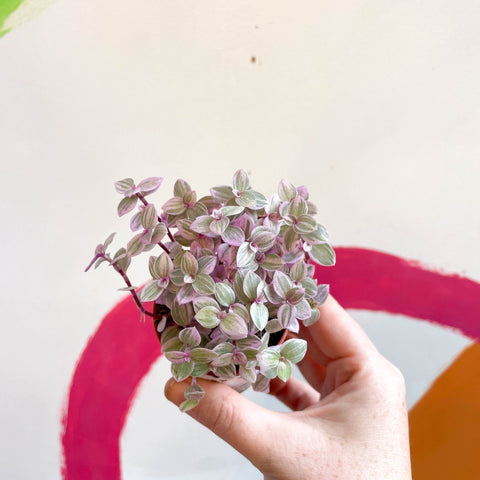
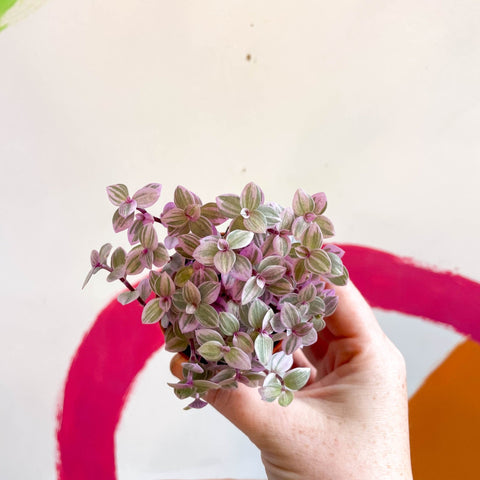
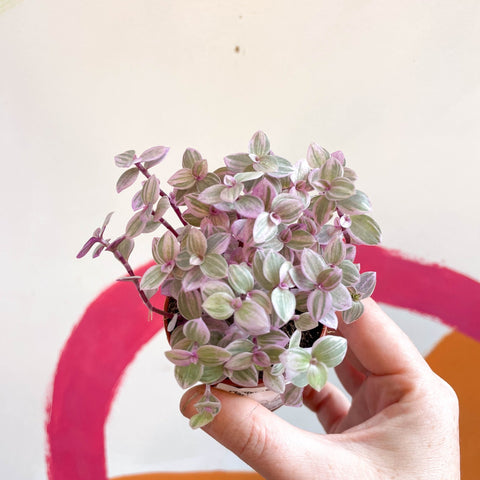
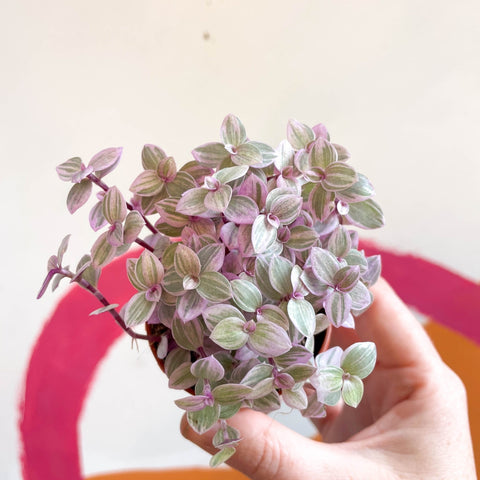
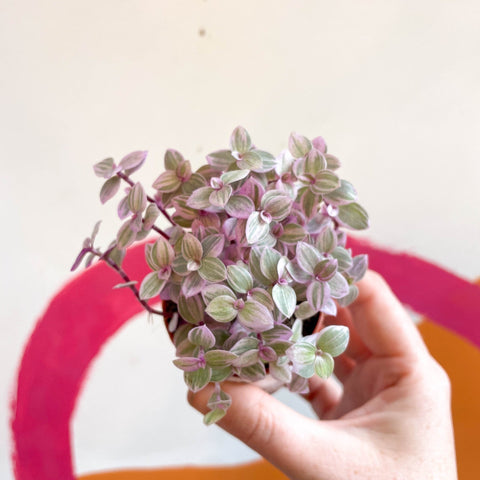
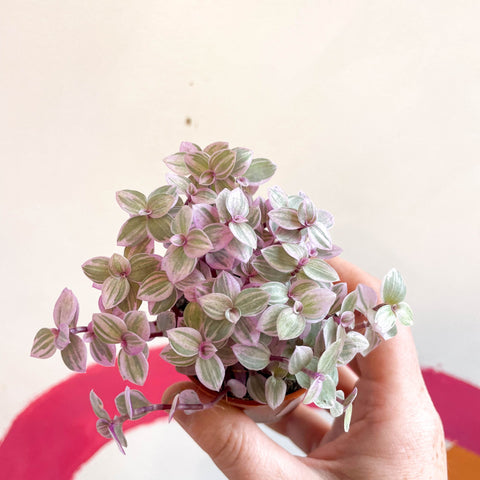
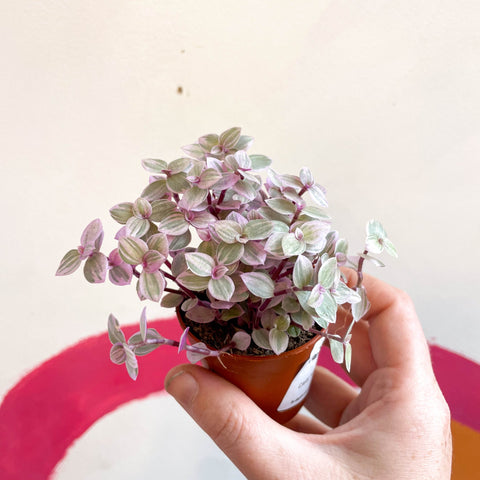
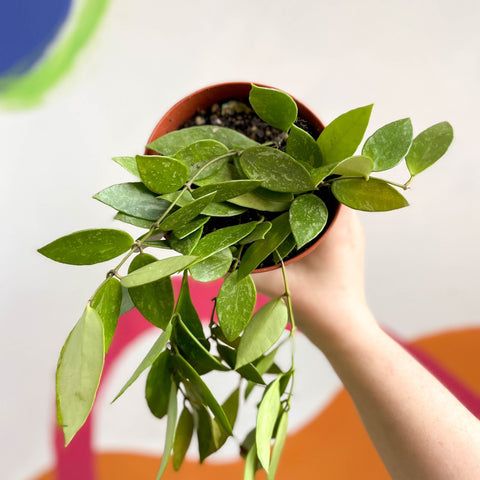
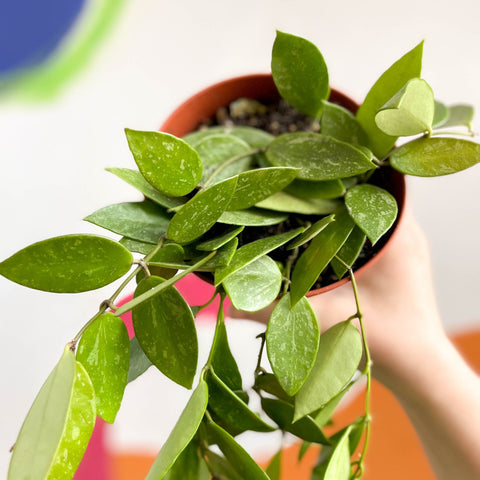
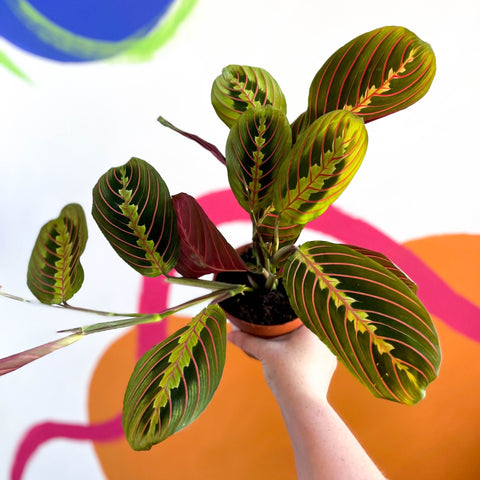
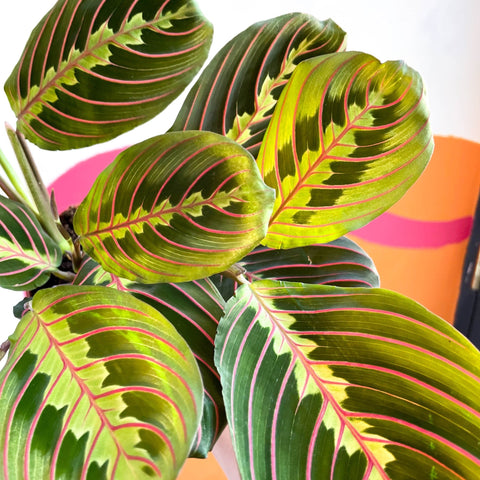
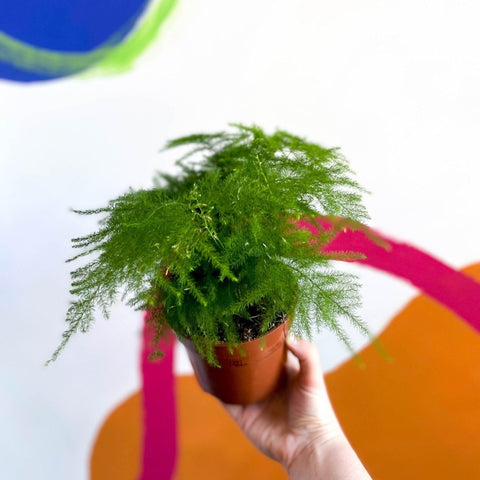
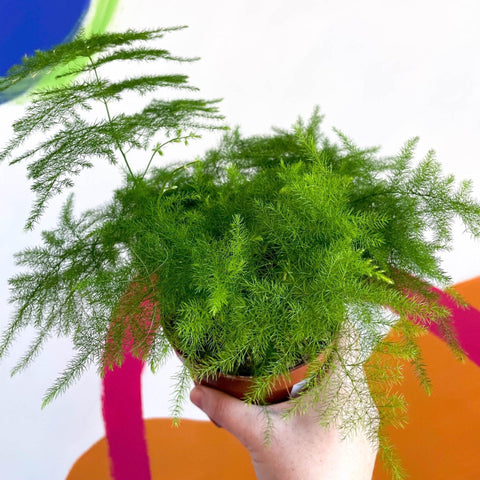
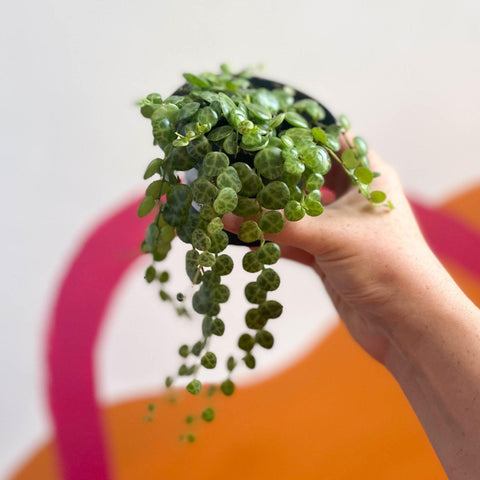
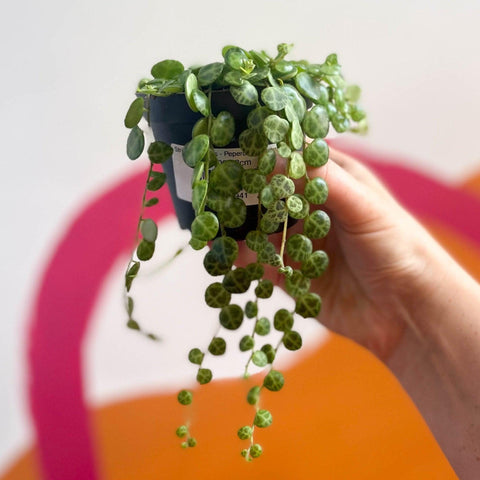
This plant's trailing foliage is adorably compact with its tiny leaves and narrow stems. In its natural habitat, it grows across the floor and, while in your home it won't root in your carpet, it will look great hanging or trailing or adding a splash of colour inside a terrarium. This Callisia's shimmering pale pink and green leaves are especially vibrant in the right amount of light. With a bright location out of direct sun, above-average humidity and moist soil, this plant will be happy to keep growing and trailing at your pleasure. It is also easy to propagate from cuttings, so you can snip it back and propagate to keep it bushy and compact.
Scientific Name
Callisia repens 'Rosato' (beautiful creeping plant, cultivar: rosy)
Synonyms
Hapalanthus repens, Tradescantia callisia, Tradescantia repens
This species name was first published in 1762 and is still accepted today.
Common Names
Turtle Vine, Pink Lady, Pink Panther Plant, Creeping Inch Plant, Callisia
Origin
Native to Central and South America, particularly in tropical regions (Northeastern & Northwestern Argentina, Aruba, Belize, Bolivia, Northeastern Brazil, Cayman Is., Colombia, Costa Rica, Cuba, Dominican Republic, Ecuador, El Salvador, French Guiana, Guatemala, Haiti, Honduras, Jamaica, Leeward Is., Mexico, Netherlands Antilles, Nicaragua, Panamá, Paraguay, Peru, Puerto Rico, Texas (US), Trinidad-Tobago, Venezuela, Venezuelan Antilles, Windward Is.)
Light
Prefers bright, indirect light for optimal growth. It can tolerate lower light conditions, but growth may slow, and the vibrant colours may fade. Avoid direct sunlight, as it can scorch the leaves.
Water
Keep the soil evenly moist but not soggy. Allow the top inch of soil to dry out between waterings. Be cautious in winter when the plant’s growth slows, and reduce watering accordingly.
Humidity
Thrives in moderate to high humidity levels. Because of this, it does well in terrarium environments, and may benefit from the introduction of a humidity tray if in a drier spot.
Soil
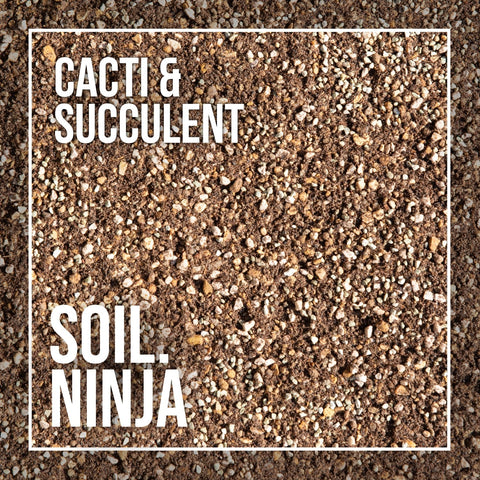
This is a succulent Callisia, so use a well-draining mix with components like sand and grit to keep it happy. A mix designed for cacti and succulents will work well here. Repot every year or two as the plant grows.
Food
Feed once a month during the growing season (spring through early autumn) with a balanced, water-soluble fertiliser. Reduce feeding in winter when the plant is not actively growing.
Temperature
Thrives in temperatures between 18-24°C. Protect it from temperatures below 10°C and avoid cold draughts.
Pet Safe?
Yes, it's non-toxic to pets, making it a safe option for households with animals.
Sprouts Top Tips
If the leaves begin to lose their vibrant colour, it may be an indication that the plant needs more light. Yellowing leaves can signal overwatering, so if you spot this, check your plant's roots and reduce watering if the soil is consistently soggy. To encourage fuller growth, pinch back the tips of the stems to promote branching.
Extras
This plant’s compact and dense growth makes it an ideal choice for terrariums, where it can thrive with the consistent moisture and higher humidity levels.