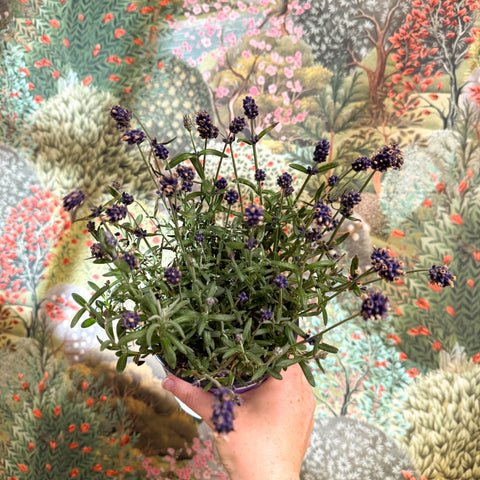
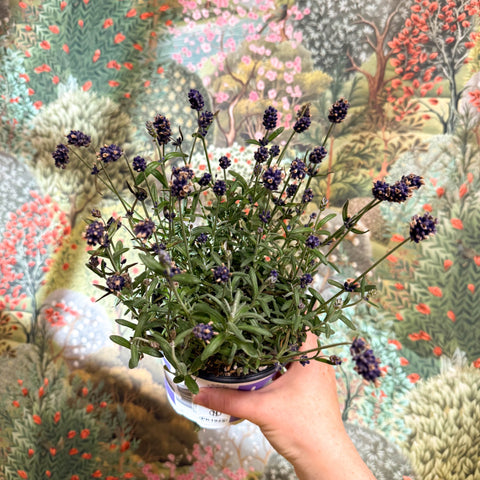
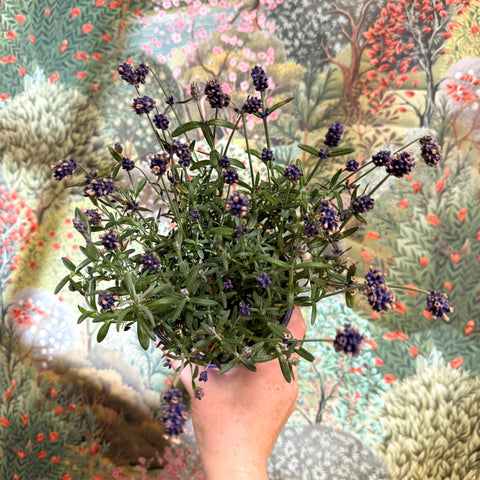
Fragrant spikes of purple flowers rise above silvery-green evergreen foliage throughout summer, filling the garden with colour, scent, and the gentle hum of pollinators. Lavandula angustifolia, commonly known as English Lavender, is one of the most beloved garden plants, valued for its long flowering season, aromatic foliage, and versatility in borders, containers, wildlife gardens, and cottage garden planting schemes.
Lavandula angustifolia is a timeless garden favourite that combines beauty with practicality. Its highly scented flowers attract a wealth of beneficial insects, while the evergreen foliage provides year-round structure and interest. Drought tolerant once established and easy to maintain, it is an excellent choice for sunny gardens and low maintenance planting.
Perennial
Evergreen Shrub, Fragrant, Drought Tolerant, Pollinator Friendly
Flowers: June to August
Foliage: Year-round
Scientific Name
Lavandula angustifolia (narrow-leaved lavender)
Synonyms
Previously known as Lavandula officinalis.
Common Name
English Lavender
Common Lavender
True Lavender
Origin
Native to the Mediterranean region, particularly southern Europe, where it grows on dry, rocky hillsides and sunny slopes.
Pruning Tips
Trim lightly after flowering to maintain a compact shape and prevent plants from becoming woody. Avoid cutting into old, leafless wood, as lavender may struggle to regenerate from these areas. A second light trim in early spring can help tidy the plant before new growth begins.
Wildlife Value
An outstanding plant for pollinators. The nectar-rich flowers attract honeybees, bumblebees, butterflies, hoverflies, and many other beneficial insects throughout summer.
Positioning
Thrives in full sun and is ideal for borders, gravel gardens, wildlife gardens, cottage gardens, and containers. Plant in an open position where air can circulate freely around the foliage.
Water
Water regularly while establishing. Once established, lavender is highly drought tolerant and typically only requires watering during prolonged periods of exceptionally dry weather.
Soil
Prefers well-drained soil and performs best in sandy, chalky, or loamy conditions. Avoid heavy, wet soils, particularly during winter, as excess moisture can lead to root problems.
Food
Requires very little feeding. An annual mulch of garden compost applied around, but not directly against, the base of the plant is usually sufficient. Excessive fertiliser can reduce flowering and increase soft, floppy growth.
Pet-safe
Generally considered mildly toxic if consumed in large quantities by cats and dogs. However, it is commonly grown in gardens and is considered low risk when used as an ornamental plant.
Sprouts Top Tips
Plant lavender where you can brush past it regularly, such as alongside a path or near a seating area. This releases the fragrant oils and allows you to fully enjoy its distinctive scent throughout summer.
Did You Know?
Despite its common name, English Lavender is not native to England. It earned its name because it grows particularly well in the British climate and became widely cultivated in English gardens and lavender farms. The species name angustifolia means “narrow-leaved”, referring to its slender grey-green foliage.