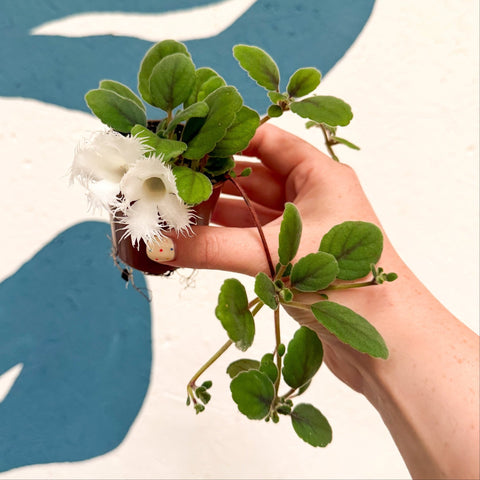
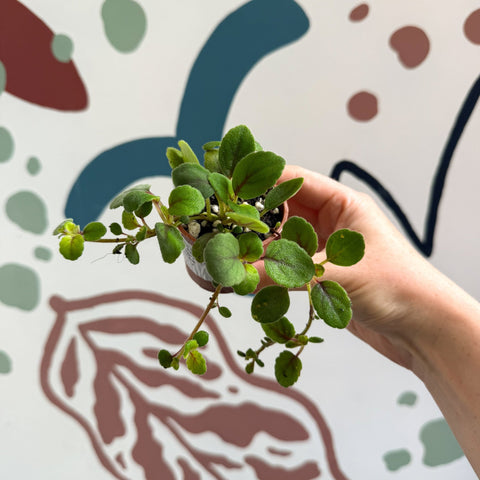
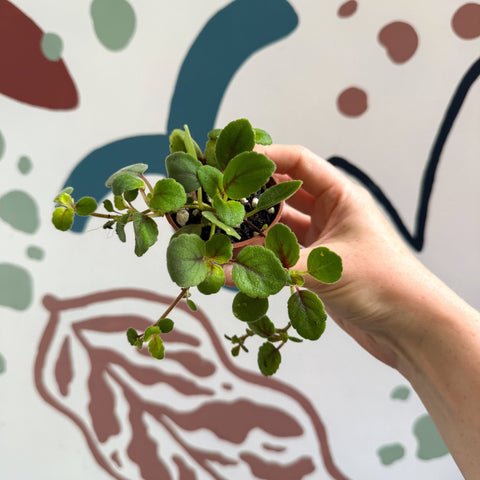
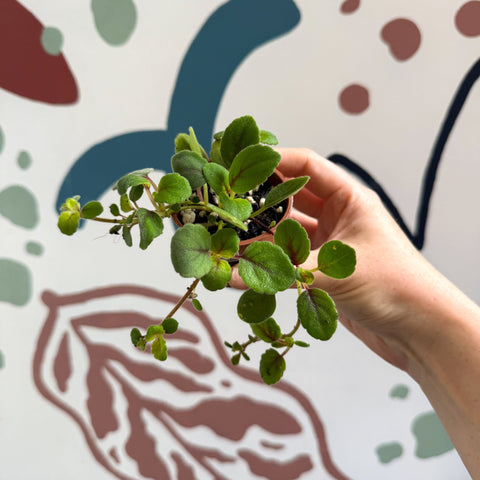
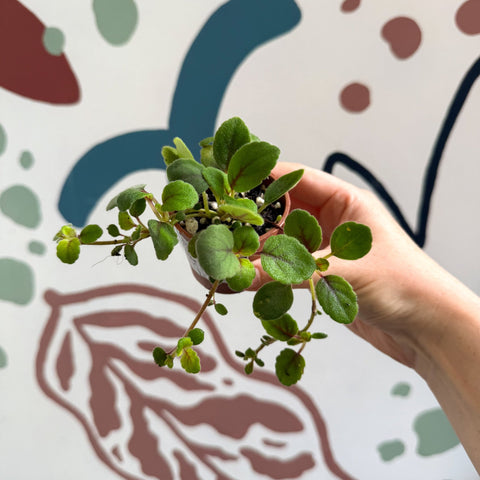
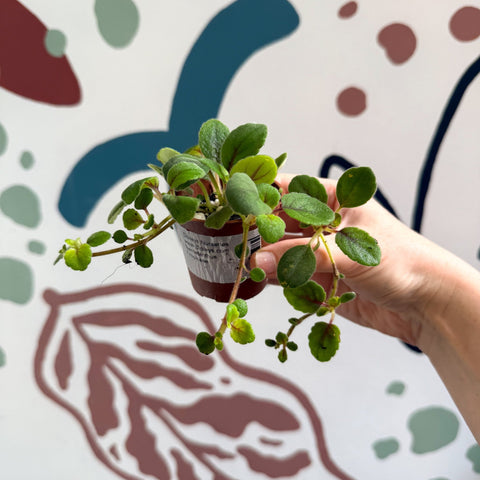
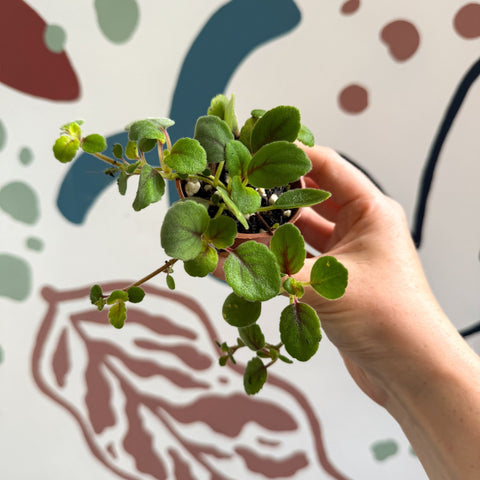
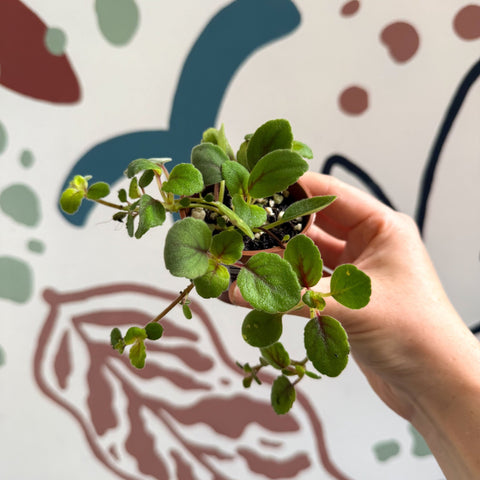
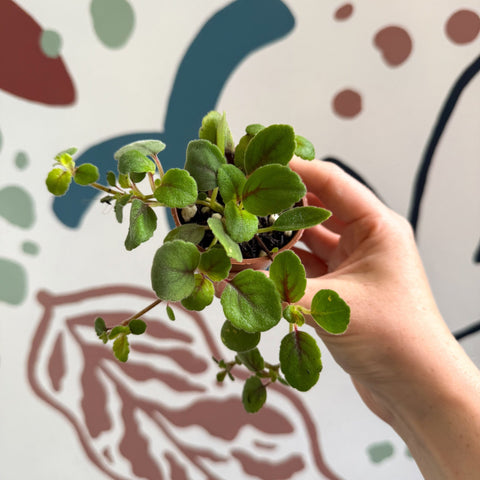
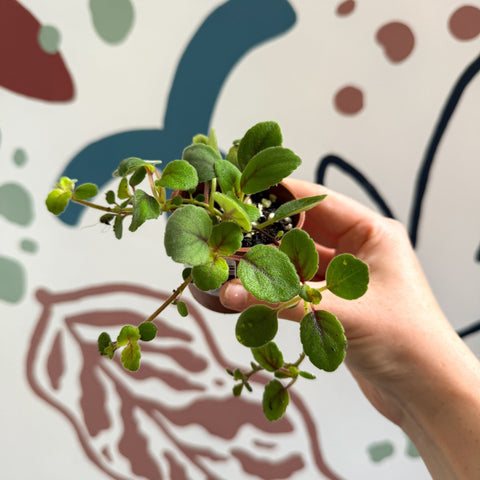
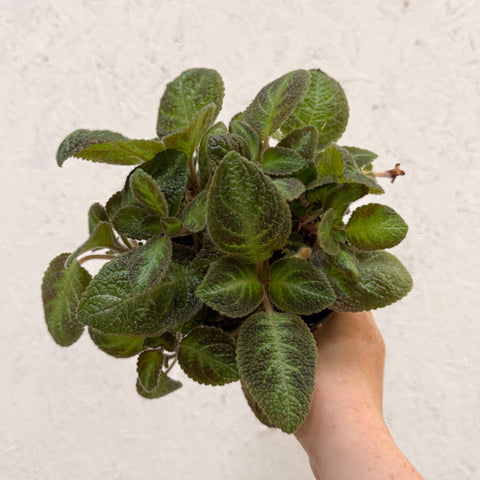
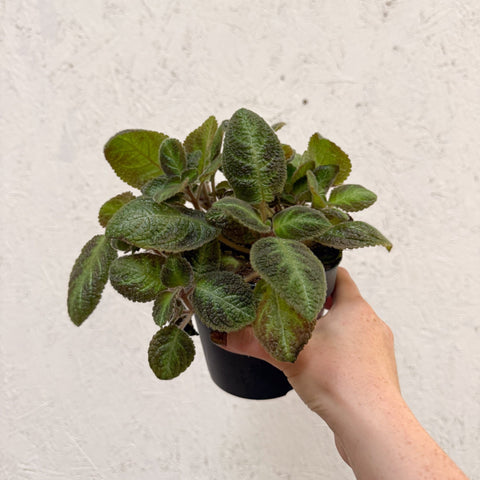
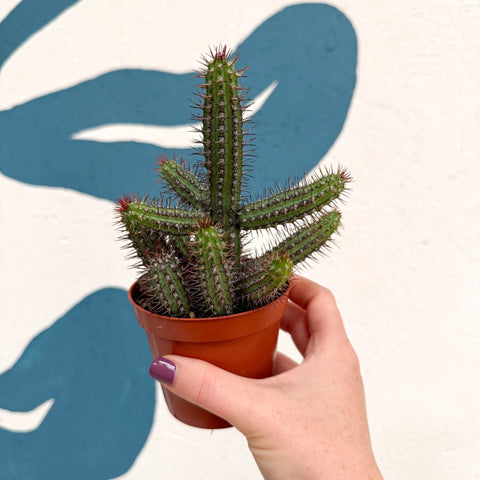
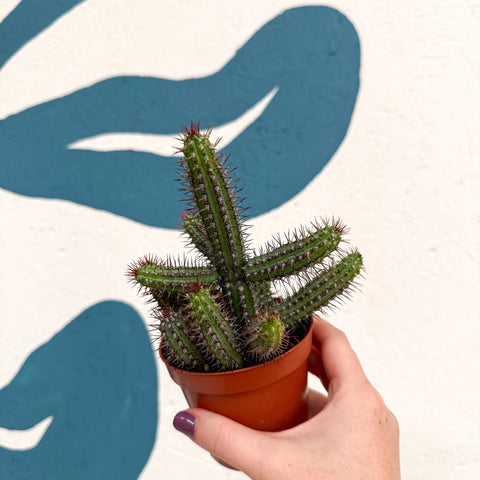
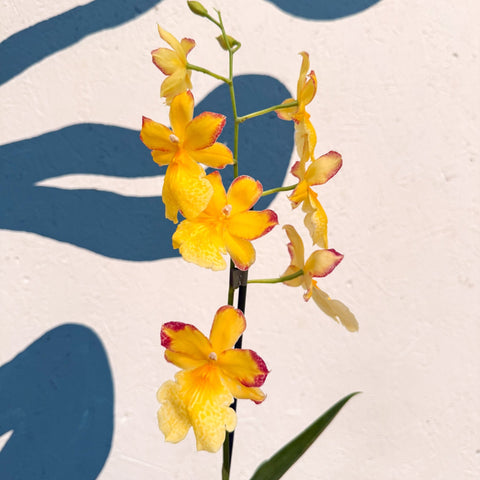
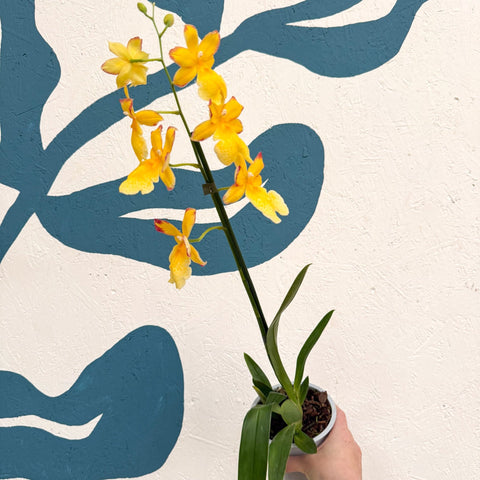
Una delicada planta colgante con hojas suaves y aterciopeladas y delicadas flores blancas, Alsobia dianthiflora es un encantador miembro de la familia de las violetas africanas. Sus flores con volantes y bordes de encaje florecen intermitentemente durante todo el año, a menudo con un ligero y dulce aroma. De crecimiento compacto, es ideal para pequeñas macetas colgantes, alféizares o terrarios con buena circulación de aire. Estas plantas no siempre llegarán florecidas.
Nombre científico
Alsobia dianthiflora (del latín Dianthus, “flor divina”, y flora, “flor” – en referencia a sus flores con volantes, parecidas a claveles)
Anteriormente agrupada bajo Episcia, Alsobia fue reclasificada en su propio género debido a sus distintas estructuras florales. Ambas pertenecen a la familia Gesneriaceae, que también incluye Saintpaulia (violetas africanas) y Aeschynanthus.
Nombre(s) común(es)
Flor de encaje, Enredadera de flor de encaje, Flor de encaje colgante
Origen
Nativa de América Central, particularmente México, Guatemala y Honduras – se encuentra típicamente en suelos de bosques sombreados y húmedos o como cubierta vegetal
Luz
Prefiere luz brillante e indirecta. Demasiado sol puede quemar las hojas, mientras que muy poca puede reducir la floración. Evite los rayos directos del mediodía.
Agua
Mantenga la tierra ligeramente húmeda durante la temporada de crecimiento – riegue cuando los primeros 1-2 cm se sientan secos. Reduzca el riego en invierno, pero no permita que la tierra se seque completamente. Use agua tibia.
Humedad
Disfruta de una humedad moderada a alta. Rocíe ocasionalmente o agrupe con otras plantas. Ideal para terrarios o espacios cerrados con buena circulación de aire.
Suelo
Use una mezcla ligera y aireada – el compost para violetas africanas o una mezcla de compost, perlita y un toque de corteza funciona bien. Asegure un excelente drenaje. Trasplante en primavera cada 1-2 años.
Alimento
Fertilice cada 4-6 semanas en primavera y verano con un fertilizante diluido para plantas de interior de uso general. Demasiado fertilizante puede reducir la floración.
Temperatura
Prefiere 18-24 °C. Evite las corrientes de aire frío y las temperaturas por debajo de los 12 °C.
Segura para mascotas
No tóxica – segura para mascotas y niños.
Consejos principales de Sprouts
Pellizque las puntas de crecimiento para fomentar una planta más llena y tupida y una mayor producción de flores. Evite mojar las hojas vellosas al regar para prevenir manchas y pudrición.
Extras
Esta planta se propaga fácilmente a partir de estolones (retoños) que enraízan en los nudos – perfecto para compartir con amigos o expandir su jungla interior.
¿Lo sabía?
Los bordes rizados de las flores se asemejan a encajes finos o adornos bordados – de ahí el nombre común “Flor de Encaje”.