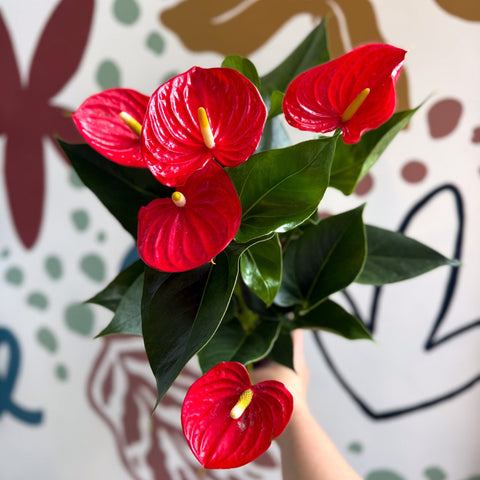
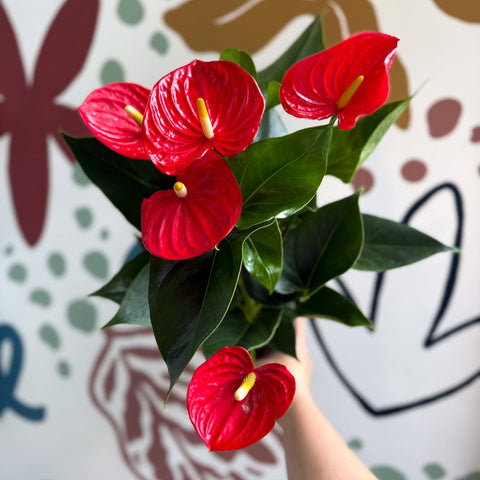
Con sus flores esculturales y cerosas y sus vibrantes espatas en forma de corazón, Anthurium 'Esudo' es una variedad destacada de la clásica flor de flamenco. Este cultivar produce flores brillantes y esculpidas en tonos que van del rosa coral al rojo, a menudo con una ondulación o una ola en la espata para añadir textura. Una hermosa manera de aportar color durante todo el año y elegancia tropical a su hogar.
Nombre científico
Anthurium andraeanum – cultivar: 'Esudo'
Sinónimos
A menudo aparece simplemente como Anthurium 'Esudo' en los listados comerciales
Nombre(s) común(es)
Anturio Esudo, Flor de flamenco, Hoja de encaje
Origen
Cultivar híbrido derivado de especies nativas de Colombia y Ecuador
Luz
Prefiere luz brillante e indirecta. Muy poca luz reducirá la floración, mientras que el sol directo fuerte puede quemar las hojas. Las ventanas orientadas al este o al norte son ideales.
Agua
Mantenga la tierra ligeramente húmeda pero no empapada. Riegue cuando los 2-3 cm superiores de la tierra se sientan secos. Reduzca ligeramente el riego en invierno.
Humedad
Prospera en alta humedad (60%+). Rocíe regularmente, use una bandeja de guijarros o colóquela cerca de un humidificador, especialmente en habitaciones con calefacción central.
Tierra
Prefiere una mezcla rica y aireada. Una mezcla de corteza de orquídea, perlita y turba o fibra de coco funciona bien para mantener las raíces contentas. Evite los suelos compactados.
Alimento
Fertilice cada 4-6 semanas durante la primavera y el verano con un fertilizante equilibrado para plantas de interior. Reduzca o pause la fertilización en otoño e invierno.
Temperatura
El rango ideal es de 18 a 26 °C. Manténgala alejada de las corrientes de aire frío y nunca deje que baje de los 13 °C.
Seguro para mascotas
Tóxico si se ingiere; manténgalo alejado de mascotas y niños pequeños.
Consejos principales de Sprouts
Limpie las hojas con un paño húmedo para mantenerlas brillantes y sin polvo; esto también ayuda a prevenir plagas. Si su anturio deja de florecer, puede necesitar más luz o un período de descanso corto con temperaturas ligeramente más frías.
Extras
Las flores pueden durar varias semanas y técnicamente no son flores, sino hojas modificadas llamadas espatas; las verdaderas flores crecen en la espiga central (espádice).
¿Sabía que?
El nombre Anthurium proviene del griego anthos (flor) y oura (cola), en referencia al largo espádice que sobresale de cada flor.