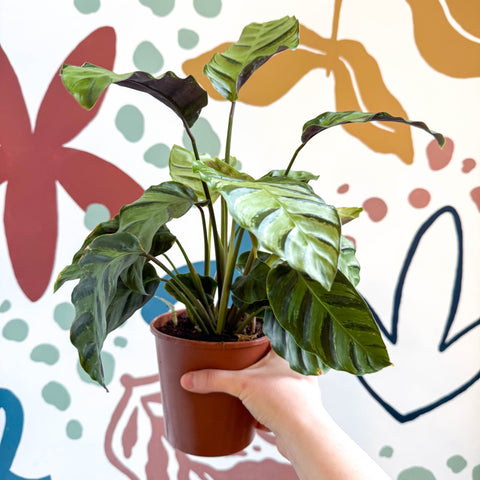
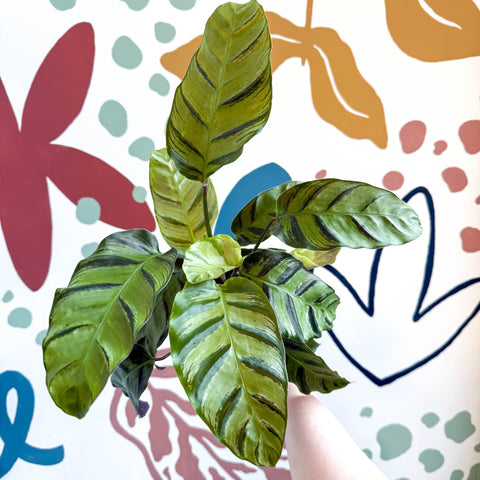
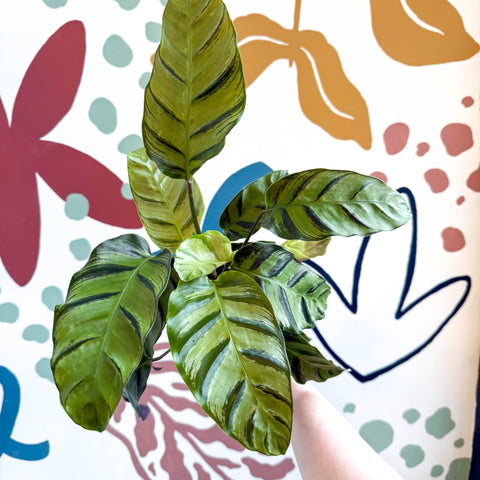
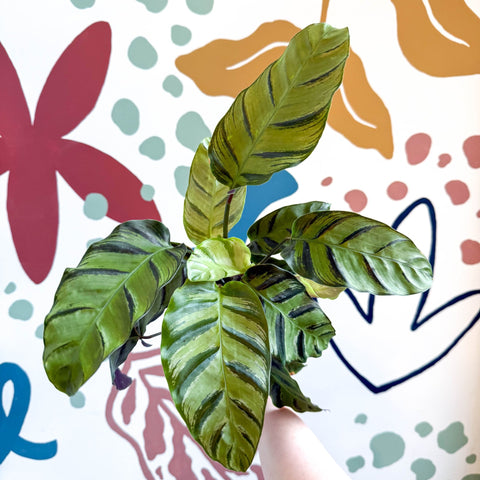
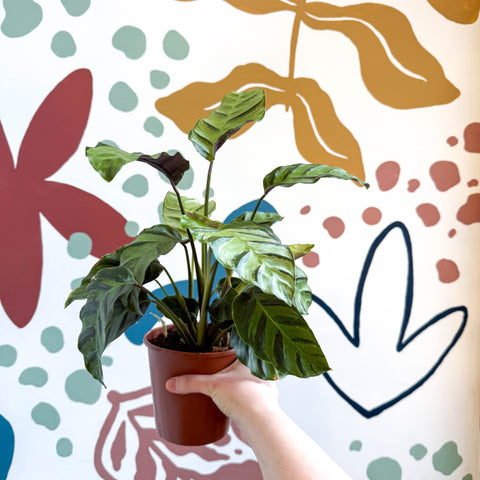
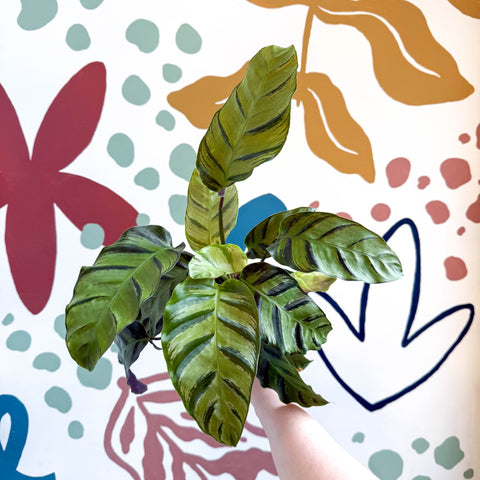
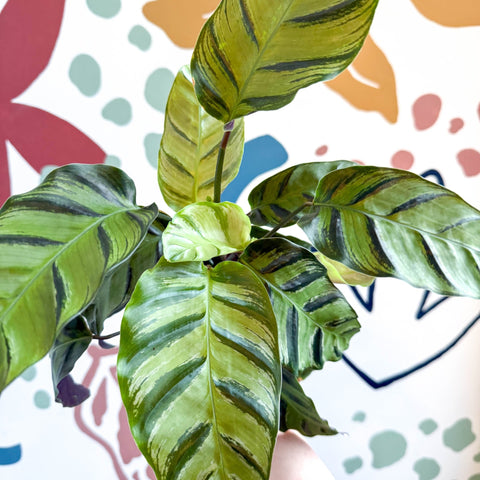
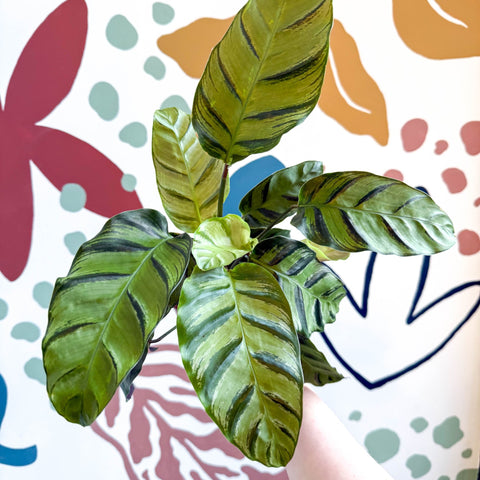
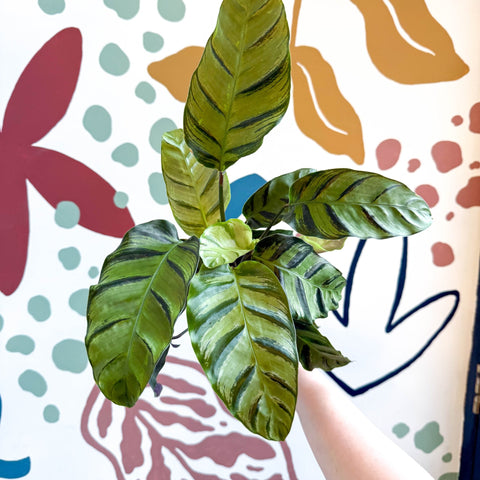
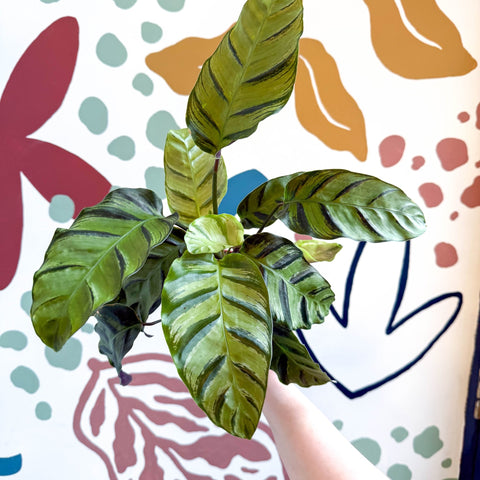
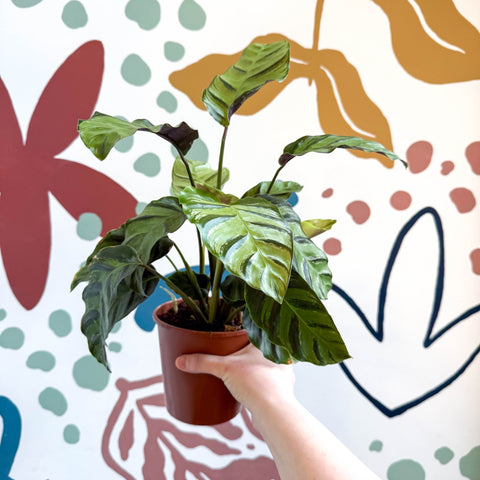
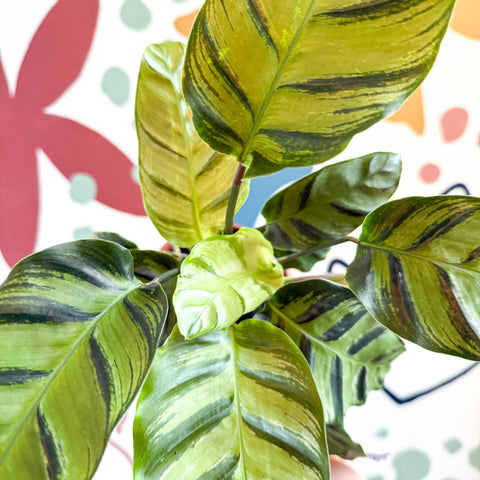
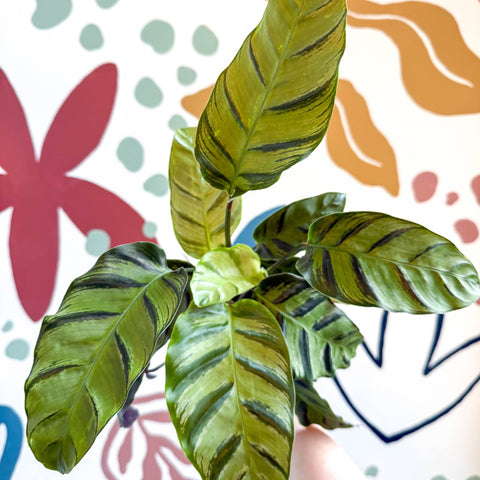
Esta Calathea es impresionante: su follaje parece irreal con pinceladas de color verde oscuro sobre las hojas de color verde pálido, más como una pintura que como un ser vivo. ¡Pero podemos garantizar que es una planta real y viva! Y podrás comprobarlo por ti mismo si la ves por la noche, cuando las hojas se pliegan hacia arriba en reacción a la poca luz, un proceso llamado "nictinastia" que ayuda a la planta a maximizar los niveles de luz diurna y proteger sus hojas durante la noche. A esta planta de selva tropical le encantará una humedad superior a la media, así que asegúrate de que esté en un lugar alejado del calor seco de un radiador y de la luz solar directa, que también puede quemar las hojas. Un baño cálido y bien utilizado podría ser el lugar perfecto para que esta planta se mantenga sana y deslumbrante durante todo el año.
Nombre científico
Goeppertia louisae 'Misto' (planta de Göppert, especie de Louise, cultivar: mixto)
Sinónimos: Calathea louisae ‘Misto’
Conocida como Calathea louisae desde su primera clasificación en 1908, un análisis del siglo XXI la colocó en el género Goeppertia en 2012.
Nombre común
Calathea Misto, Planta de la oración
Origen
Nativa de la selva tropical del sureste de Brasil, alrededor de Río de Janeiro
Luz
Prospera con luz brillante e indirecta. Puede tolerar condiciones de poca luz, pero puede crecer más lentamente. Evita la luz solar directa, que puede quemar las delicadas hojas y desvanecer su variegación.
Agua
Deja que la pulgada superior de la tierra se seque entre riegos; a esta planta le gusta la humedad constante en la tierra. Si es posible, usa agua de lluvia en lugar de agua del grifo, o al menos deja reposar el agua del grifo durante 24 horas para que los químicos se asienten. Riega con agua tibia para evitar conmocionar a la planta.
Humedad
La alta humedad es clave para esta planta, idealmente alrededor del 60-80% de humedad. Puedes mantenerla en un grupo de plantas o colocarla en una bandeja de humedad para aumentar la humedad local alrededor de la planta. Preferirá estar lejos de los calentadores en funcionamiento que la secarían, y puede prosperar en un baño luminoso donde la humedad tiende a ser mayor.
Tierra
Planta en tierra de drenaje rápido, pero que retenga la humedad. Una mezcla con corteza o perlita adicionales sería ideal. Trasplanta cada dos años en primavera y riega un día antes para combatir el shock del trasplante.
Alimento
Fertiliza cada cuatro riegos en primavera y verano mientras la planta crece más; reduce a cada seis en invierno cuando el crecimiento disminuye.
Temperatura
La temperatura ideal es de alrededor de 20-26°C; asegúrate de que no baje de 12°C en invierno.
Segura para mascotas
Sí, ¡pero masticar demasiado no será bueno para las mascotas, los humanos pequeños ni la planta!
Consejos principales de Sprouts
Las Calatheas pueden ser delicadas, así que asegúrate de elegir bien su ubicación para mantenerla con una humedad superior a la media. Para que las hojas luzcan lo mejor posible, límpialas suavemente con un paño húmedo para eliminar el polvo y mejorar la fotosíntesis. Evita colocarla cerca de rejillas de calefacción o aires acondicionados, ya que las temperaturas fluctuantes pueden estresar la planta y secar el aire.
Extras
A lo largo de las raíces de la Calathea crecerán pequeños nódulos hinchados; esto es saludable y se utilizan para almacenar agua y nutrientes, ¡así que no los cortes cuando la trasplantes!