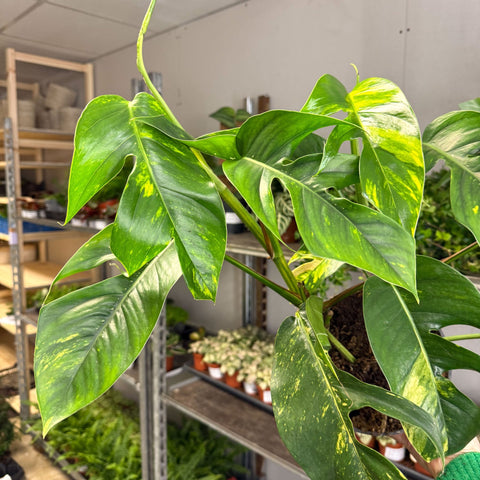
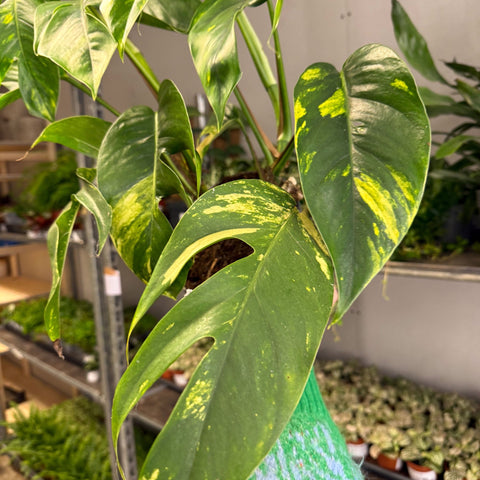
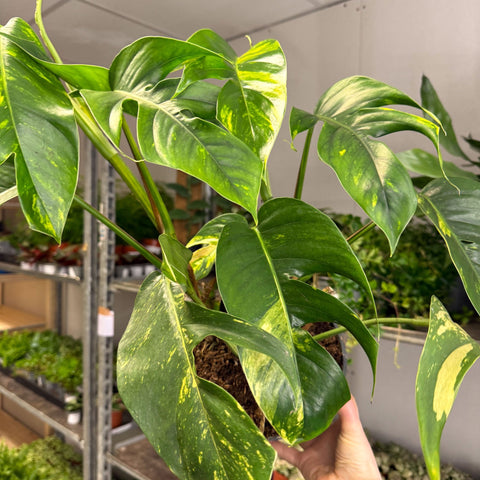
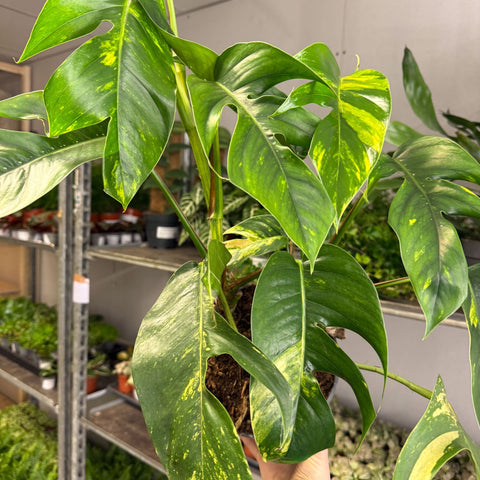
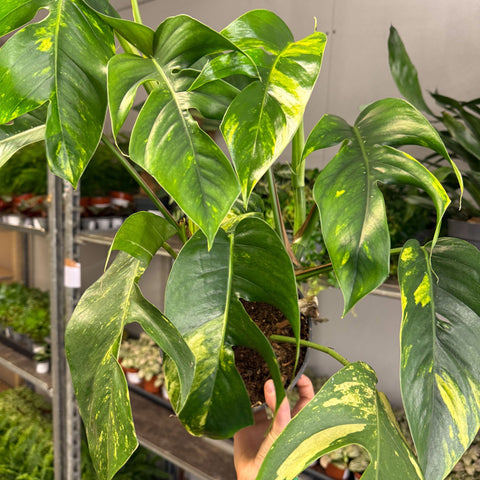
Una llamativa forma dorada del clásico pothos trepador, Epipremnum pinnatum 'Cintho Goldfinger' produce hojas alargadas y puntiagudas salpicadas de vibrantes tonos chartreuse y lima. A medida que la planta madura y trepa, el follaje puede desarrollar dramáticas hendiduras y fenestraciones, dándole una apariencia más arquitectónica y tropical. Fácil de cuidar y adaptable, esta variedad es ideal para estanterías, tutores de musgo o colgando de una maceta colgante.
Nombre científico
Epipremnum pinnatum (sobre troncos de árboles, pinnado) ‘Cintho Goldfinger’
Anteriormente confundido y a menudo vendido como Scindapsus o Pothos. El género Epipremnum fue formalmente separado de Scindapsus basándose en la estructura floral y las diferencias botánicas.
Sinónimos
A menudo etiquetado incorrectamente como Pothos Dorado o simplemente Pothos (aunque el verdadero Pothos Dorado es Epipremnum aureum).
Nombre común
Pothos Goldfinger, Pothos Cintho Goldfinger, Pothos trepador
Origen
La especie Epipremnum pinnatum es nativa del sudeste asiático, Papúa Nueva Guinea y el norte de Australia. Este cultivar ha sido seleccionado artificialmente por su distintiva coloración dorada.
Luz
Prefiere luz brillante e indirecta para mantener su coloración vibrante. Tolerará niveles de luz moderados, pero el crecimiento puede ralentizarse y la variegación puede volverse menos intensa. Evite la luz solar directa y fuerte del mediodía, ya que puede quemar las hojas.
Agua
Permita que el tercio o la mitad superior de la tierra se seque entre riegos. Riegue a fondo, permitiendo que el exceso se escurra, y nunca deje la planta en agua. Reduzca la frecuencia de riego durante el otoño y el invierno, cuando el crecimiento se ralentiza de forma natural.
Humedad
Disfruta de una humedad moderada a alta, pero se adapta bien a las condiciones promedio de los hogares del Reino Unido. Si su hogar es particularmente seco, especialmente en invierno con la calefacción central, considere una bandeja con guijarros o agruparla con otras plantas.
Tierra
Utilice un sustrato para plantas de interior con buen drenaje y agregue corteza o perlita para la circulación de aire alrededor de las raíces. Trasplante cada 1-2 años en primavera si las raíces comienzan a llenar la maceta.
Alimento
Fertilice cada 2-4 riegos durante la temporada de crecimiento (primavera y verano) con un fertilizante líquido equilibrado para plantas de interior. Reduzca la fertilización en otoño y suspéndala en invierno.
Temperatura
El rango de temperatura ideal es de 18-27°C. Evite temperaturas inferiores a 12-15°C y protéjala de las corrientes de aire frío.
Seguro para mascotas
Tóxico si se ingiere debido a los cristales de oxalato de calcio. Manténgase fuera del alcance de mascotas y niños.
Consejos principales de Sprouts
Ofrézcale algo para trepar –como un poste de musgo o un enrejado– para fomentar la aparición de hojas más grandes y maduras con hendiduras dramáticas con el tiempo.