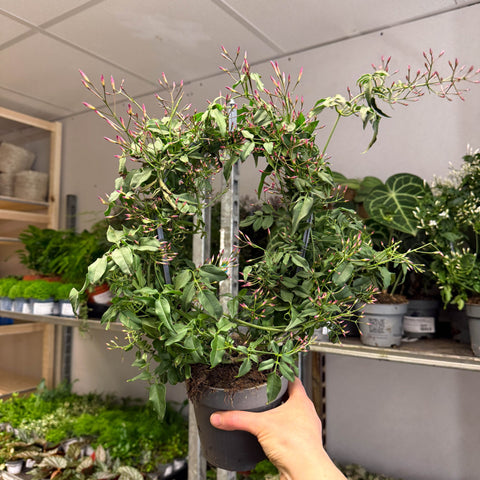
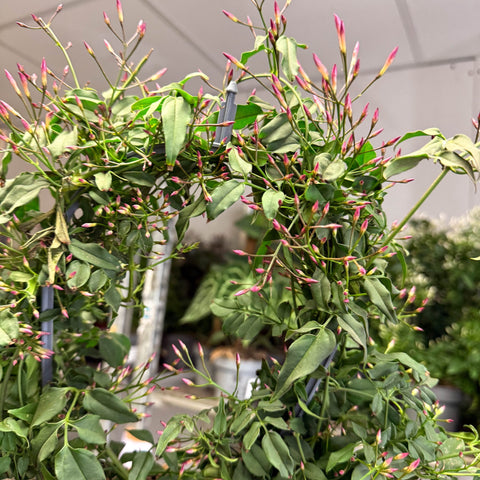
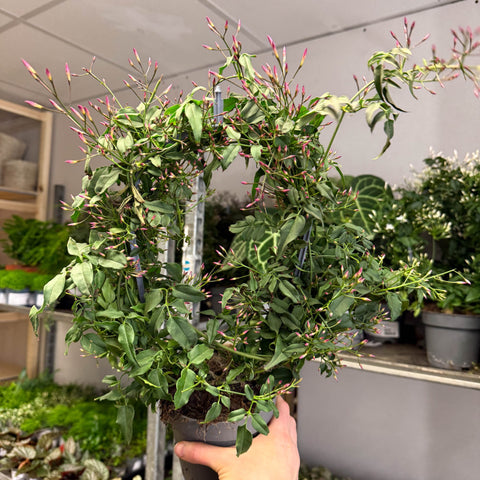
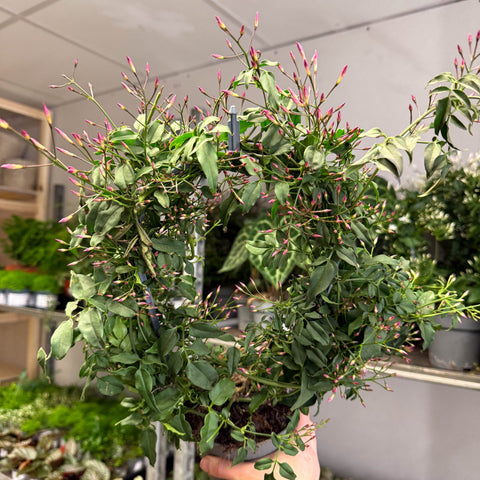
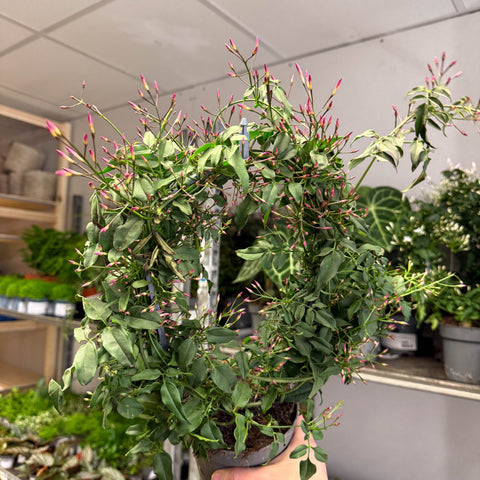
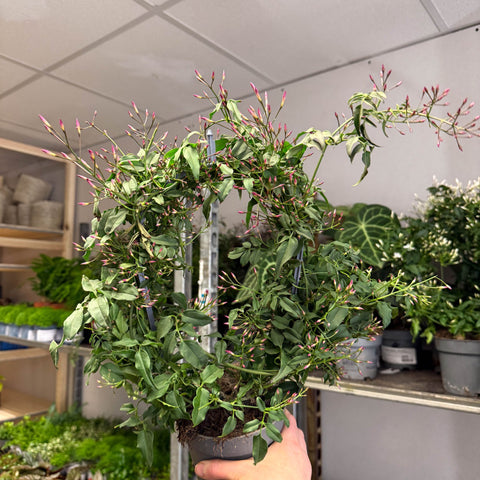
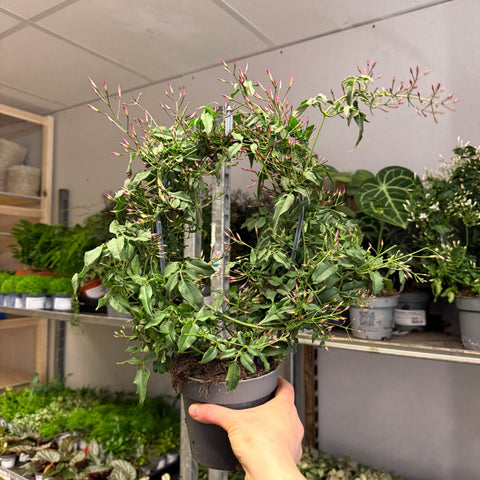
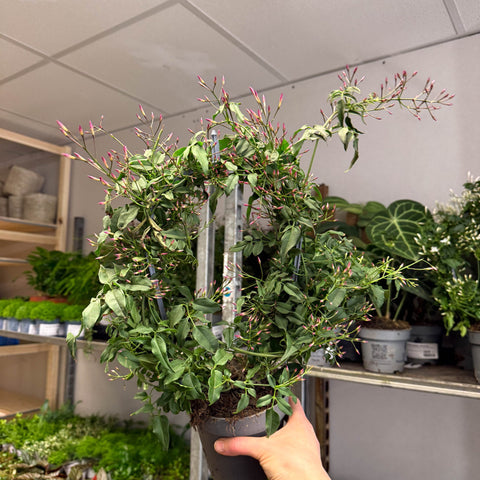
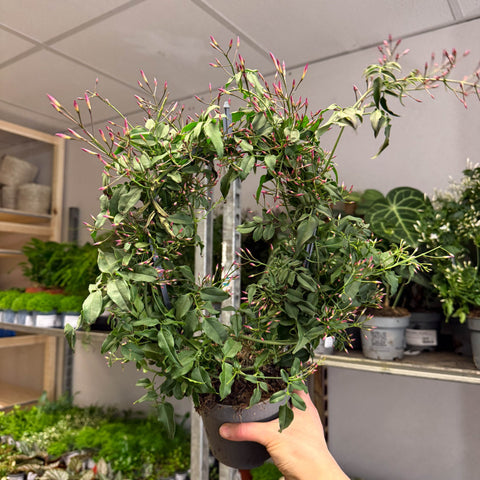
Esta trepadora de hermosa fragancia es un cultivar seleccionado del jazmín de muchas flores, cultivado por sus capullos de color rosa oscuro y su excepcional y abundante floración. Las flores en forma de estrella, muy fragantes, se abren blancas, creando un llamativo contraste con los capullos de color rosa oscuro y el brillante follaje verde. Ideal para espacios interiores luminosos o invernaderos, este jazmín de rápido crecimiento aporta tanto impacto visual como una increíble fragancia, especialmente a finales del invierno y principios de la primavera.
Nombre científico
Jasminum polyanthum 'Passion' (jazmín de muchas flores, cultivar: Passion)
Jasminum polyanthum fue descrito por Adrien René Franchet a finales del siglo XIX. El cultivar 'Passion' es una selección moderna creada para obtener capullos de color rosa más oscuro y un mayor número de capullos florales que las formas estándar.
Nombre común
Jazmín de muchas flores, Jazmín de capullos rosados
Origen
Especie nativa del suroeste de China; cultivar seleccionado por su rendimiento ornamental
Luz
Prefiere luz brillante e indirecta. Puede tolerar algo de sol directo suave, especialmente el sol de la mañana, lo que ayuda a fomentar la formación de capullos. La luz baja puede reducir la floración.
Agua
Riegue regularmente durante el período de crecimiento y floración, permitiendo que los primeros centímetros de tierra se sequen entre riegos. Reduzca el riego después de la floración y en invierno, pero no permita que el sustrato se seque por completo.
Humedad
Disfruta de una humedad moderada. La humedad normal del hogar suele ser suficiente, pero la pulverización ocasional puede ayudar durante la floración, especialmente en habitaciones con calefacción central.
Tierra
Utilice un sustrato para plantas de interior fértil y con buen drenaje. Añadir una pequeña cantidad de gravilla o perlita ayudará a prevenir el encharcamiento. Trasplante en primavera si las raíces se congestionan.
Alimento
Fertilice cada 2 o 3 riegos durante el crecimiento activo y la floración con un fertilizante líquido equilibrado. Deje de fertilizar una vez que termine la floración y reanude en primavera.
Temperatura
Prefiere temperaturas interiores más frescas de 12 a 18 °C, especialmente para fomentar la floración. Evite colocarla cerca de radiadores o corrientes de aire frío.
Seguro para mascotas
Tóxico si se ingiere; manténgase fuera del alcance de mascotas y niños.
Los mejores consejos de Sprouts
Las temperaturas frescas y la luz brillante son clave para una gran cantidad de flores; si su jazmín tiene muchas hojas pero no florece, generalmente es porque hace demasiado calor o está demasiado sombreado.
Extras
Este jazmín se beneficia de un soporte como un aro o enrejado y se puede podar ligeramente después de la floración para mantener la forma y fomentar un crecimiento más tupido.
¿Sabías que?
Las flores de Jasminum polyanthum se encuentran entre las más perfumadas de todos los jazmines, a menudo llenando una habitación entera de fragancia cuando están en flor.