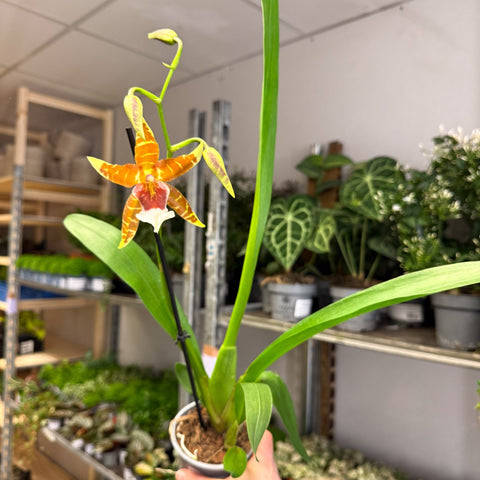
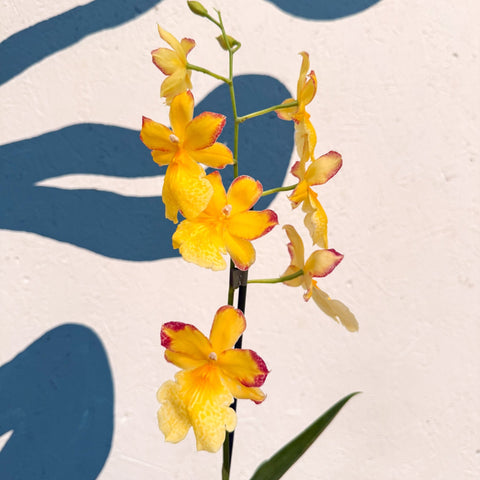
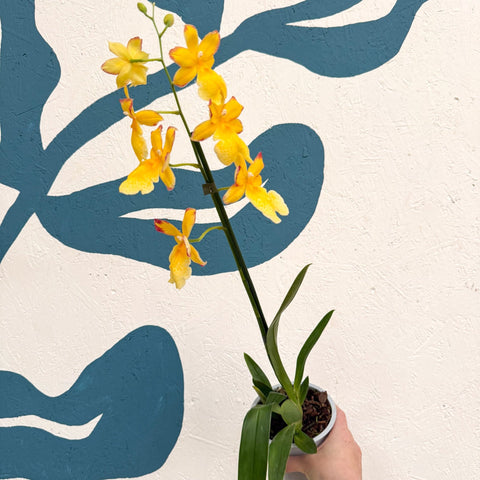
Grandes flores pictóricas en tonos cobre cálidos con intrincadas rayas hacen de esta orquídea Cambria una planta verdaderamente llamativa. Estas orquídeas pertenecen a la alianza Oncidium y fueron históricamente agrupadas bajo Odontoglossum, un género valorado por sus especies de montaña de crecimiento en climas frescos. Sus dramáticas flores pueden durar muchas semanas, convirtiéndolas en una planta de interior duradera y gratificante.
Nombre Científico
Híbrido de la alianza Oncidium (acumulado como una pequeña hinchazón, refiriéndose a los crecimientos en forma de bulbo)
Muchas plantas vendidas anteriormente como Odontoglossum fueron reclasificadas como Oncidium tras revisiones taxonómicas a principios de los años 2000.
Sinónimos
Anteriormente vendidas como híbridos de Odontoglossum
A menudo etiquetadas en el comercio como “Cambria”
Nombre Común
Orquídea Cambria, Orquídea Tipo Odontoglossum
Origen
Orquídeas híbridas derivadas de especies nativas de los bosques nubosos de América Central y del Sur, particularmente Colombia y Ecuador.
Luz
La luz brillante e indirecta es ideal. Una posición cerca de una ventana orientada al este o al norte funciona bien. Evite el sol fuerte del mediodía, que puede quemar las hojas. Si las hojas se vuelven de un verde muy oscuro, la planta podría necesitar un poco más de luz.
Agua
Riegue a fondo cuando la mitad superior de la mezcla para macetas se sienta seca. Estas orquídeas prefieren secarse ligeramente entre riegos, pero no deben permanecer completamente secas por períodos prolongados. Reduzca el riego en invierno cuando el crecimiento se ralentiza. Nunca permita que la maceta se asiente en agua.
Humedad
Prefiere humedad moderada. Una bandeja con guijarros y agua debajo de la maceta puede ayudar en hogares más secos, especialmente durante la temporada de calefacción invernal. Evite rociar directamente en el centro de la planta.
Sustrato
Utilice una mezcla especializada de corteza para orquídeas que permita una buena circulación de aire alrededor de las raíces. Trasplante cada 2-3 años después de la floración, o cuando la corteza comience a descomponerse.
Alimento
Fertilice con un fertilizante balanceado para orquídeas cada 2-3 riegos durante la temporada de crecimiento. Reduzca la fertilización en invierno.
Temperatura
Prefiere temperaturas domésticas más frescas entre 16 y 22°C. Evite colocar cerca de radiadores o corrientes de aire frío.
Seguro para mascotas
Generalmente considerado no tóxico, pero no está destinado al consumo.
Consejos principales de Sprouts
Después de la floración, corte el tallo gastado hasta la base y continúe cuidando la planta como de costumbre. Con buena luz y cuidados constantes, crecerá un nuevo brote desde la base y producirá el siguiente tallo floral.
Extras
A diferencia de las orquídeas polilla, las Cambrias producen pseudobulbos, pequeños crecimientos hinchados en la base de las hojas que almacenan agua y energía.
¿Sabías que?
Odontoglossum significa "lengua de diente" en griego, refiriéndose al callo en forma de diente que se encuentra en el labio de las especies originales.