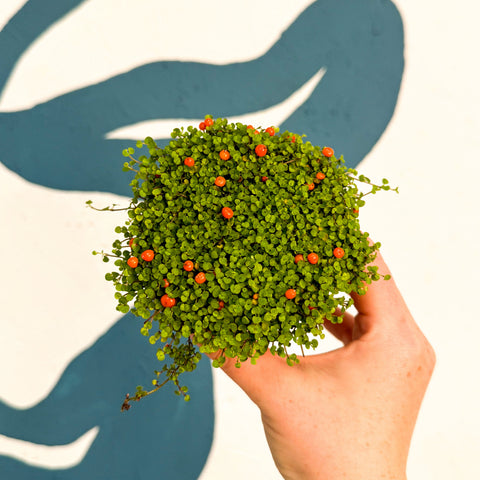
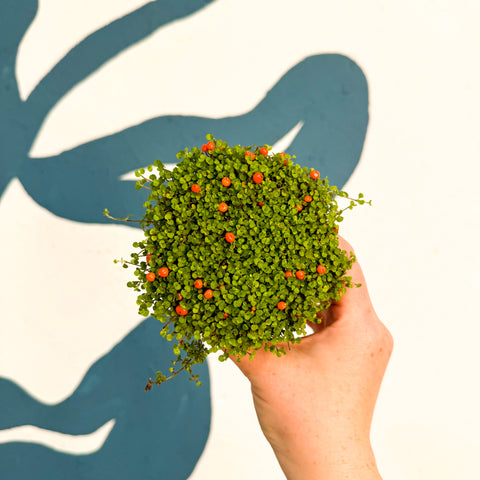
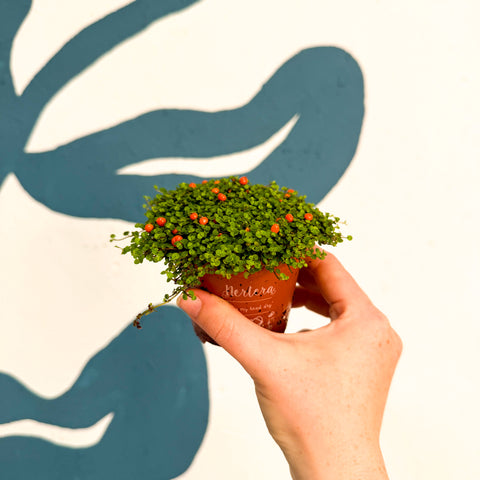
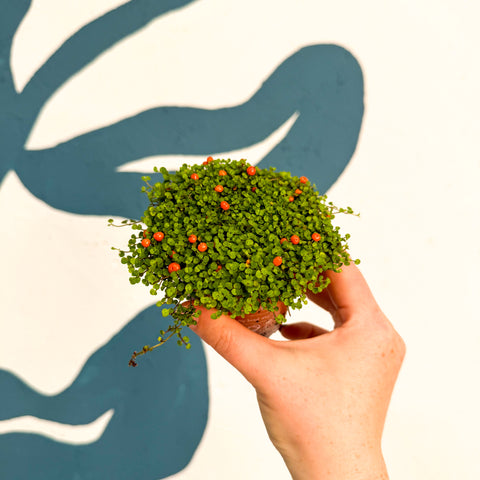
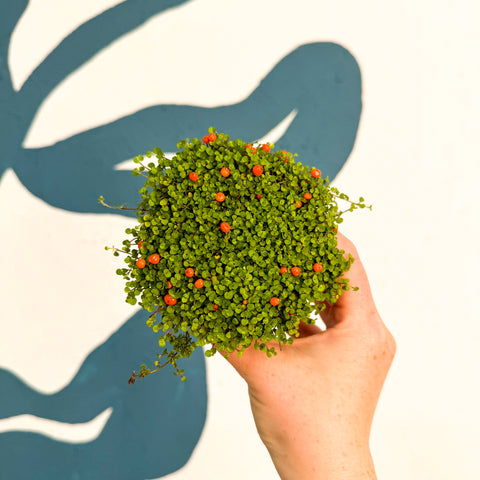
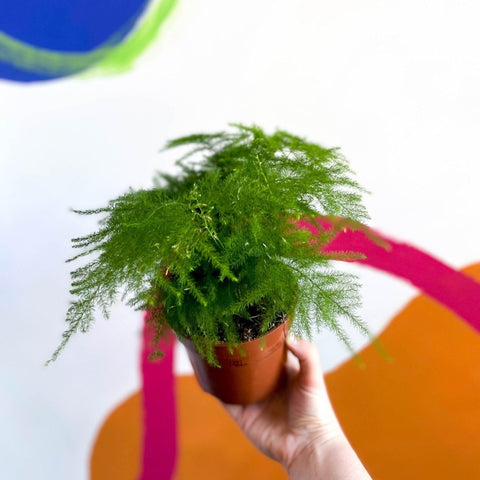
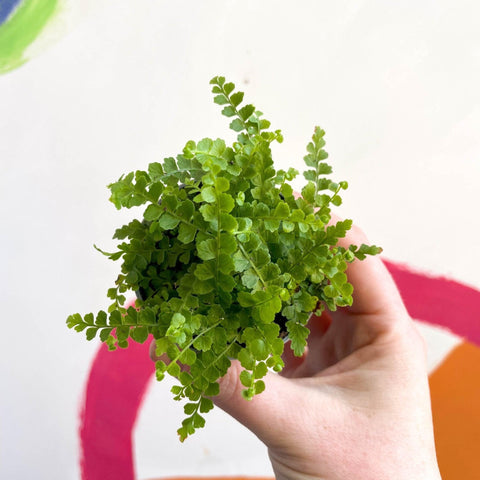
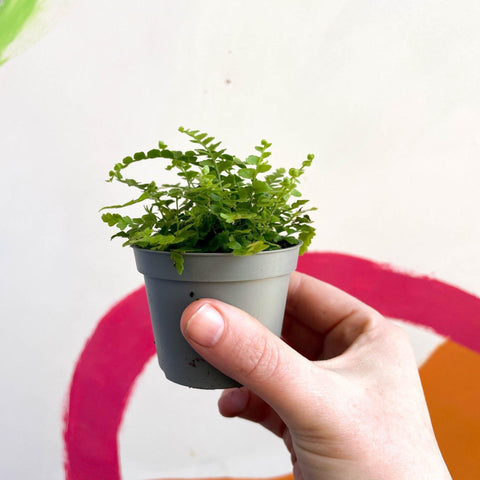
La Nertera granadensis 'Astrid' forma una mata baja y compacta de diminutas hojas verdes que se cubren de brillantes bayas anaranjadas parecidas a cuentas durante el verano y principios de otoño. Compacta, llamativa y una verdadera pieza de conversación, es ideal para terrarios, estanterías y pequeñas macetas decorativas.
Nombre científico
Nertera granadensis ‘Astrid’ (del latín granadensis, que significa “de Granada/región de Granada”)
Originalmente descrita bajo el género Nertera por el botánico Hipólito Ruiz López (finales del siglo XVIII). La especie ha permanecido consistentemente dentro de Nertera, con cultivares como 'Astrid' seleccionados para una mayor producción de bayas.
Sinónimos
Nertera depressa, Nertera balfouriana (nombres antiguos o mal aplicados que a veces se ven en horticultura)
Nombre(s) común(es)
Planta de cuentas, Planta de cuentas de coral, Musgo de coral, Planta de alfiletero
(Nota: a veces se comercializa como "Planta de café", lo cual es engañoso y no es botánicamente preciso).
Origen
Nativa de América Central y del Sur, particularmente Colombia, Ecuador, Perú y Chile, a menudo se encuentra en suelos de bosques frescos, sombreados y húmedos, y en regiones de tierras altas.
Luz
Luz brillante e indirecta. Evita el sol directo, que quema las hojas y las bayas. Demasiada poca luz reducirá la producción de bayas y causará un hábito de crecimiento más suelto y menos compacto.
Agua
Mantén la tierra ligeramente y constantemente húmeda, nunca empapada.
Permite que solo la superficie superior se seque antes de volver a regar.
Reduce ligeramente en invierno, pero no dejes que la planta se seque completamente, ya que puede colapsar rápidamente si se riega insuficientemente.
Humedad
La alta humedad es esencial. Busca un 60-80%.
Pulveriza alrededor (no directamente sobre las bayas), usa una bandeja con guijarros o colócala en una habitación naturalmente húmeda como un baño. Excelente para terrarios cerrados o semicerrados.
Suelo
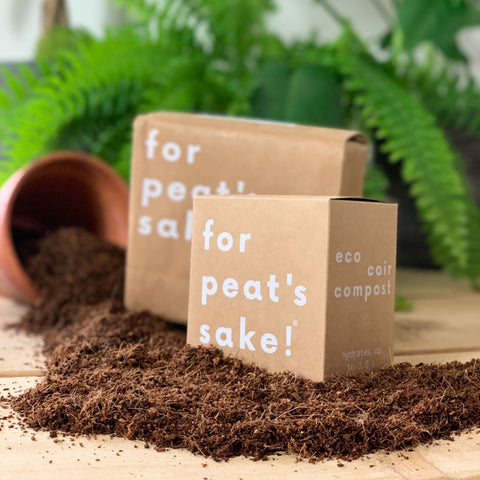
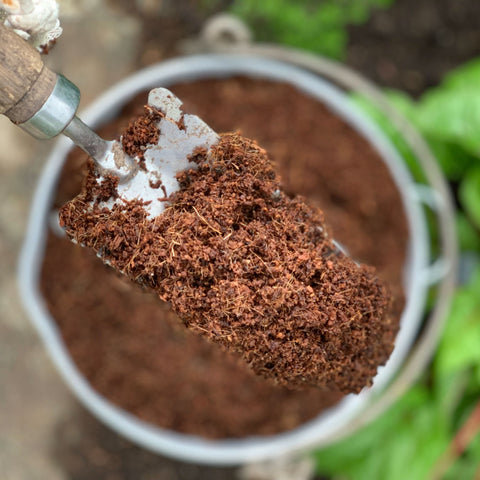
Una mezcla ligera, aireada y que retenga la humedad es ideal. Elige un sustrato multiusos sin turba con perlita añadida para el drenaje. A la planta le gustan las macetas poco profundas para mantener una humedad uniforme.
Alimento
Fertiliza con moderación durante la primavera y el verano —cada 4-6 semanas— con un fertilizante líquido equilibrado a media concentración. Evita fertilizar en invierno.
Temperatura
Prefiere temperaturas frescas-moderadas de 12-18°C.
Evita las olas de calor o colocarla cerca de radiadores; las bayas caen prematuramente si las temperaturas superan los 24°C.
Seguro para mascotas
Ligeramente tóxico si se ingiere. Mantener alejado de mascotas y niños.
Consejo superior de Sprouts
Después de la temporada de bayas, poda ligeramente para mantener la planta compacta; esto fomenta un crecimiento fresco y denso y ayuda a la producción de bayas del próximo año.
Extras
Las bayas suelen aparecer a mediados o finales del verano y duran hasta el otoño. Son delicadas y pueden caerse si la planta se mueve o se deja secar.
¿Sabías que?
En sus hábitats nativos, Nertera granadensis forma alfombras naturales en los suelos sombreados de los bosques, con las bayas actuando como una importante fuente de alimento para pequeños pájaros e insectos.