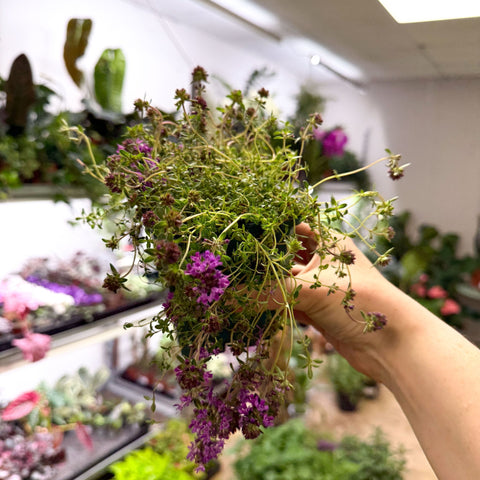
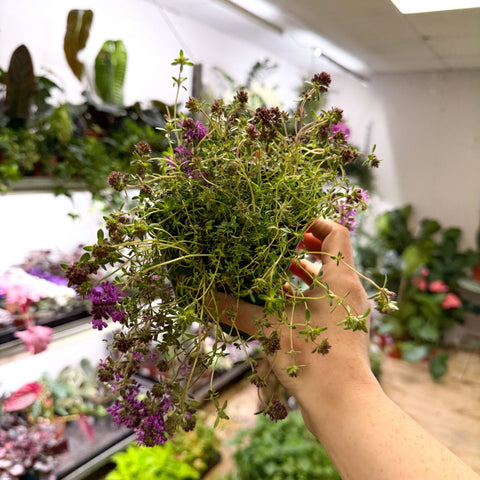
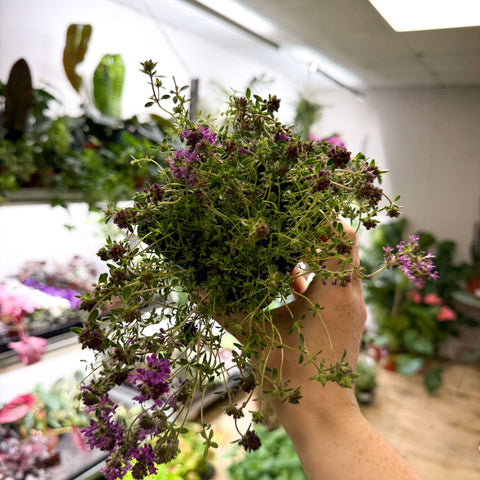
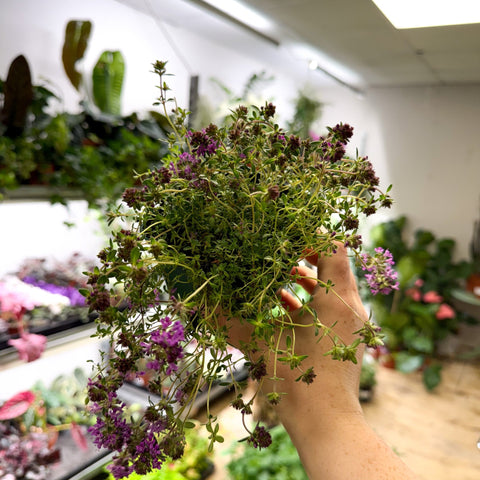
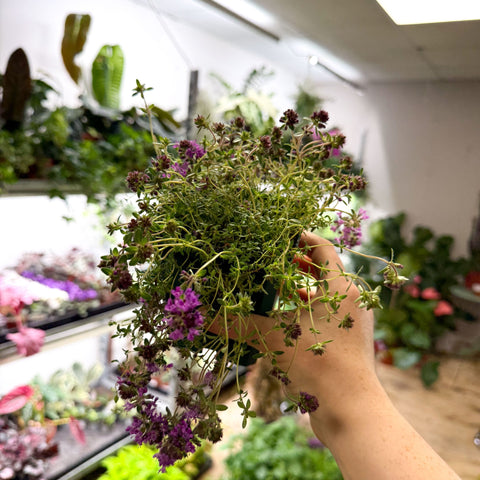
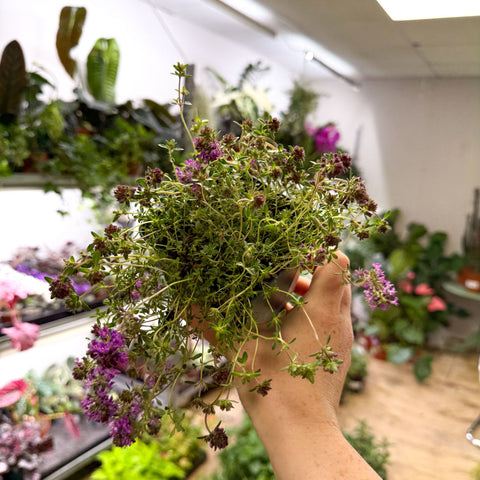
Este tomillo de bajo crecimiento y forma de alfombra produce una capa de pequeñas hojas aromáticas cubiertas de vibrantes flores de color carmesí-rosa durante el verano. Thymus serpyllum 'Coccineus' es una excelente planta cubresuelos, que prospera en bordes soleados, jardines de grava, rocallas, entre adoquines y esquemas de plantación amigables con la vida silvestre. Cuando está en flor, crea una exhibición colorida que atrae a una gran cantidad de insectos polinizadores.
Thymus serpyllum 'Coccineus', comúnmente conocido como tomillo rastrero rojo, es valorado por su tolerancia a la sequía, su follaje perenne y su capacidad para prosperar en condiciones desafiantes y secas. Sus hojas fragantes liberan un agradable aroma cuando se pisan o se rozan, lo que lo hace particularmente popular para plantar a lo largo de senderos y entre adoquines.
Perenne
Perenne, Cubresuelos, Aromático, Amigable con los Polinizadores
Flores: de junio a agosto
Follaje: todo el año
Nombre científico
Thymus serpyllum 'Coccineus' (tomillo rastrero carmesí)
Sinónimos
A veces se vende como Thymus praecox 'Coccineus', aunque Thymus serpyllum 'Coccineus' es el nombre más comúnmente utilizado en el cultivo.
Nombre común
Tomillo rastrero rojo
Tomillo rastrero
Tomillo silvestre
Origen
La especie Thymus serpyllum es nativa de gran parte de Europa, incluido el Reino Unido, donde crece naturalmente en pastizales, páramos, laderas rocosas y zonas costeras. 'Coccineus' es una variedad cultivada seleccionada por el color vivo de sus flores.
Consejos de poda
Recortar ligeramente después de la floración para mantener una forma ordenada y compacta y fomentar un crecimiento denso. Evitar cortar los tallos leñosos viejos.
Valor para la vida silvestre
Una planta excepcional para los polinizadores. Las flores ricas en néctar atraen abejas, abejorros, mariposas, sírfidos y muchos otros insectos beneficiosos durante todo el verano.
Posicionamiento
Prospera a pleno sol y es ideal para jardines de grava, rocallas, arriates alpinos, jardines silvestres, techos verdes y para plantar entre adoquines. Requiere una posición abierta y soleada para una mejor floración.
Agua
Regar regularmente durante el establecimiento. Una vez establecido, es muy tolerante a la sequía y generalmente solo requiere riego durante períodos prolongados de sequía.
Suelo
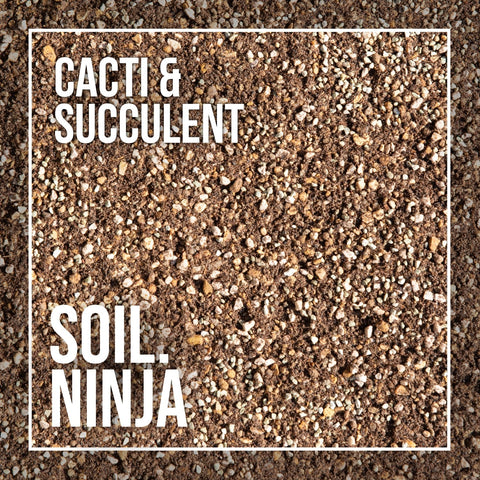
Prefiere suelos con buen drenaje y se desarrolla mejor en condiciones arenosas, calcáreas o con gravilla. Evitar suelos pesados y húmedos, especialmente durante el invierno.
Alimento
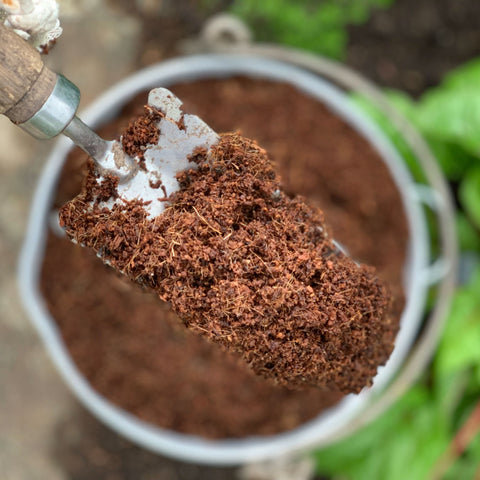
Requiere muy poca fertilización. Una ligera aplicación de compost de jardín en primavera suele ser suficiente. El exceso de fertilizante puede reducir la floración y provocar un crecimiento blando.
Seguro para mascotas
Generalmente considerado no tóxico para gatos, perros y caballos.
Consejos principales de Sprouts
Plantar entre adoquines o a lo largo del borde de un camino donde el follaje aromático se pueda disfrutar cada vez que se roza o se pisa suavemente.
¿Sabías que?
El nombre del cultivar Coccineus proviene de la palabra latina "scarlet" o "crimson", en referencia a su vibrante color de flor. El tomillo silvestre ha sido valorado durante siglos tanto por los jardineros como por la vida silvestre, proporcionando una de las mejores fuentes de néctar para muchas especies de abejas.