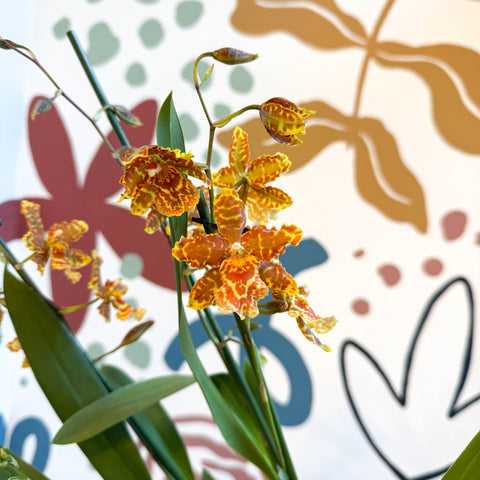
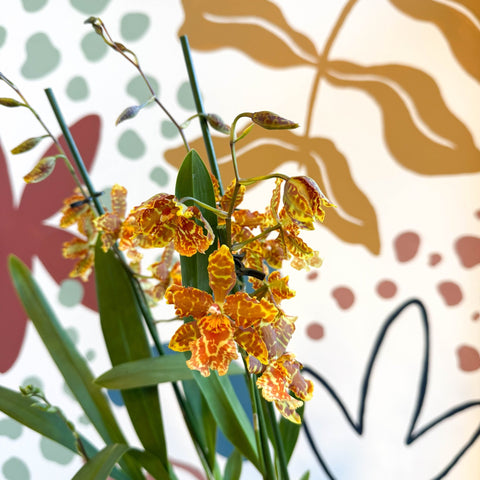
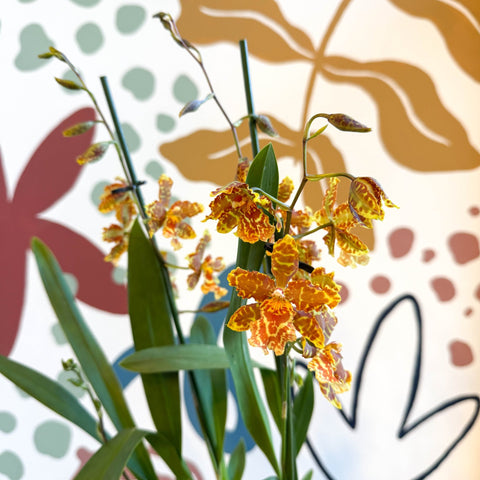
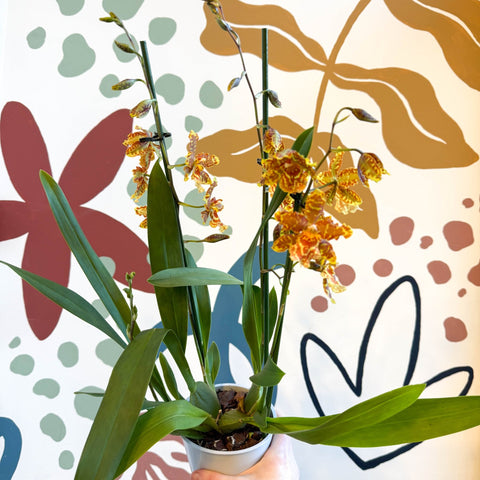
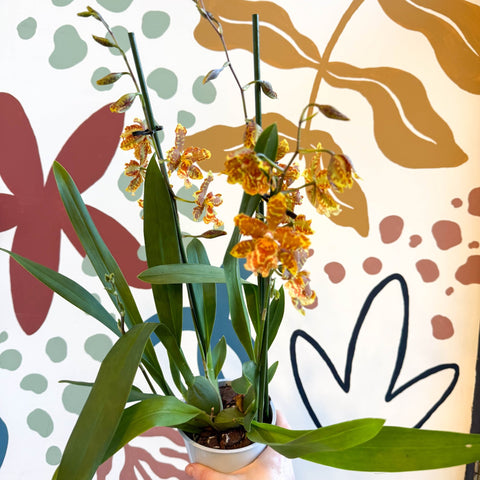
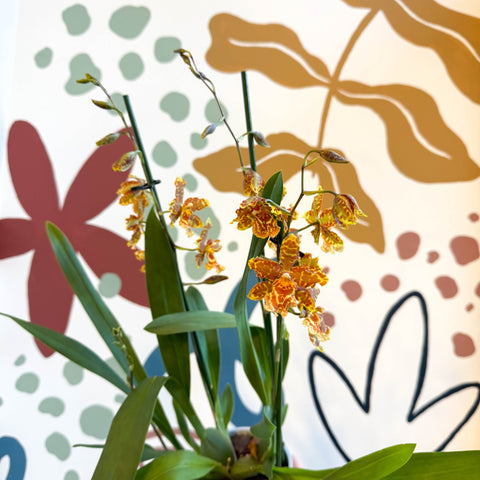
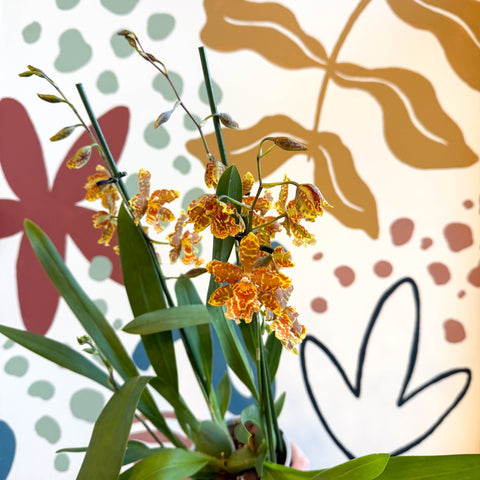
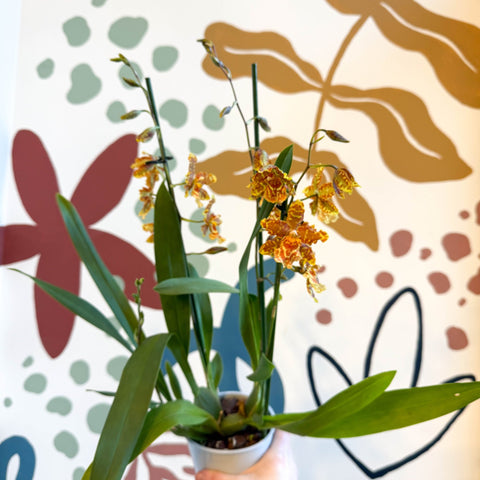
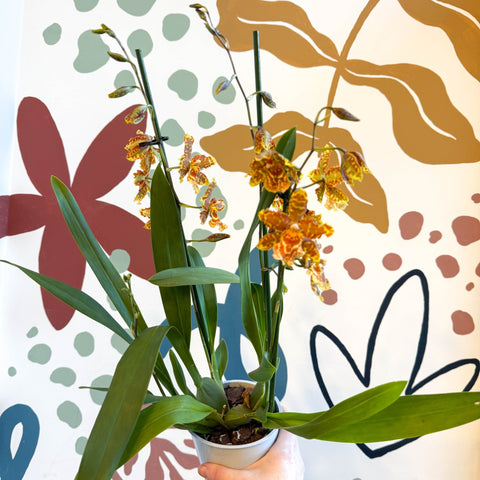
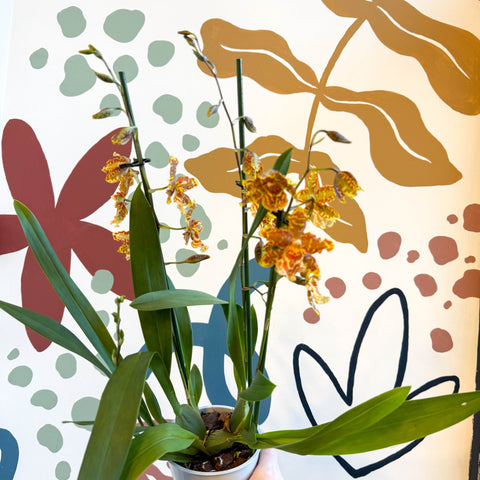
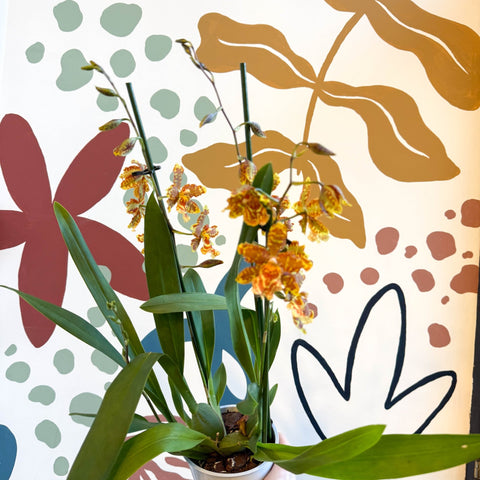
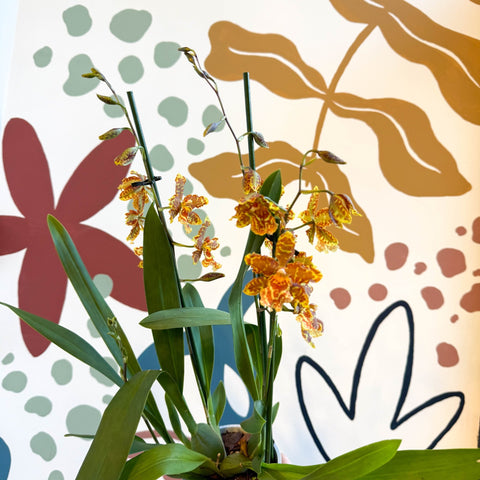
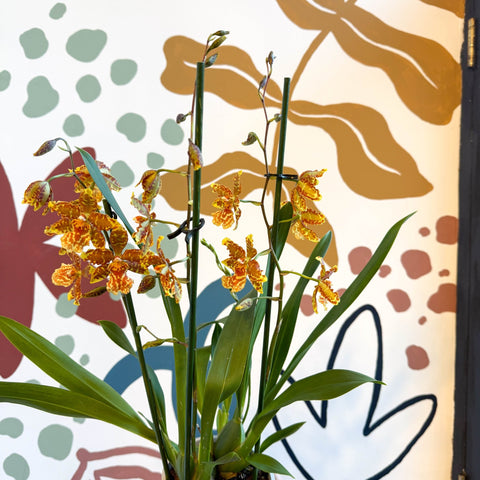
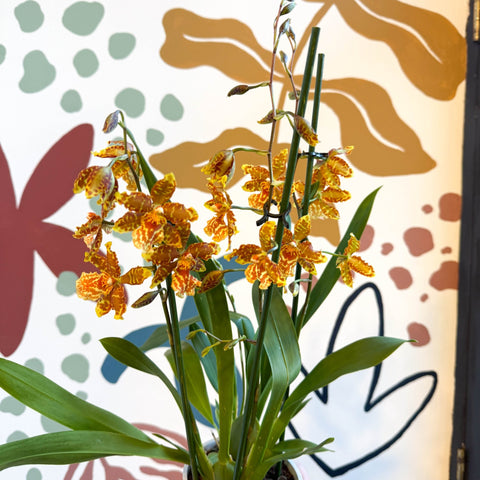
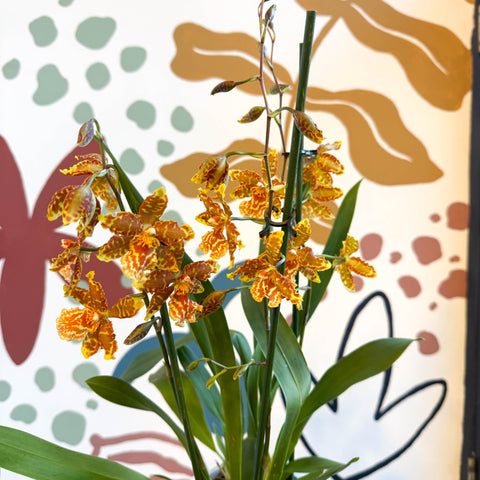
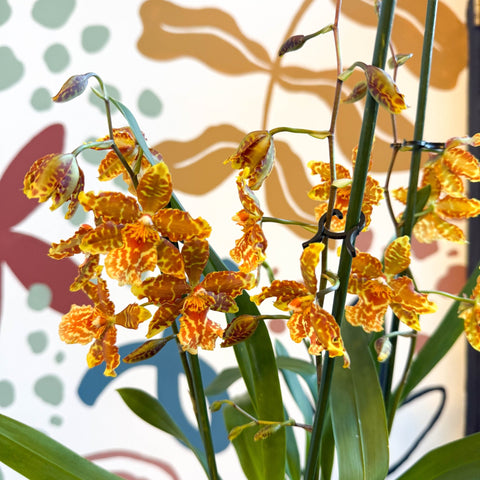
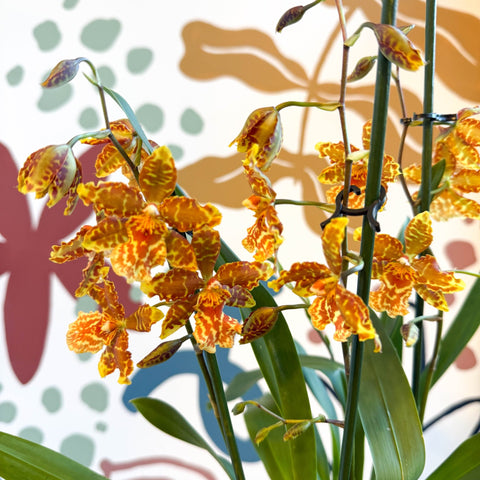
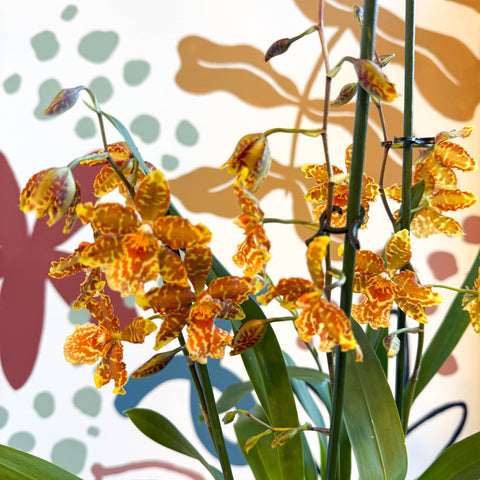
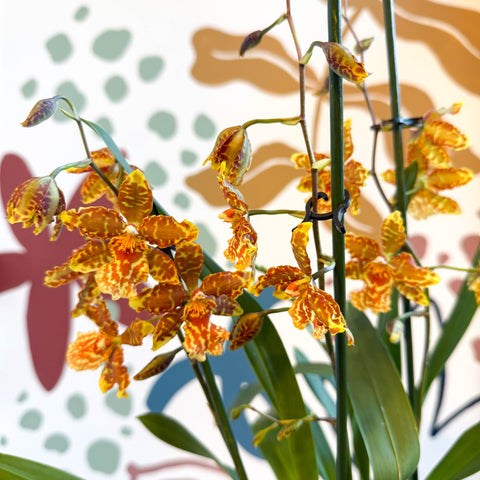
Una orquídea tipo Cambria vibrante y llamativa, los híbridos de × Odontoglossum son apreciados por sus flores de patrones atrevidos y su rendimiento fiable en interiores. Esta forma produce flores amarillas con ricas rayas naranjas, creando una exhibición cálida y animada que destaca maravillosamente contra su esbelto follaje verde. De floración abundante y duradera, las orquídeas Cambria son una excelente opción para habitaciones luminosas y resultan plantas gratificantes tanto para principiantes como para cultivadores experimentados de orquídeas.
Nombre científico
× Odontoglossum (híbrido intergenérico Cambria)
× Odontoglossum se refiere a un híbrido intergenérico que involucra a Odontoglossum y géneros estrechamente relacionados como Oncidium, Miltonia y Cochlioda. Muchas orquídeas anteriormente vendidas bajo × Odontoglossum ahora se agrupan bajo el término hortícola amplio Orquídea Cambria. Debido a la compleja hibridación y la reclasificación en curso, las plantas individuales rara vez son identificables más allá de ser híbridos tipo Cambria.
Sinónimos
Orquídea Cambria, híbrido tipo Odontoglossum
Nombre común
Orquídea Cambria
Origen
Origen híbrido. Las especies parentales son originarias de Centro y Sudamérica, donde crecen epífitamente en bosques nubosos más fríos y húmedos.
Luz
Prefiere luz brillante e indirecta. Evitar la luz solar directa fuerte, que puede quemar las hojas. Los buenos niveles de luz son esenciales para la floración.
Agua
Regar cuando el sustrato comience a secarse, permitiendo que el exceso de agua drene libremente. Regar con mayor frecuencia durante el crecimiento activo y la floración, reduciendo ligeramente en invierno. No permitir que la planta permanezca en agua.
Humedad
Disfruta de una humedad moderada, pero se adapta bien a las condiciones promedio del hogar. Se desempeña bien cerca de una bandeja de guijarros o en una habitación naturalmente húmeda con buena circulación de aire.
Tierra
Usar una mezcla de corteza para orquídeas de drenaje libre adecuada para orquídeas epífitas. Trasplantar cada 1-2 años, idealmente después de la floración o cuando comienza el crecimiento nuevo.
Alimento
Alimentar cada 2-3 riegos durante la temporada de crecimiento con un fertilizante diluido para orquídeas. Reducir la alimentación significativamente en invierno.
Temperatura
Prefiere condiciones ligeramente más frescas que muchas orquídeas tropicales. El rango de temperatura ideal es de 15–22°C. Evitar temperaturas por debajo de 10–12°C y proteger de las corrientes de aire frío.
Seguro para mascotas
No tóxico. Considerado seguro para mascotas y niños.
Consejos principales de Sprouts
Una temperatura nocturna más fresca y una luz brillante pueden ayudar a desencadenar los tallos florales en las orquídeas Cambria.
Extras
Cada pseudobulbo florece típicamente una vez, pero se formarán nuevos pseudobulbos y florecerán en temporadas futuras.
¿Sabías que?
Las orquídeas Cambria fueron desarrolladas para combinar flores vistosas con un cuidado más fácil, lo que las convierte en algunas de las orquídeas más fiables para el cultivo en interiores.