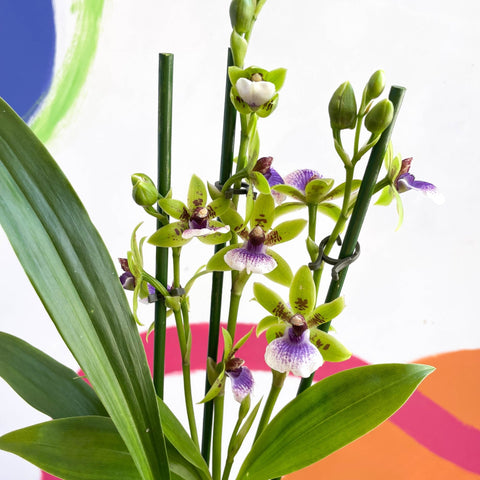
This species of Zygopetalum orchid (or Zygo orchid for short) has distinctive flowers with green, white and purple colours. Each flower has a delicate purple and white petal at its base, which acts as a kind of 'landing pad' for pollinating insects in the wild, and a fan of bright green petals speckled with maroon-purple towards the centre encircling the centre. Their long, mid-green leaves grow to almost the same height as the flower spikes and sprout from 'pseudobulbs' which serve to store water for these orchids. Add a touch of the tropical jungle with these unusual, scented blooms and their lush tropical foliage. The blooms can last for weeks in the right conditions, so keep this plant happy and you'll enjoy its funky flowers for a while yet!
Important Note We have tried to identify these orchids but please note that we are doing this by eye and comparing the plants we have in the shop to photos online. The orchids might arrive with the flowers open or closed.
Scientific Name
Zygopetalum sellowii (yoked-petal plant, Sellow's species)
This scientific name has been accepted since its initial publication in 1836. The taxonomy of this genus is still being studied, though, so some species might move around over the next few years.
Common Name
Zygopetalum Orchid, Zygo Orchid, Purple Orchid, Sellow's Zygopetalum Orchid
Origin
Native to cloud forests in Eastern Brazil
Light
Zygopetalum sellowii prefers bright, indirect light. Avoid direct sunlight, as it can burn the leaves and damage the plant. It will appreciate a splash of morning sun in autumn and winter when it's dormant, though. A spot near a window with sheer curtains or filtered sunlight works well for this orchid.
Water
This species requires regular watering, but it is essential to let the top third of the soil dry out before watering again. Orchids in the Zygopetalum genus are prone to root rot if left sitting in water; if the pot feels heavy when you pick it up, it probably isn't time to water yet. Water thoroughly and ensure it drains afterwards, especially in the cooler months when the plant’s growth slows down.
Humidity
Zygopetalum sellowii thrives in moderate to high humidity levels (50-70%). To maintain the right humidity, place a humidity tray under the pot or use a room humidifier, especially in dry conditions or when the heating is on.
Soil
Use a well-draining orchid mix that contains bark, perlite, and coir. The mix should ensure good air circulation around the roots and prevent the soil from getting too soggy. Repot every 3-4 years to refresh the soil and accommodate new root growth; this level of frequency lets it get slightly rootbound which will make it more likely to bloom.
Food
Feed Zygopetalum sellowii with a balanced orchid fertiliser once a month during the growing season (spring and summer). Reduce feeding during the winter months when the plant’s growth slows. You can supplement this with a foliar orchid feed, in spring, but don't overdo it as this can damage the plant.
Temperature
This orchid prefers temperatures between 18-24°C during the day. It is tolerant of slightly cooler temperatures overnight but should not be exposed to temperatures below 12°C. Cold draughts and blasts of heat from a radiator can harm the plant, so make sure it is sheltered from these.
Pet-Safe
Yes; orchids are generally considered non-toxic to pets. It’s still best for the plant and your pet to keep Zygopetalum sellowii out of reach, though.
Sprouts Top Tips:
Flowering: Zygopetalum sellowii produces large, fragrant flowers in late winter or early spring. For optimal blooming, ensure it receives adequate light and humidity. Avoid disturbing the plant during its flowering period, as this may disrupt its growth cycle. It will also benefit from having a dormancy period in autumn and winter, with lower temperatures, less fertilising and some weak sunlight being introduced.
Did You Know?
Zygopetalum sellowii is one of the most sought-after species in the Zygopetalum genus. They are not only visually striking but also have a pleasant fragrance that makes them a popular choice in both homes and orchid shows. Their vibrant purple and green markings really help them stand out too.




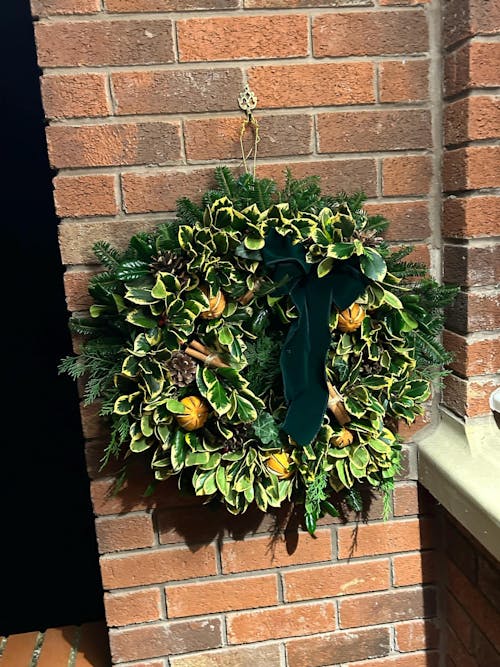
![The 'Hot Toddy' Fresh Foliage Christmas Wreath [Made to Order]](https://cdn.shopify.com/s/files/1/0490/2774/3905/products/the-hot-toddy-fresh-foliage-christmas-wreath-240111_500x500.jpg?v=1637626402)