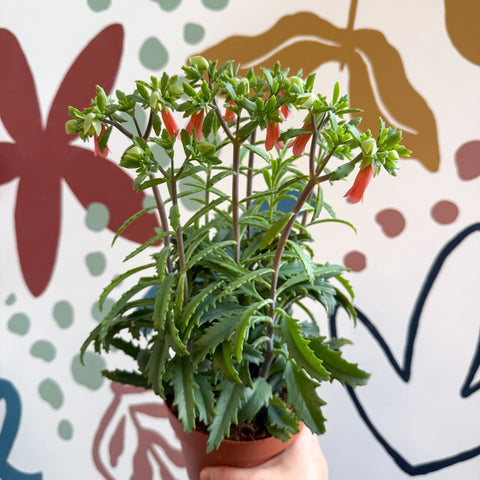
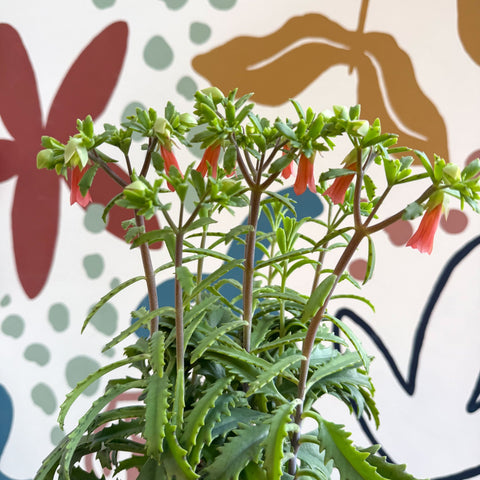
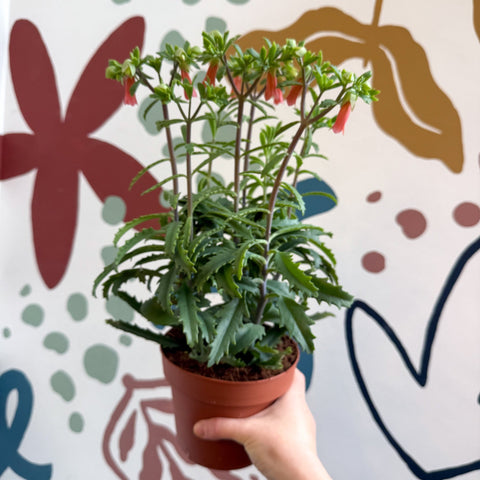
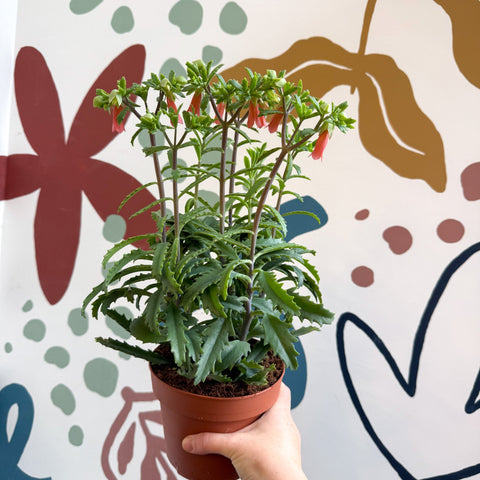
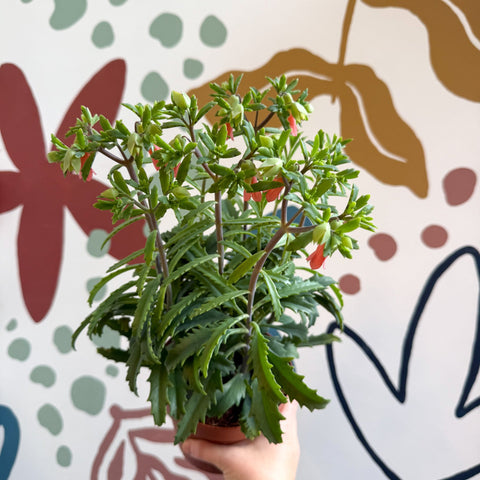
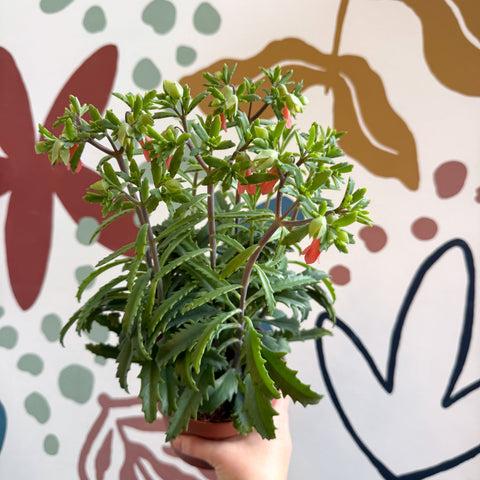
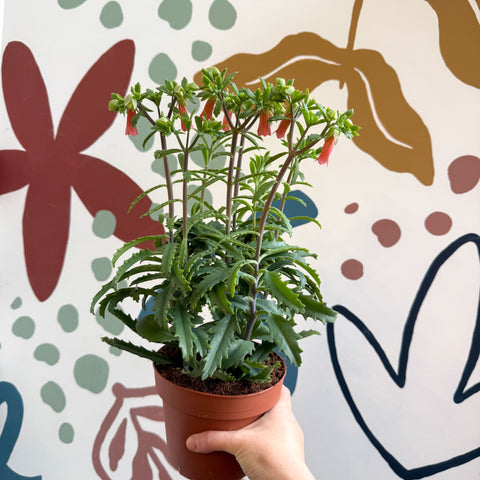
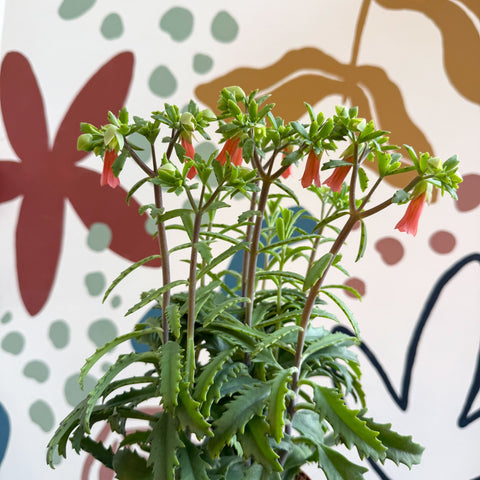
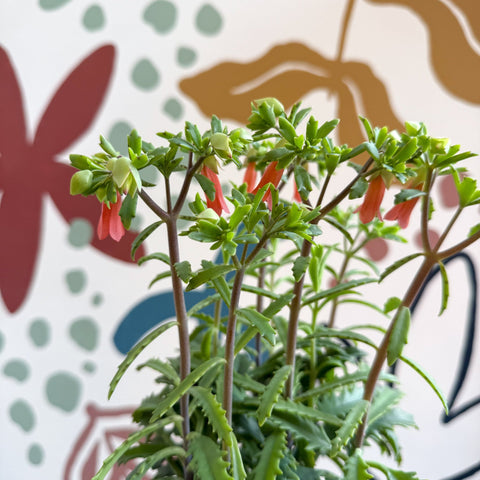
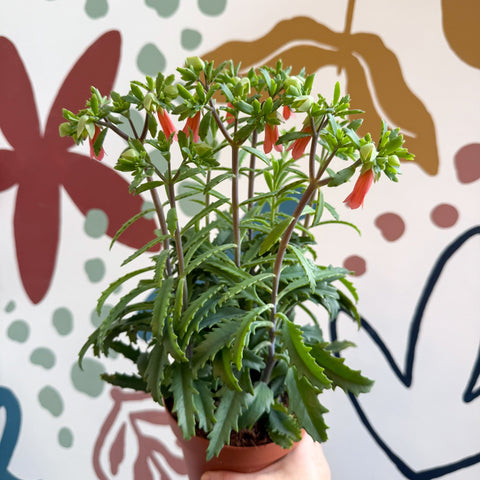
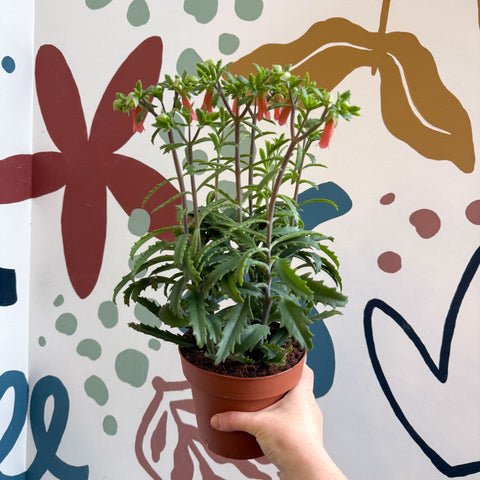
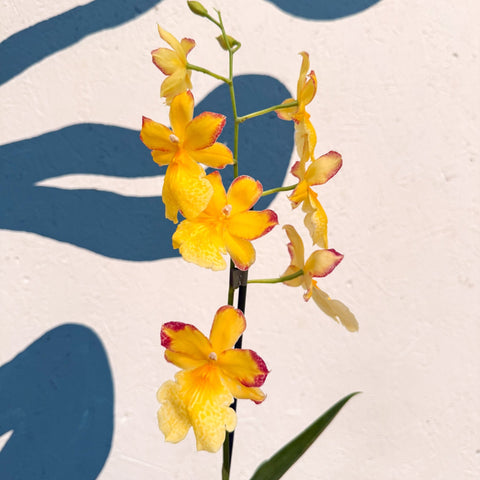
La Kalanchoe ‘Lucky Bells’ es una suculenta llamativa e inusual, apreciada por sus tallos erguidos adornados con racimos de flores colgantes en forma de campana en tonos naranja coral y rosa salmón. Estas flores colgantes emergen por encima de las hojas suculentas de color verde azulado y pueden durar varias semanas, añadiendo altura e interés a su exhibición de plantas. Tolerante a la sequía y de bajo mantenimiento, la ‘Lucky Bells’ es una suculenta con flores que prospera con un mínimo de cuidados y la máxima luz solar.
Nombre científico
Kalanchoe manginii × Kalanchoe pinnata ‘Lucky Bells’ (híbrido de Kalanchoes con campanas y de planta aérea)
Un híbrido cultivado desarrollado para la floración ornamental. Las especies parentales son nativas de Madagascar y conocidas por sus flores en forma de campana y su facilidad de propagación. La ‘Lucky Bells’ fue criada para combinar flores vistosas con una forma estructural.
Nombre(s) común(es)
Kalanchoe Lucky Bells, Kalanchoe Campana, Kalanchoe de flores colgantes
Origen
Híbrido – las especies parentales son originarias de Madagascar
Luz
Le encanta la luz brillante y directa. Un alféizar soleado es ideal, especialmente en invierno. Sin suficiente luz, la planta puede estirarse y negarse a florecer.
Agua
Permita que el suelo se seque completamente entre riegos. Riegue con moderación en invierno y evite que el agua entre en el centro de la planta. El riego excesivo puede provocar la pudrición de la raíz o el marchitamiento de las hojas.
Humedad
Tolera muy bien la baja humedad doméstica. Evite rociar: esta planta prefiere el aire seco y está adaptada a entornos áridos.
Tierra
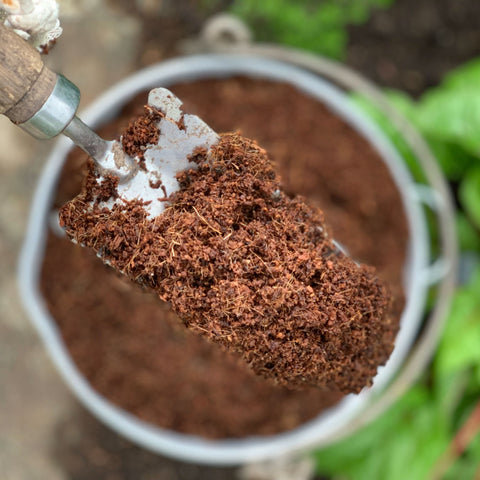
Utilice una mezcla para cactus o suculentas con muy buen drenaje. También puede enmendar la tierra común con grava, arena o perlita para mejorar el drenaje. Una maceta poco profunda con orificios de drenaje es ideal.
Alimento
Fertilice una vez cada 6-8 semanas durante la primavera y el verano con un fertilizante líquido equilibrado o un fertilizante especializado para cactus. No es necesario fertilizar en otoño e invierno.
Temperatura
El rango de temperatura ideal es de 18–24°C. Evite temperaturas por debajo de los 10°C; protéjala de las heladas y de los alféizares fríos.
Seguro para mascotas
No, tóxico si es ingerido por mascotas o humanos. Mantener fuera del alcance de gatos, perros y niños.
Consejos principales de Sprout
Para fomentar la floración, asegúrese de que la planta tenga un período de descanso en invierno con riego reducido y noches largas. Intente colocarla en un lugar oscuro durante 12 a 14 horas al día durante 4 a 6 semanas para ayudar a iniciar la floración.
Extras
Después de la floración, puede podar los tallos de las flores y dejar que la planta descanse. Puede volver a florecer al año siguiente si se le da suficiente luz y cuidado.
¿Sabía que?
Muchas especies de Kalanchoe, incluida esta, se conocen como plantas "madre de miles" debido a su capacidad para producir plántulas o retoños a lo largo de sus hojas o tallos. Aunque la ‘Lucky Bells’ no suele hacer esto, comparte la misma resistencia y tolerancia a la sequía.