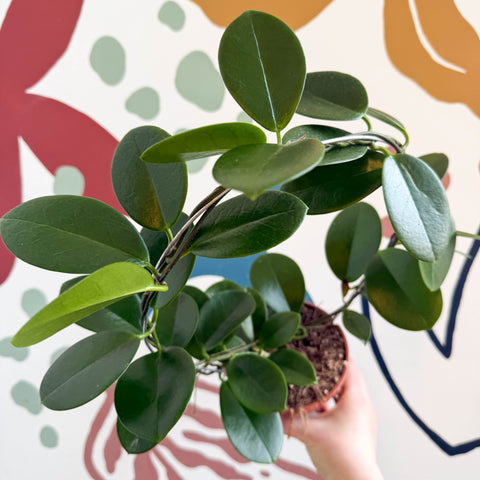
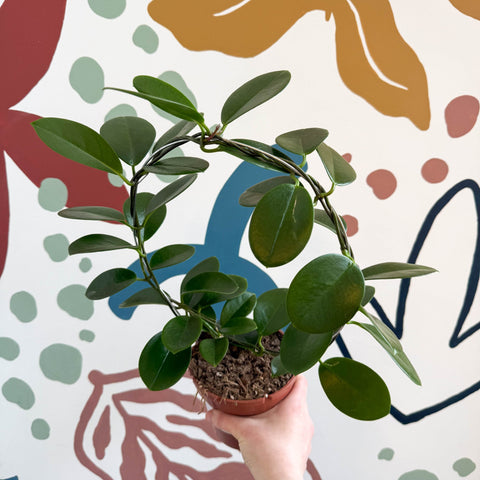
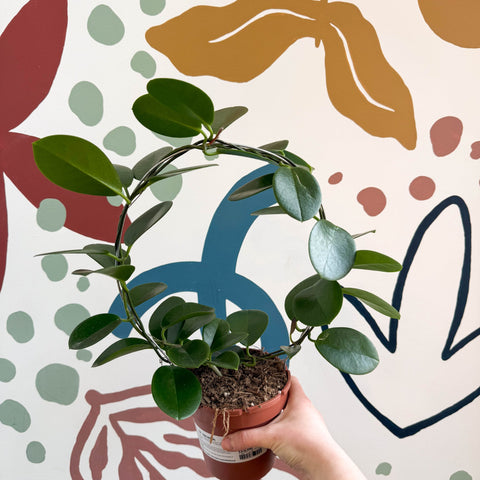
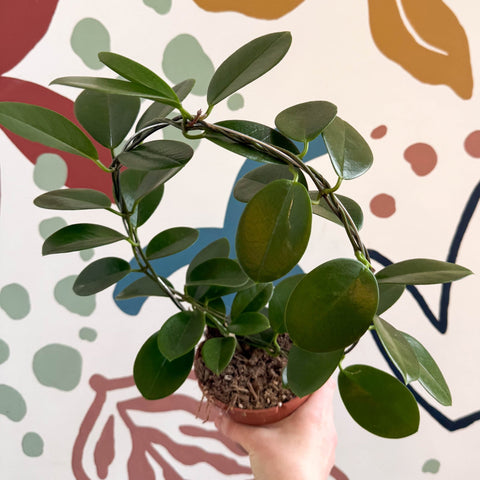
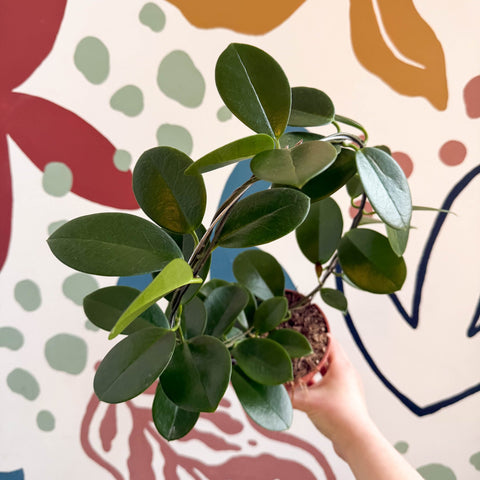
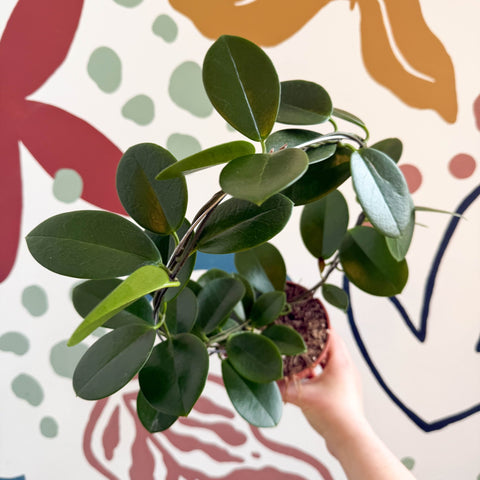
Las distintivas hojas grandes y redondas de esta Hoya le dan una apariencia impactante a medida que se arrastra o trepa por su hogar. El exuberante follaje verde es de un verde bosque intenso y se ve muy bien entrenado alrededor de una estructura (a menudo tenemos esta especie entrenada alrededor de un lazo de metal, formando una llamativa forma circular), o colgando de una maceta colgante o un estante alto. Las Hoyas aprecian la luz brillante y pueden soportar algo de sol directo, aunque no querrán estar expuestas todo el día, ya que esto puede quemarlas. Sin embargo, esta especie es de fácil cuidado como planta de interior y no es demasiado exigente si olvida regarla, por lo que es una excelente manera de traer un hermoso follaje a su hogar y dejar que se extienda por todas partes.
Nombre científico
Hoya australis (planta del sur de Hoy)
Clasificada en 1830, esta planta ha conservado el mismo nombre científico desde entonces.
Nombre común
Flor de cera, Hoya común, Flor de porcelana, Planta de miel, Flor de cera de Nueva Gales del Sur, Hiedra de cera
Origen
Nativa de Oceanía, crece en: Australia (Nueva Gales del Sur, Territorio del Norte, Australia Occidental, Queensland), Borneo, Fiyi, Samoa, Islas Salomón, Sulawesi, Tonga, Vanuatu, Islas Wallis y Futuna
Luz
Prospera con luz brillante e indirecta. Unas pocas horas de sol directo por la mañana o por la tarde pueden fomentar un crecimiento más fuerte y la floración, y es especialmente beneficioso en otoño e invierno, pero evite el sol fuerte del mediodía.
Agua
Deje que el tercio superior de la tierra se seque entre riegos y reduzca el riego en invierno y en lugares con menos luz. Asegúrese de no dejar agua estancada en el follaje (o las flores) ya que esto puede causar daños.
Humedad
Prefiere una humedad moderada a alta, pero puede tolerar las condiciones domésticas promedio. Aumentar la humedad con rocío, una bandeja de guijarros o un humidificador puede fomentar un crecimiento saludable y la floración.
Suelo
Utilice una mezcla con mucha aireación y elementos como corteza de orquídea, o una diseñada para anturios. Trasplante cada tres años en primavera a medida que la planta crece. Si está floreciendo, manténgala enraizada en la maceta un poco más para evitar que se estrese por el movimiento y pierda las flores.
Alimento
Alimente cada cuatro riegos durante todo el año. Para ajustar aún más su alimentación, busque un fertilizante rico en nitrógeno cuando el follaje necesite desarrollarse más, y para estimular las flores una vez que esté madura, busque uno con un mayor contenido de potasio (K), como el abono para tomates.
Temperatura
La temperatura ideal es entre 15 y 35 °C; asegúrese de que no baje de 15 °C en invierno o durante períodos prolongados.
Seguro para mascotas
Las Hoyas no son tóxicas, pero pueden causar reacciones adversas en sus mascotas, como vómitos/diarrea.
Consejos principales de Sprouts
Aunque a esta planta le gusta la humedad, no le gusta el suelo encharcado, así que asegúrese de no regarla en exceso. Esté atento a las hojas amarillentas, especialmente las más cercanas al suelo, para detectarlo a tiempo y reducir la frecuencia de sus riegos antes de que las raíces se dañen.