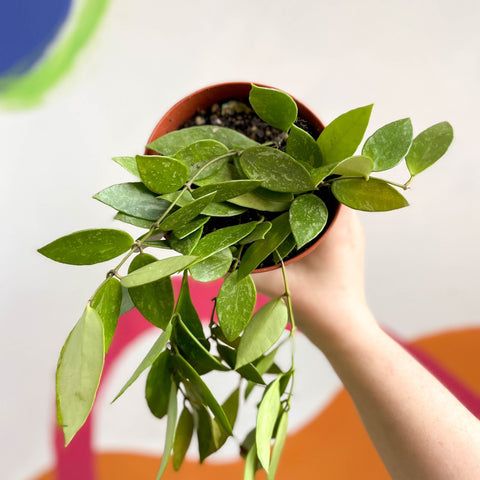
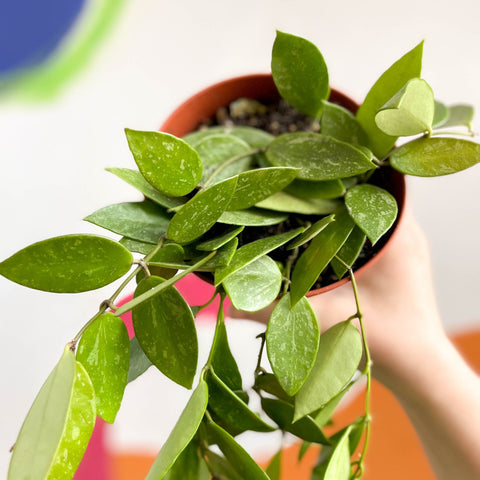
A striking climbing Hoya with firm green leaves and bold dark veining, Hoya callistophylla ‘Sabah’ (IML 1762) is a collector favourite. Its thick, almost corrugated foliage is edged with slightly rippled margins, and in time, it may reward you with clusters of pale yellow, waxy flowers. With origins in Borneo, this species thrives with warmth, bright indirect light, and a little patience.
Scientific Name
Hoya callistophylla ‘Sabah’ IML 1762 (beautiful leaf)
Described by Ted Green in 2000. Native to Sabah, Malaysian Borneo, and part of a group of striking veined Hoyas cultivated for their foliage.
Common Name
Callistophylla Hoya, Sabah Hoya, Veined Wax Plant
Origin
Endemic to Sabah, Malaysian Borneo
Light
Prefers bright, indirect light. Can tolerate some dappled sun, especially morning light, but avoid harsh midday rays which may scorch the leaves.
Water
Allow the top third of the soil to dry between waterings. Water more frequently in the growing season, and reduce in winter. Do not allow to sit in water.
Humidity
Thrives in moderate to high humidity (60%+). Ideal for a warm bathroom or near a humidifier. Benefits from occasional misting or a pebble tray, especially in dry homes.
Soil
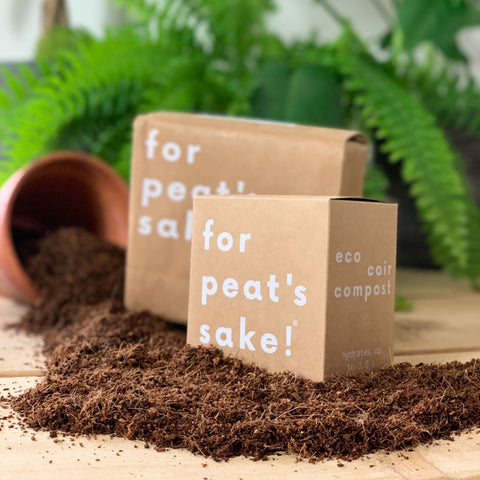
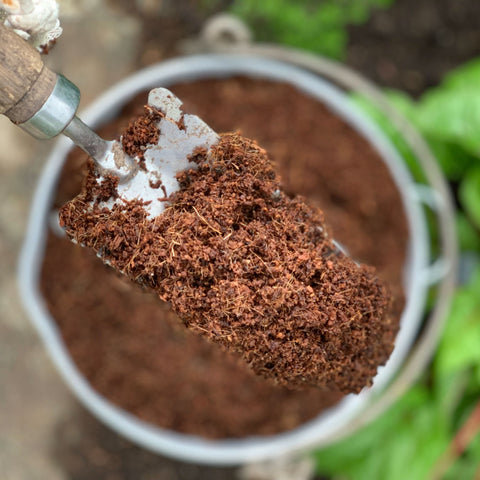
Use a loose, well-draining mix – a blend of orchid bark, perlite, and a small amount of peat or coco coir is ideal. Hoya roots dislike compact or soggy soil.
Food
Feed every 4–6 weeks during the growing season with a balanced houseplant fertiliser or one high in potassium to support blooming. Pause in winter.
Temp
Enjoys warmth – ideal range is 18–26°C. Avoid exposure to temperatures below 12°C. Keep away from draughts and cold windows in winter.
Pet-safe
Mildly toxic if ingested. Keep out of reach of pets and children.
Sprouts Top Tips
If leaves become soft or wrinkled, it’s likely underwatered – but don’t rush to soak it. Water gently, and let it recover gradually to avoid root stress.
Extras
This Hoya climbs in the wild – offer a moss pole, trellis, or branch to support mature growth and encourage flowering.
Did You Know?
The name callistophylla comes from Greek roots meaning “beautiful leaf” – and it lives up to the name with its dramatic veined foliage.

![Hoya callistophylla ‘Sabah’ [ID: IML 1762] - Sprouts of Bristol](http://sproutsofbristol.co.uk/cdn/shop/files/hoya-callistophylla-sabah-id-iml-1762-2435894.jpg?v=1751064659&width=480)
![Hoya callistophylla ‘Sabah’ [ID: IML 1762] - Sprouts of Bristol](http://sproutsofbristol.co.uk/cdn/shop/files/hoya-callistophylla-sabah-id-iml-1762-6466389.jpg?v=1751064659&width=480)
![Hoya callistophylla ‘Sabah’ [ID: IML 1762] - Sprouts of Bristol](http://sproutsofbristol.co.uk/cdn/shop/files/hoya-callistophylla-sabah-id-iml-1762-8430046.jpg?v=1751064660&width=480)
![Hoya callistophylla ‘Sabah’ [ID: IML 1762] - Sprouts of Bristol](http://sproutsofbristol.co.uk/cdn/shop/files/hoya-callistophylla-sabah-id-iml-1762-4708686.jpg?v=1751064660&width=480)
![Hoya callistophylla ‘Sabah’ [ID: IML 1762] - Sprouts of Bristol](http://sproutsofbristol.co.uk/cdn/shop/files/hoya-callistophylla-sabah-id-iml-1762-4625469.jpg?v=1751064662&width=480)
![Hoya callistophylla ‘Sabah’ [ID: IML 1762] - Sprouts of Bristol](http://sproutsofbristol.co.uk/cdn/shop/files/hoya-callistophylla-sabah-id-iml-1762-9796285.jpg?v=1751064662&width=480)
![Hoya callistophylla ‘Sabah’ [ID: IML 1762] - Sprouts of Bristol](http://sproutsofbristol.co.uk/cdn/shop/files/hoya-callistophylla-sabah-id-iml-1762-5199542.jpg?v=1751064663&width=480)
![Hoya callistophylla ‘Sabah’ [ID: IML 1762] - Sprouts of Bristol](http://sproutsofbristol.co.uk/cdn/shop/files/hoya-callistophylla-sabah-id-iml-1762-7255639.jpg?v=1751064663&width=480)
![Hoya callistophylla ‘Sabah’ [ID: IML 1762] - Sprouts of Bristol](http://sproutsofbristol.co.uk/cdn/shop/files/hoya-callistophylla-sabah-id-iml-1762-4871347.jpg?v=1751064662&width=480)
![Hoya callistophylla ‘Sabah’ [ID: IML 1762] - Sprouts of Bristol](http://sproutsofbristol.co.uk/cdn/shop/files/hoya-callistophylla-sabah-id-iml-1762-3502598.jpg?v=1751064663&width=480)
![Hoya callistophylla ‘Sabah’ [ID: IML 1762] - Sprouts of Bristol](http://sproutsofbristol.co.uk/cdn/shop/files/hoya-callistophylla-sabah-id-iml-1762-3789803.jpg?v=1751064677&width=480)
![Hoya callistophylla ‘Sabah’ [ID: IML 1762] - Sprouts of Bristol](http://sproutsofbristol.co.uk/cdn/shop/files/hoya-callistophylla-sabah-id-iml-1762-3995349.jpg?v=1751064677&width=480)