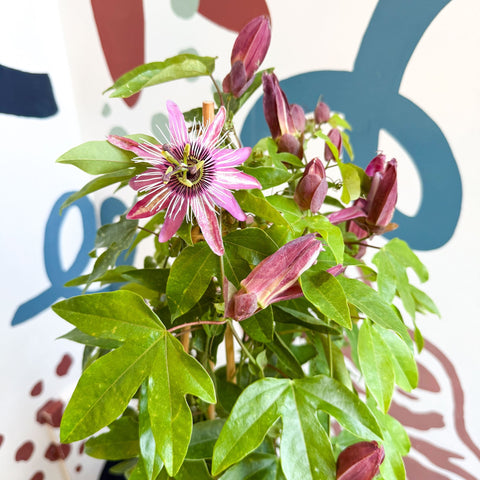
Passiflora × violacea ‘Victoria’ - Pink Passionflower

Size
Precio normal £16.00
Este producto no está disponible para la recogida en ninguna tienda

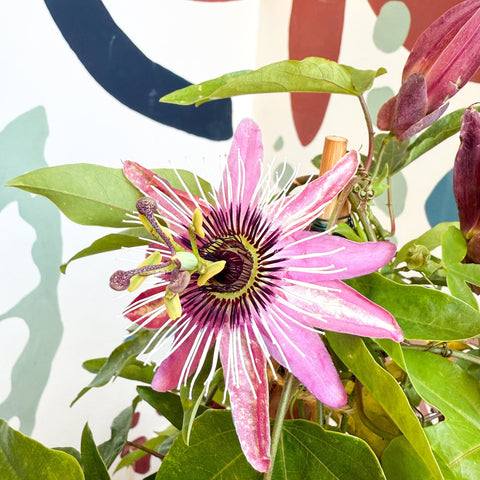
This evergreen climbing plant has distinctive pink and white flowers which bloom throughout summer. Hardy through most of the UK down to -10°C.

Bring this vining plant into your garden to introduce colour, subtropical style and the opportunity to say 'wow' each time a flower opens in summer. Mid-green, pinnate leaves are the backdrop to this plant's stunning blooms, and provide an effective piece of structural greenery throughout the year. The flowers are impossible to describe - pink petals with a fringe of deep magenta blending to white, and vibrant green and pink stamen protruding from the centre. You may also get a harvest of orange fruits in autumn - these are edible, but not the tastiest as fresh fruits; we've heard they're best made into jam. Bring these otherworldly beauties into your garden in a sunny, sheltered spot, and enjoy them all year long.

Evergreen Perennial

Flower with climbing habit

Foliage year-round; flowers June to September, fruit September and October.


Scientific Name
Passiflora × violacea ‘Victoria’ (passionflower, violet-coloured hybrid species, cultivar: Victoria)

This plant is a hybrid between P. caerulea and P. princeps.

Common Name
Passionflower, Violet Passion-Flower, Pink Passion-Flower, Common Passionflower, Southern Beauty

Origin
Native to South America, parent plants found in Northern Argentina, Bolivia, Southern and Eastern Brazil, and Paraguay.

Pruning Tips
Prune in early spring if necessary.

Wildlife Value
Attractive to bees, butterflies and beneficial insects. Your Passionflowers' blooms are super accessible to insects and are rich in nectar and pollen.

Positioning
Grow in a spot that gets full or partial sun, and shelter from the wind.

Water
Your Passionflower grows best when kept fairly moist; once established in the ground, it is drought resistant.

Soil
Use a well-draining soil that holds some moisture but not so much that it keeps the plant actively soggy in winter.

Food
Can benefit from a light feed, every couple of weeks in spring and summer, to help keep it blooming healthily. Use a feed with high potassium, like a tomato feed, to boost those blooms.

Pet-safe
No - leaves and unripe fruit can be toxic or cause tummy upset in dogs, cats, horses and humans, though once ripe, the fruit is safe to eat.

Sprouts Top Tips
For the best aesthetics, make sure your passionflower has something to grow up, whether that's a trellis, fence or shed.
You may need to overwinter in a conservatory or greenhouse in colder areas.

Did you know?
The name 'Passion Flower' was given by early missionaries when they saw this plant in South America; they saw in the shape of the flower signs of the passion of Christ.

Check out The Sprouts Blog

Sprouts insights to house plants, gardening, our favourite brands and plant hire case studies.
We’re Growing – Welcome to Sprouts HQ! - Sprouts of Bristol
Sprouts of Bristol is expanding with the launch of Sprouts HQ – a new South Bristol premises that will house a dedicated packing space for online orders, an office, studio, and more room for rare and exciting plants. While the Kingsdown shop remains open as usual, the new HQ allows Sprouts to grow behind the scenes and offer even better service both in-store and online. This blog post shares the story behind the move, what customers can expect, and how to keep supporting this independent plant shop through the transition.
Jessy Edgar15 de agosto de 2025
Terrarium & Wreath Workshops in Bristol – Autumn & Winter 2025 - Sprouts of Bristol
Join Sprouts of Bristol for terrarium, kokedama, and Christmas wreath workshops this autumn–winter. Creative, plant-filled fun in the heart of Bristol!
Jessy Edgar5 de agosto de 2025
Build Your Own Terrarium: A Step-by-Step Guide from Sprouts - Sprouts of Bristol
Fancy creating your own tiny, self-contained world of green? Our DIY terrarium kits are the...
Jessy Edgar20 de julio de 2025