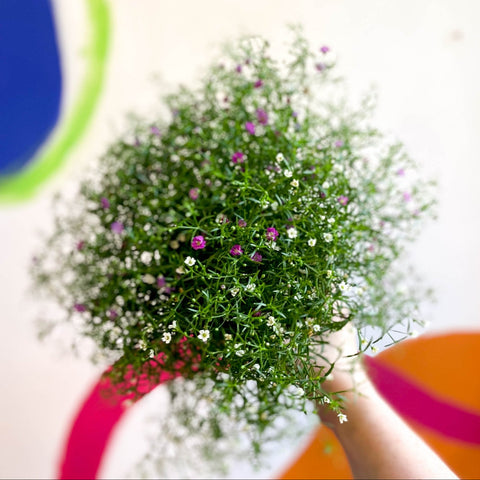
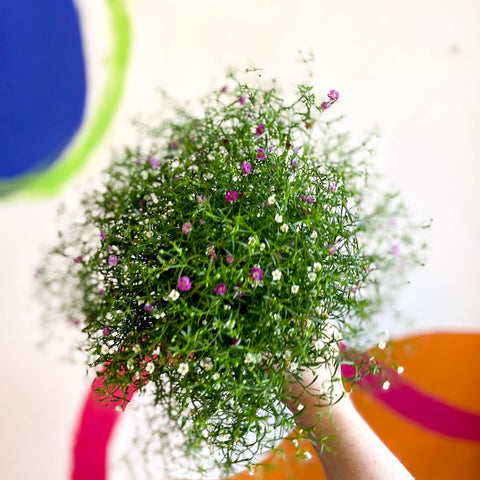
A delicate, frothy annual, Gypsophila muralis forms airy mounds of fine green foliage covered in dainty pink and white star-like flowers. The soft, cloud-like effect adds lightness and texture to borders, rockeries, containers, and path edges. With its compact habit and mix of flower colours in each planting, it’s a charming way to bring gentle colour and movement to sunny garden spaces.
Gypsophila muralis, commonly known as Baby’s Breath, is a compact, fast-growing variety that flowers over a long period in summer and looks lovely spilling over low walls or softening the edge of beds.
Annual
Compact, Flowering, Summer Interest
Flowers: June–August
Foliage: Spring–Autumn
Scientific Name
Gypsophila muralis (from Greek gypsos, meaning “gypsum” and philos, meaning “loving” – referring to the plant’s preference for chalky soils; muralis = “growing on walls”)
Common Name
Baby’s Breath, Low Baby’s Breath, Wall Gypsophila
Origin
Native to central and eastern Europe, western Asia, and naturalised in some parts of North America
Pruning Tips
Deadhead regularly to encourage continuous flowering. Remove spent plants after flowering or before they self-seed if you want to control spread.
Wildlife Value
Attracts small pollinators like hoverflies and solitary bees.
Positioning
Full sun is best for strong flowering. Ideal for the front of borders, alpine troughs, containers, and dry stone walls.
Water
Water regularly while establishing and during hot, dry spells. Avoid waterlogged conditions – prefers light watering.
Soil
Prefers free-draining, alkaline or neutral soil. Chalky or sandy soils are ideal. Avoid heavy, wet ground.
Food
Not a heavy feeder – a light application of balanced fertiliser in spring is usually enough.
Pet-safe
Generally considered non-toxic and safe for pets.
Sprouts Top Tips
Perfect for planting en masse in shallow containers or troughs for a soft, meadowy look – mix with other low-growing annuals for a romantic, pastel-toned display.