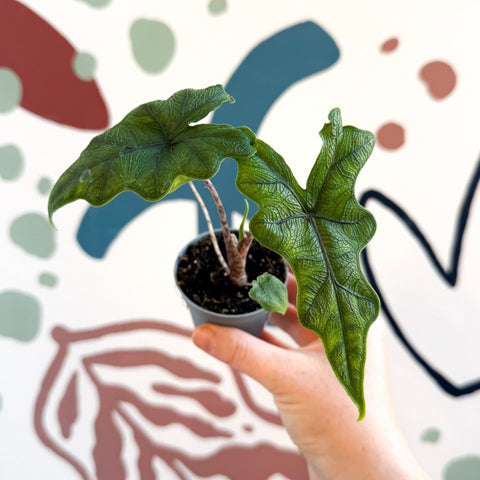
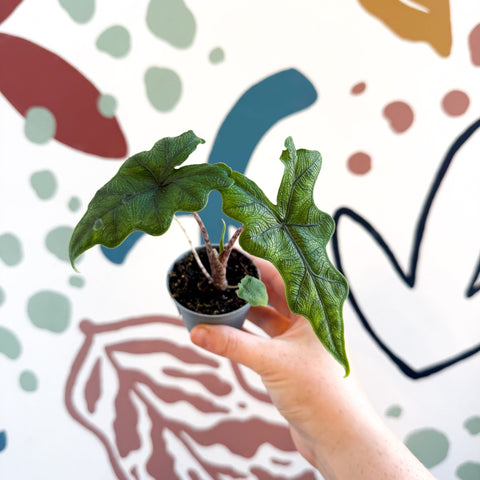
Con hojas profundamente lobuladas, nervaduras vivas y un acabado aterciopelado, la Alocasia ‘Jacklyn’ es una verdadera pieza de coleccionista. Cada hoja exhibe audaces tonos verdes con dramáticas nervaduras oscuras y una superficie texturizada, lo que le confiere un aspecto prehistórico, casi reptil. Originaria de Indonesia, esta rara variedad es llamativa y llena de carácter, perfecta para quienes buscan expandir su colección de aráceas.
Nombre científico
Alocasia nycteris – cultivar comúnmente conocido como ‘Jacklyn’
Sinónimos
Alocasia sulawesiensis ‘Jacklyn’ (informal), Alocasia nycteris (nombre de especie propuesto), Alocasia ‘Jacklyn’ (nombre hortícola)
Nombre(s) común(es)
Alocasia Jacklyn, Velvet Fang, Alocasia Dragón Verde
Origen
Descubierta en Sulawesi, Indonesia, se cree que es un híbrido natural o una especie distinta nativa de los hábitats de la selva tropical.
Luz
Lo ideal es luz brillante e indirecta. Evite el sol directo intenso, que puede quemar el delicado follaje. Muy poca luz puede causar un crecimiento espigado o lento.
Agua
Mantenga la tierra uniformemente húmeda pero no empapada. Deje que los 2-3 cm superiores se sequen ligeramente entre riegos. Reduzca el riego en los meses más fríos cuando el crecimiento se ralentiza.
Humedad
La alta humedad (60-80%) es esencial. Use un humidificador o una bandeja de guijarros, y evite colocarla cerca de radiadores o ventanas con corrientes de aire.
Tierra
Una mezcla suelta y con buen drenaje es clave; pruebe una mezcla de tierra para aráceas, corteza de orquídea, perlita y compost. Evite la tierra pesada o compactada.
Alimento
Fertilice cada 2-4 semanas en la temporada de crecimiento con un fertilizante equilibrado y diluido. Suspenda la fertilización en invierno.
Temperatura
Le encanta el calor: 18-28 °C es ideal. Manténgala alejada de los alféizares fríos o las corrientes de aire y evite temperaturas inferiores a 15 °C.
Segura para mascotas
Tóxica si se ingiere; manténgala fuera del alcance de mascotas y niños.
Consejos principales de Sprouts
La Alocasia ‘Jacklyn’ es particularmente propensa a las arañas rojas; revise regularmente el envés de las hojas y mantenga la humedad alta para disuadir las plagas.
Extras
La superficie rugosa y peluda de las hojas le da a esta planta una sensación táctil única, una característica rara entre las Alocasias.
¿Sabías qué?
El nombre ‘Jacklyn’ no es un registro oficial de cultivar, sino un apodo popularizado por los cultivadores indonesios. Su clasificación científica aún está en revisión, lo que la convierte en un verdadero enigma del mundo vegetal.