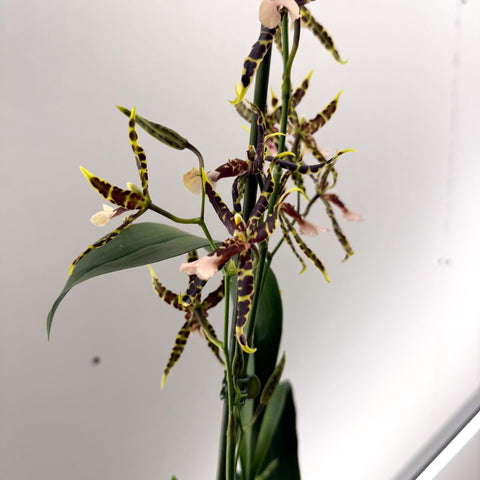
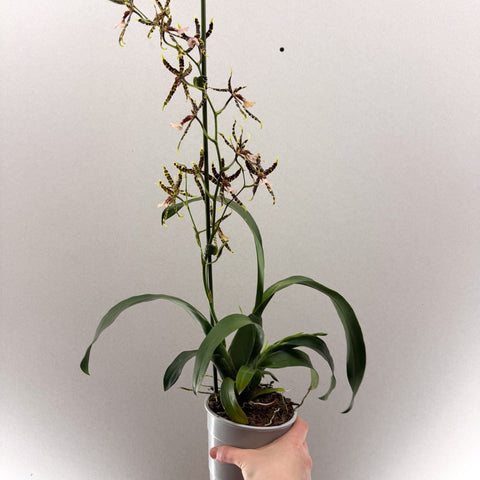
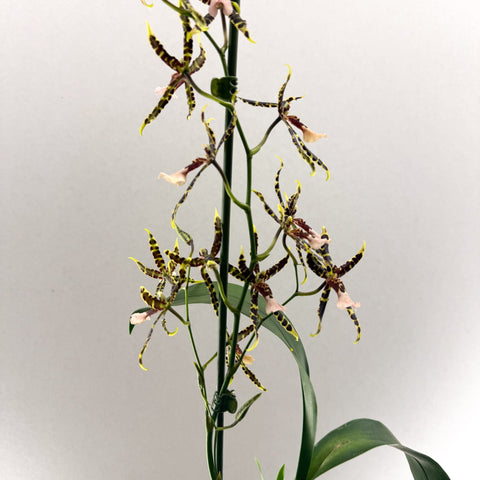
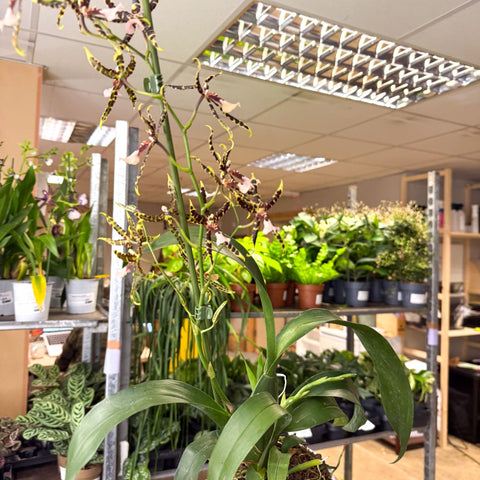
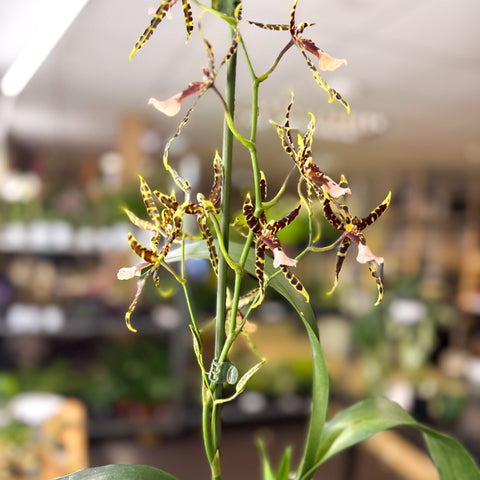
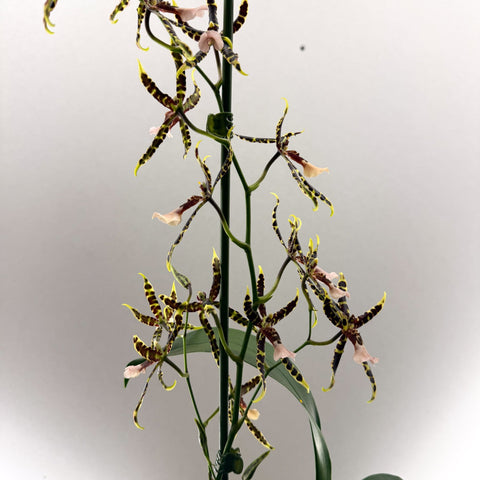
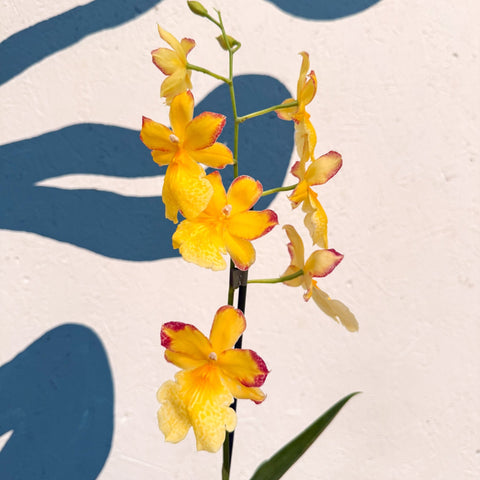
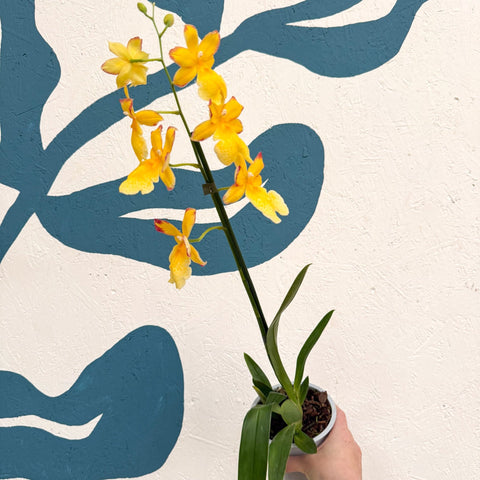
Elegante y dramática, la Brassia ‘Summer Dream’ es una orquídea araña híbrida admirada por sus pétalos largos y estrechos que se irradian como patas de araña. Las flores suelen ser de color verde a verde amarillento con manchas más oscuras, creando una exhibición llamativa y arquitectónica. Ligeramente fragante y de larga duración, esta orquídea aporta movimiento y personalidad a los espacios interiores luminosos.
Nombre científico
Brassia ‘Summer Dream’ (híbrido dentro del género Brassia)
Reclasificación / Historia de la denominación
La Brassia ‘Summer Dream’ es un híbrido (grex) en lugar de una especie única. El género Brassia pertenece a la alianza Oncidiinae dentro de la familia Orchidaceae y ha estado involucrado en una extensa hibridación. Como ocurre con muchos híbridos de orquídeas, las plantas individuales pueden variar ligeramente en el tamaño, la forma y las marcas de las flores.
Sinónimos
A veces aparece simplemente como híbrido de Brassia
Nombre común
Orquídea Araña
Origen
Origen híbrido. Las especies parentales son nativas de América Central y del Sur, donde las orquídeas Brassia crecen epífitas en bosques cálidos y húmedos.
Luz
Prefiere luz brillante e indirecta. Puede tolerar algo de sol suave de la mañana o de la tarde, pero evite la luz solar directa fuerte, que puede quemar las hojas.
Agua
Riegue a fondo cuando el sustrato comience a secarse, permitiendo que el exceso de agua drene libremente. Riegue con más regularidad durante la primavera y el verano, reduciendo la frecuencia en invierno a medida que el crecimiento se ralentiza.
Humedad
Disfruta de una humedad moderada a alta. Se desarrolla bien en cocinas, baños o cerca de una bandeja de guijarros. Una buena circulación de aire es importante para evitar condiciones estancadas.
Suelo
Utilice una mezcla de corteza de orquídea de drenaje libre adecuada para orquídeas epífitas. Trasplante cada 1-2 años, idealmente después de la floración o cuando comience el nuevo crecimiento.
Alimento
Alimente cada 2-3 riegos durante la temporada de crecimiento con un fertilizante de orquídeas diluido. Reduzca significativamente la alimentación en otoño e invierno.
Temperatura
El rango de temperatura ideal es de 18 a 26 °C. Evite temperaturas por debajo de los 12 °C y protéjala de las corrientes de aire frío.
Seguro para mascotas
No tóxico. Considerado seguro para mascotas y niños.
Consejos principales de Sprouts
La luz brillante es clave: la luz insuficiente a menudo produce un follaje sano pero sin flores.
Extras
Las nuevas varas florales suelen emerger de la base de los pseudobulbos maduros y pueden tardar varias semanas en desarrollarse completamente.
¿Sabías que?
Las orquídeas araña desarrollaron su inusual forma de flor para imitar a las arañas o los insectos, lo que ayuda a atraer polinizadores específicos en la naturaleza.