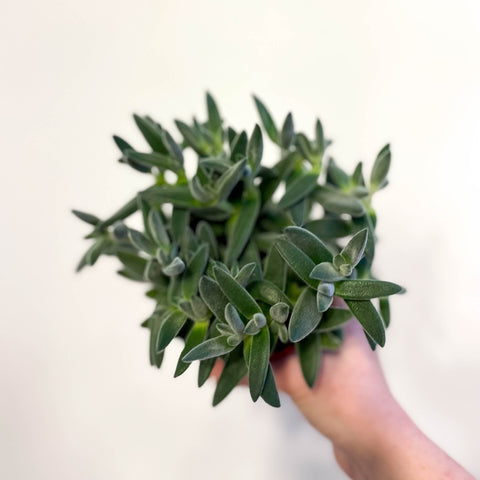
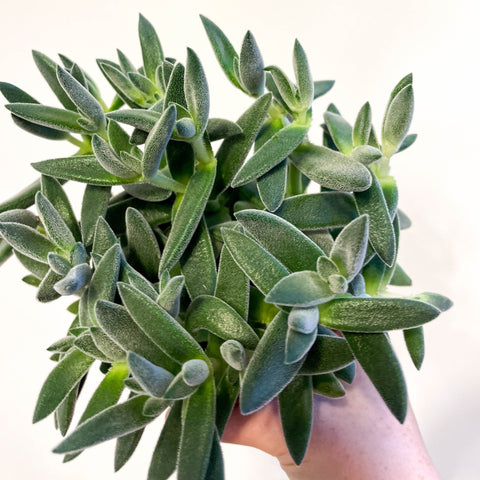
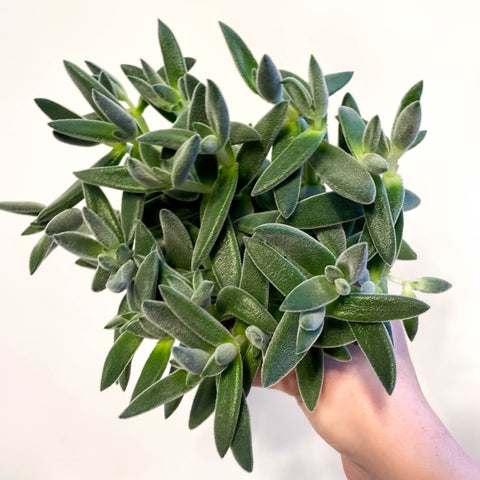
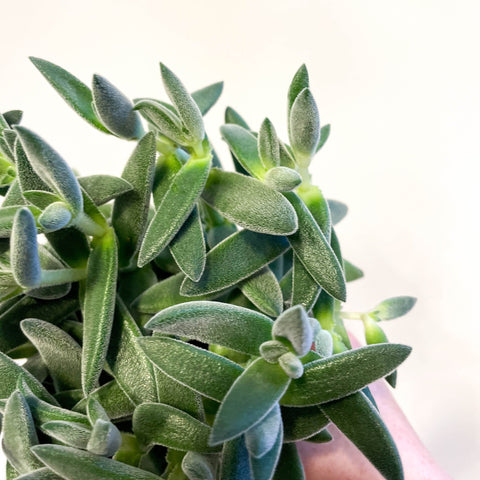
Esta planta mullida es una explosión de follaje verde plateado, con cada hoja de color verde oscuro que se oscurece desde un verde más brillante hacia el tallo. El follaje también está cubierto de pelos cortos y suaves, como el arácnido del que proviene su nombre de variedad, ¡aunque es mucho menos probable que pique! Con un follaje denso en una forma compacta y tupida, esta planta de interior es ideal para realzar la exhibición de su ventana con una textura divertida y un color verde brillante.
Nombre Científico
Crassula x hybrida 'Tarantula' (planta de hojas gruesas, especie híbrida, cultivar: Tarántula)
Esta es una especie híbrida del género Crassula.
Nombre Común
Planta de Jade Tarántula, Crassula Tarántula
Origen
Esta planta es originaria de Namibia.
Luz
La luz brillante es importante para las Crassulas, así que elija un lugar donde pueda recibir unas horas de sol por la mañana o por la tarde.
Agua
Deje que toda la tierra se seque entre riegos; recuerde que en su hábitat natural esta planta está acostumbrada a sequías entre lluvias poco frecuentes. El agua fría puede estresar la planta, así que asegúrese de que el agua esté a temperatura ambiente al menos antes de regar.
Humedad
Las Crassulas están acostumbradas a la baja humedad, así que no las mantenga en ningún lugar húmedo. Un rociado ocasional mantendrá las hojas libres de polvo, pero asegúrese de que se sequen completamente después.
Tierra
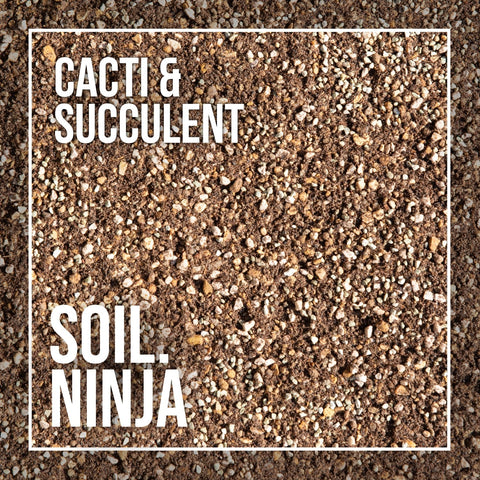
Use una mezcla de tierra que drene bien con componentes como arena y grava; una mezcla diseñada para cactus y suculentas funcionará bien aquí. Trasplante cada 2-3 años en primavera.
Alimento
Fertilice cada dos meses en la temporada de crecimiento, reduzca a cada tres en otoño e invierno.
Temperatura
La temperatura ideal es de 15-26°C; asegúrese de que no baje de 12°C en invierno.
Seguro para mascotas
No, esta planta es tóxica para mascotas y niños pequeños.
Consejos de Sprouts
Esté atento al color de las hojas para detectar algunos de los problemas más comunes con la Crassula. Si las hojas comienzan a ponerse rojas (aparte de su variegación natural), esto es un signo de quemadura solar y deben moverse gradualmente a un lugar con menos sol directo. Sin embargo, si las hojas se están poniendo amarillas, la planta probablemente esté demasiado húmeda y se beneficiará de una luz más brillante y un riego menos frecuente.