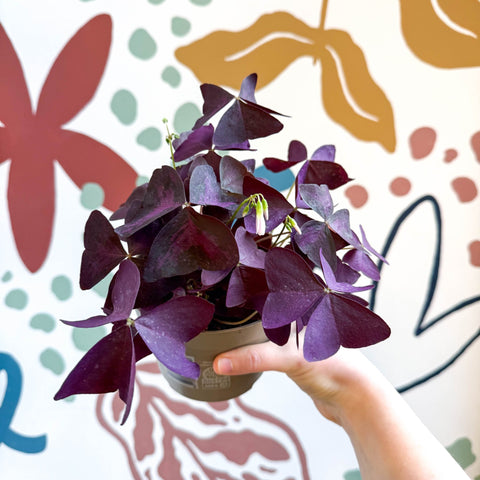
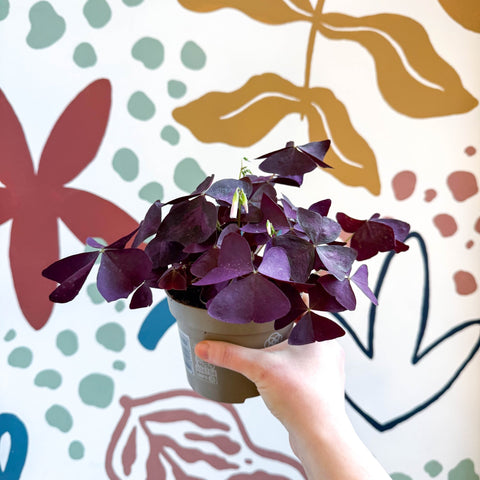
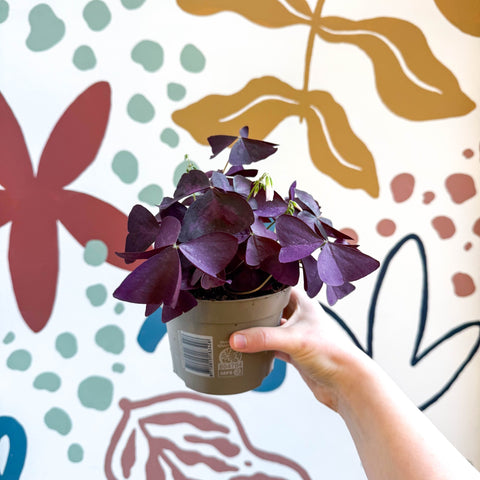
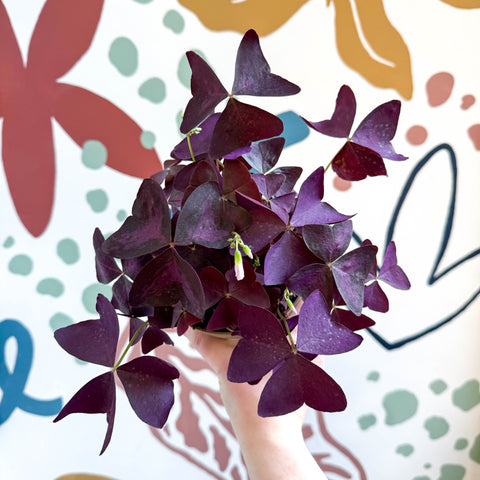
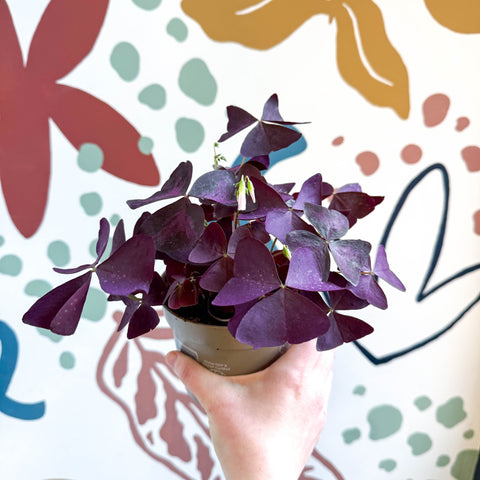
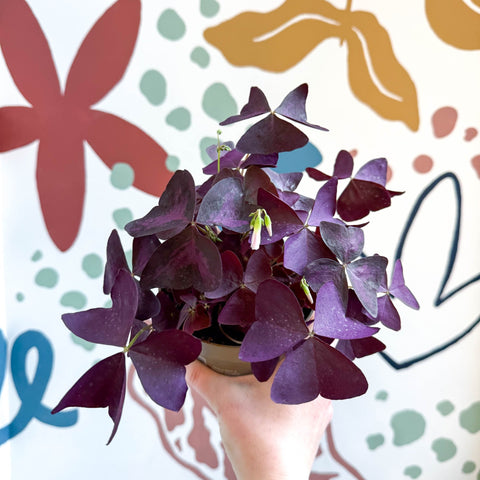
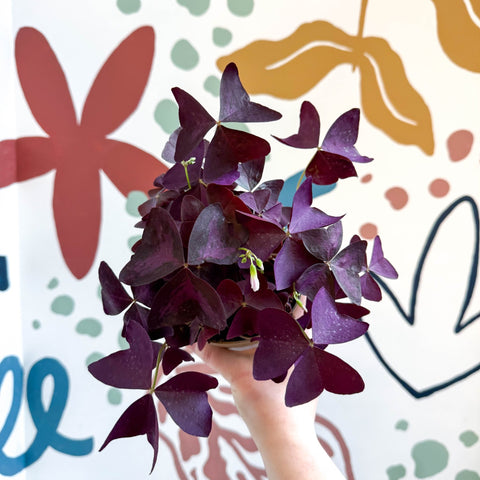
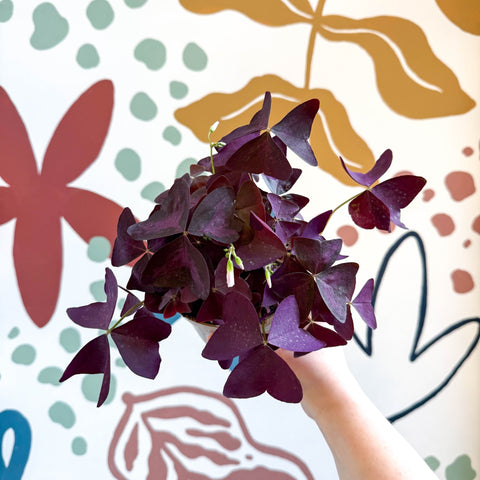
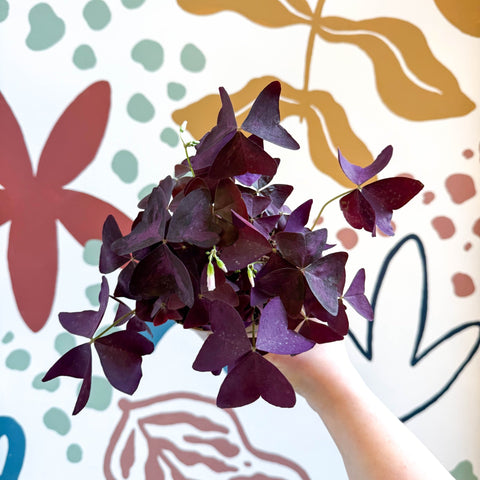
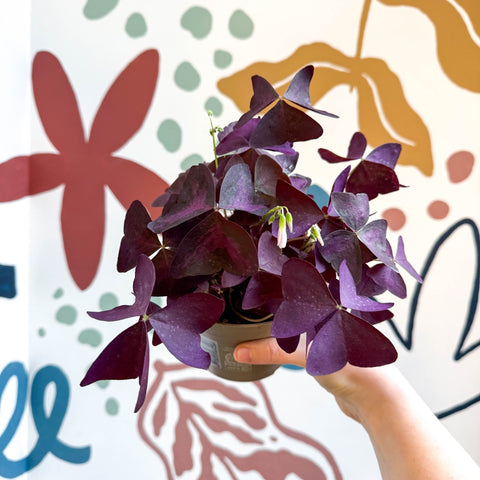
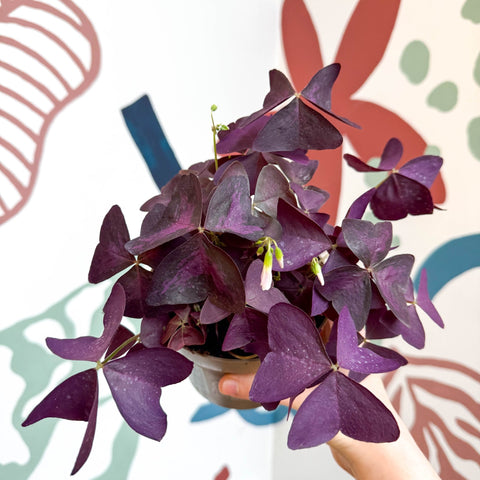
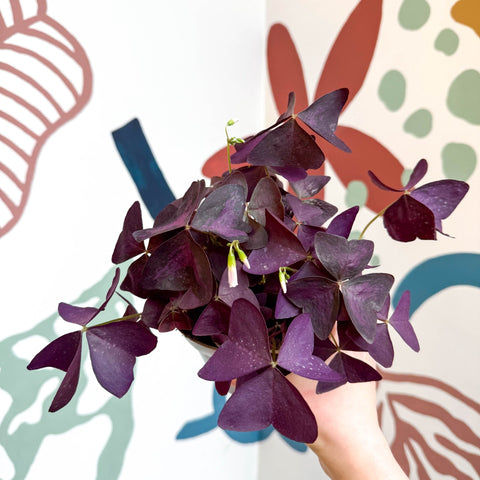
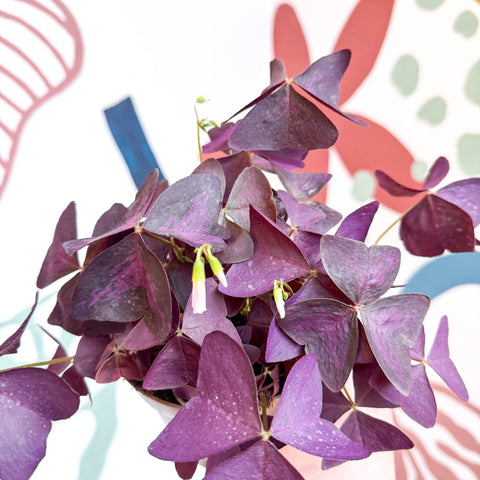
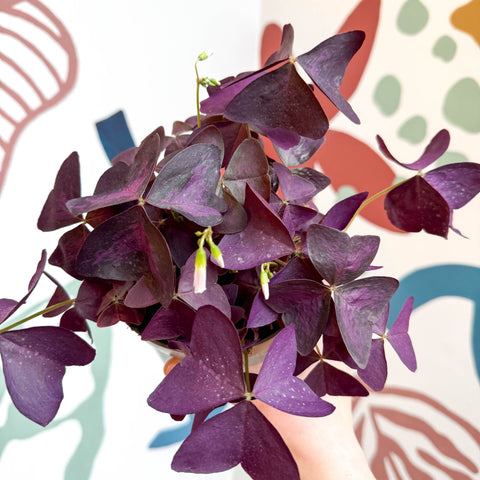
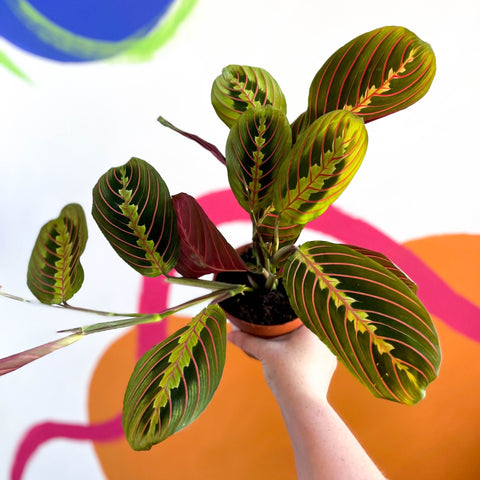
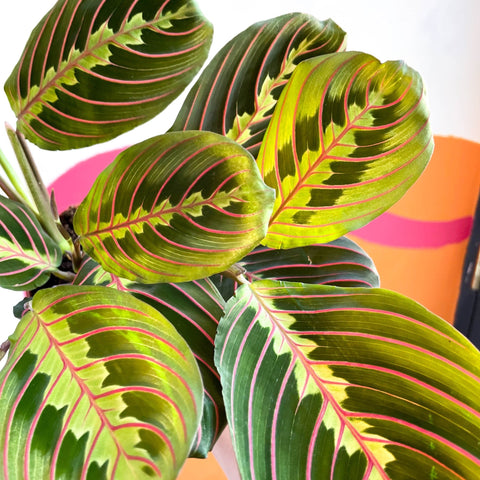
El morado intenso de esta Oxalis destaca en cualquier alféizar. La distintiva forma de sus hojas, que le da tanto su nombre de especie en latín, triangularis, como su nombre común, "Trébol", también contribuyen a su atractivo visual. Al final de cada tallo erguido hay un trío de hojas triangulares de color morado, y en primavera y verano también pueden ir acompañadas de tallos florales rematados con flores de color púrpura pálido. Las hojas se pliegan y se cierran durante la noche para volver a abrirse con el siguiente amanecer, lo que añade personalidad a la planta. Y no te preocupes demasiado si parece un poco más pequeña durante el invierno: las Oxalis pueden perder su follaje en épocas de frío, pero tienen pequeños órganos de almacenamiento llamados cormos (como pequeños bulbos) que pueden permanecer ocultos durante el invierno para volver a crecer en primavera. Dale a esta semi-suculenta un lugar luminoso y no demasiada agua, y verás cómo crece, se mueve y florece en tu hogar.
Nombre científico
Oxalis triangularis (planta amarga de hojas triangulares)
Sinónimos: Acetosella triangularis, Acetosella oxyptera, Acetosella papilionacea, Acetosella regnellii, Oxalis regnellii, Oxalis triangularis ssp. papilionacea, Oxalis truncata
Nombrada por primera vez en 1825, esta planta ha mantenido su clasificación actual durante 200 años. Varias publicaciones le han dado diferentes nombres científicos a lo largo de los años, pero Oxalis triangularis sigue siendo el nombre aceptado.
Nombre común
Falso trébol, trébol morado, acedera morada, mariposa morada, planta del amor
Origen
Nativa de América del Sur, esta planta crece de forma natural en Brasil, el norte de Argentina, Bolivia, Paraguay y Perú.
Luz
Un lugar con luz brillante e indirecta es bueno para la Oxalis, pero te lo agradecerá aún más si recibe unas horas de sol por la mañana o por la tarde. Los fuertes rayos de sol del mediodía pueden quemar su follaje.
Agua
Mantén la tierra relativamente húmeda en la temporada de crecimiento, regando cuando la pulgada superior se haya secado; reduce la frecuencia en otoño e invierno durante su período de dormancia y asegúrate de que no se encharque.
Humedad
La humedad media del hogar está bien, siempre y cuando tu Oxalis no esté demasiado cerca de un calentador que la reseque.
Tierra
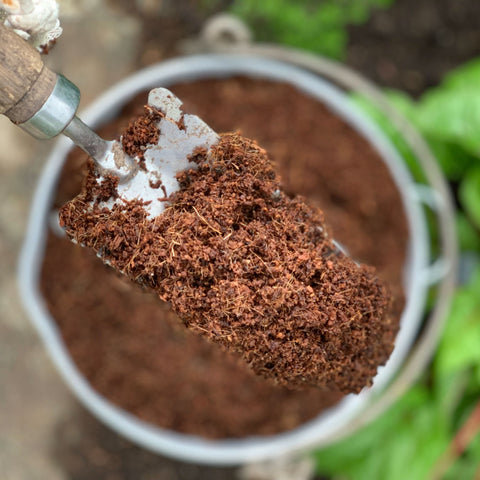
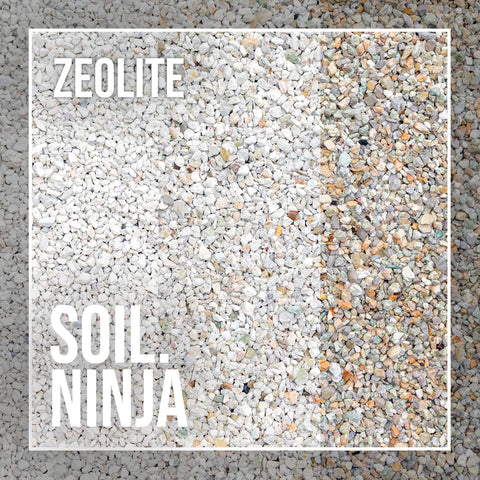
Elige una tierra que drene bien pero que retenga la humedad; una mezcla con corteza o fibra de coco añadidas, o una diseñada para Alocasias, ayudará a prevenir la pudrición de la raíz. Trasplanta cada tres años a medida que la planta crece.
Alimento
Alimenta cada cuatro riegos en la temporada de crecimiento; reduce a cada seis en otoño e invierno.
Temperatura
La temperatura idealmente debe estar entre 18 y 24 °C; asegúrate de que no baje de los 12 °C en invierno.
Seguro para mascotas
No, esta planta es tóxica para mascotas y niños pequeños si se consume en grandes cantidades.
Consejos principales de Sprouts
La Oxalis crece a partir de tubérculos en su sistema radicular; puedes separar estos tubérculos para dividir la planta en varias macetas diferentes y compartir o extender tu planta. Esto se hace mejor cuando la planta está inactiva en invierno, pero se puede hacer en cualquier momento siempre que seas suave con sus raíces.