Esta planta trepadora semiperenne tiene distintivas flores blancas que florecen durante todo el verano. Es resistente en la mayor parte del Reino Unido hasta -10°C.
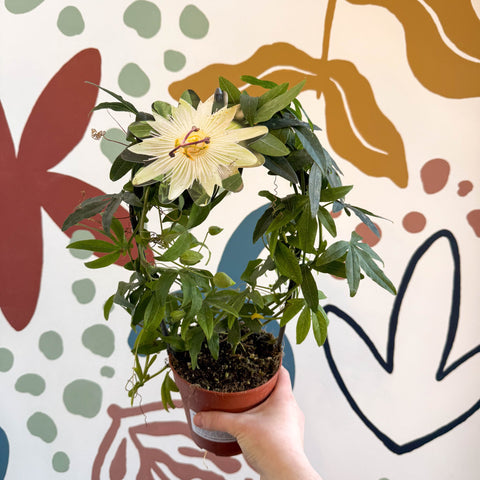
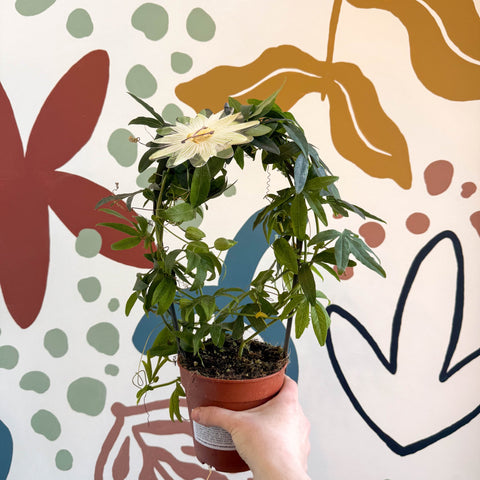
Lleva esta planta trepadora a tu jardín para darle un toque de estilo subtropical y la oportunidad de decir "guau" cada vez que una flor se abre en verano. Sus hojas pinnadas de color verde medio son el telón de fondo de las impresionantes flores de esta planta y proporcionan una pieza efectiva de vegetación estructural durante todo el año. Las flores son imposibles de describir: pétalos blancos puros detrás de un fleco blanco y estambres de color granate vibrante y naranja que sobresalen del centro. También puedes obtener una cosecha de frutos naranjas en otoño; estos son comestibles, pero no los más sabrosos como fruta fresca; hemos oído que son mejores para hacer mermelada. Lleva estas bellezas de otro mundo a tu jardín en un lugar soleado y protegido, y disfrútalas todo el año.
|
Perenne de hoja perenne
|
Flor con hábito trepador
|
Follaje todo el año; flores de junio a septiembre, frutos en septiembre y octubre.
|
Nombre científico
Passiflora caerulea 'Constance Elliott' (flor de la pasión con pétalos azul oscuro, cultivar: Constance Elliott)
Nombre común
Flor de la pasión, Pasionaria blanca, Pasionaria de corona blanca, Pasionaria común, Belleza del sur
Origen
Originaria de Sudamérica, se encuentra especialmente en el norte de Argentina, Bolivia, el sur y el este de Brasil, y Paraguay.
Consejos de poda
Poda a principios de primavera si es necesario.
Valor para la vida silvestre
Atractiva para abejas, mariposas e insectos beneficiosos. Las flores de tu Pasionaria son muy accesibles para los insectos y ricas en néctar y polen.
Ubicación
Cultívala en un lugar con sol total o parcial y resguardada del viento.
Riego
Tu Pasionaria crece mejor cuando se mantiene bastante húmeda; una vez establecida en el suelo, es resistente a la sequía.
Suelo
Usa un suelo bien drenado que retenga algo de humedad, pero no tanto como para mantener la planta activamente empapada en invierno.
Alimentación
Puede beneficiarse de un abono ligero, cada dos semanas en primavera y verano, para ayudarla a florecer saludablemente. Usa un abono con alto contenido de potasio, como el abono para tomates, para potenciar esas flores.
Segura para mascotas
No; las hojas y los frutos inmaduros pueden ser tóxicos o causar malestar estomacal en perros, gatos, caballos y humanos, aunque una vez maduros, los frutos son seguros para comer.
Consejos principales de Sprout
Para una mejor estética, asegúrate de que tu pasionaria tenga algo por donde trepar, ya sea un enrejado, una valla o un cobertizo.
Es posible que necesites invernar en un invernadero o jardín de invierno en zonas más frías.
Extras
Esta flor de la pasión ha sido galardonada con el prestigioso Premio al Mérito en Jardinería de la RHS.
¿Sabías que?
El nombre "flor de la pasión" fue dado por los primeros misioneros cuando vieron esta planta en América del Sur; vieron en la forma de la flor signos de la pasión de Cristo.