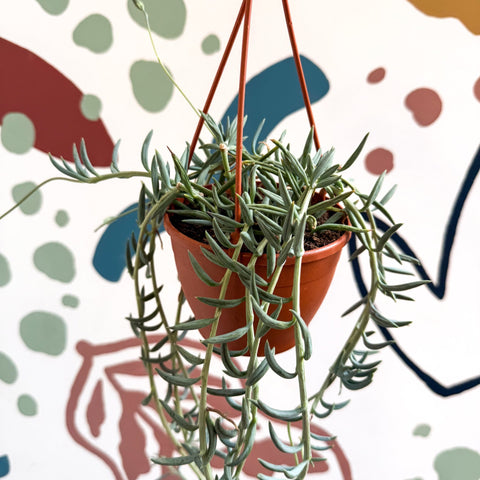
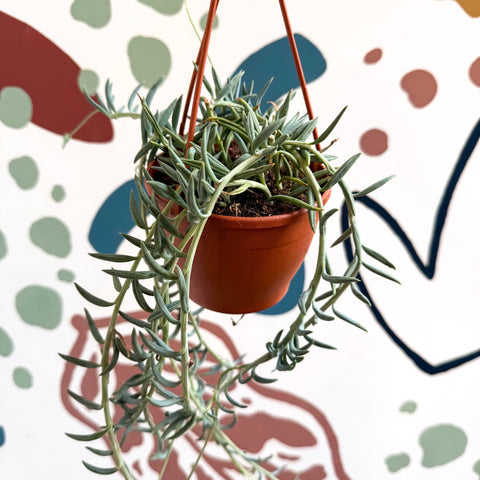
El Senecio hallianus, de crecimiento rastrero y forma suavemente escultural, es una llamativa suculenta conocida por sus hojas regordetas y en forma de cuentas con un sutil tono azul verdoso y delicadas rayas, lo que le valió el sobrenombre de «Collar de guisantes azules». Estas hebras colgantes son de rápido crecimiento y perfectas para macetas colgantes, estantes de suculentas o alféizares bañados por la luz. Fácil de propagar y tolerante a la sequía, aporta una textura suave y rastrera a tu espacio, e incluso puede sorprenderte con flores blancas de dulce aroma cuando está contenta.
Nombre científico
Senecio hallianus (Senecio = latín para «anciano»; hallianus = en honor al botánico sudafricano Harry Hall)
Sinónimos
Curio hallianus (clasificación moderna aceptada)
Nombre común
Collar de guisantes azules, Collar de sandías, Senecio colgante, Planta de uvas de mar
Origen
Nativa del sur de África, donde crece como cobertura vegetal rastrera sobre laderas secas y rocosas.
Luz
Prospera con luz brillante e indirecta, y desarrolla un color más fuerte y un crecimiento compacto con algo de sol directo suave. Ideal para ventanas orientadas al sur o al oeste en interiores.
Riego
Permite que la tierra se seque completamente entre riegos. Riega profundamente y luego drena. El exceso de riego es la causa más común de problemas: esta planta almacena humedad en sus hojas y prefiere secarse completamente entre riegos.
Humedad
Prefiere una humedad interior baja a media. Evita colocarla en lugares muy húmedos o mal ventilados.
Tierra
Utiliza una mezcla de cactus o suculentas con buen drenaje. Puedes mejorar el drenaje añadiendo arena gruesa, perlita o arena a la tierra estándar.
Alimento
Fertiliza cada 4 a 6 semanas en primavera y verano con un fertilizante diluido para cactus o suculentas. No es necesario fertilizar en invierno.
Temperatura
Prefiere 18-26 °C. Protege de las heladas y evita temperaturas inferiores a 10 °C.
Seguro para mascotas
No, las especies de Senecio son tóxicas si las ingieren mascotas o humanos.
Consejos principales de Sprouts
Recorta y replanta las hebras largas para mantenerla tupida y frondosa. El tono azul se intensifica con buena luz y condiciones más secas. Rota ocasionalmente para asegurar un crecimiento uniforme en todos los lados.