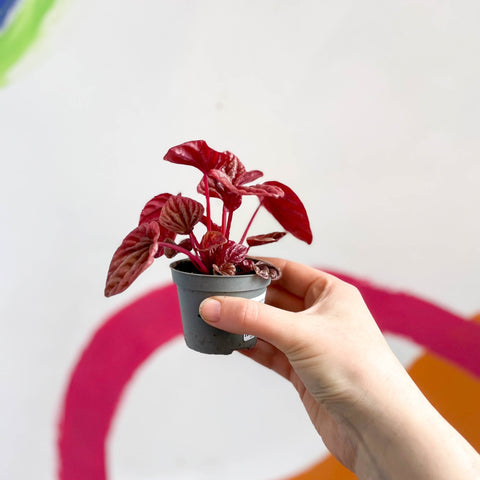
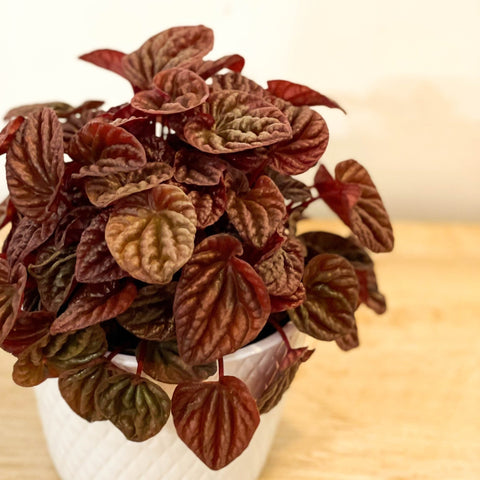
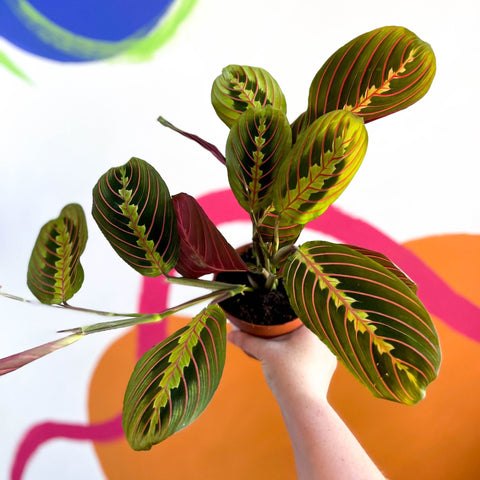
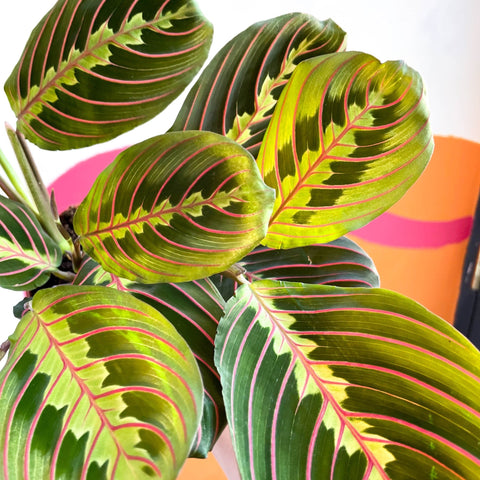
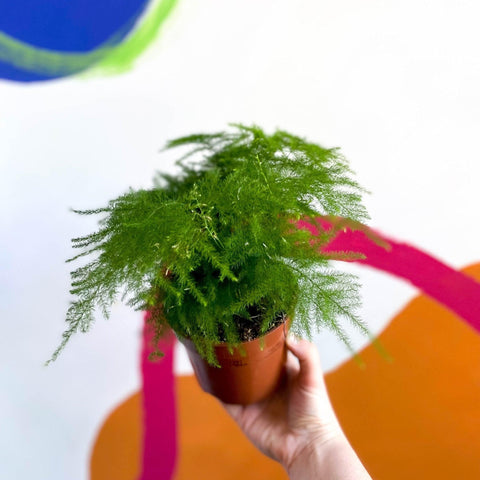
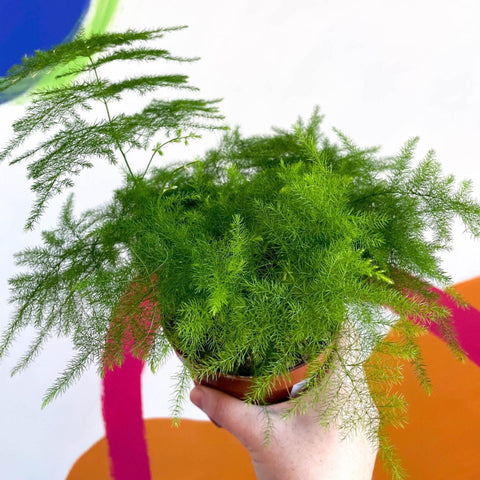
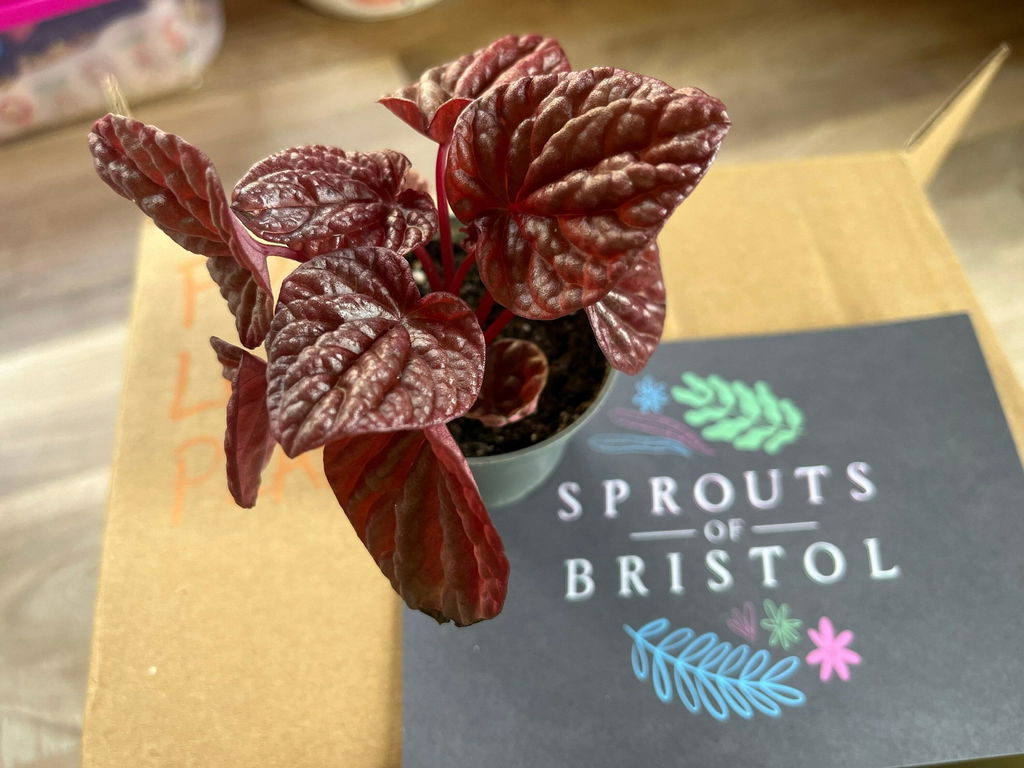
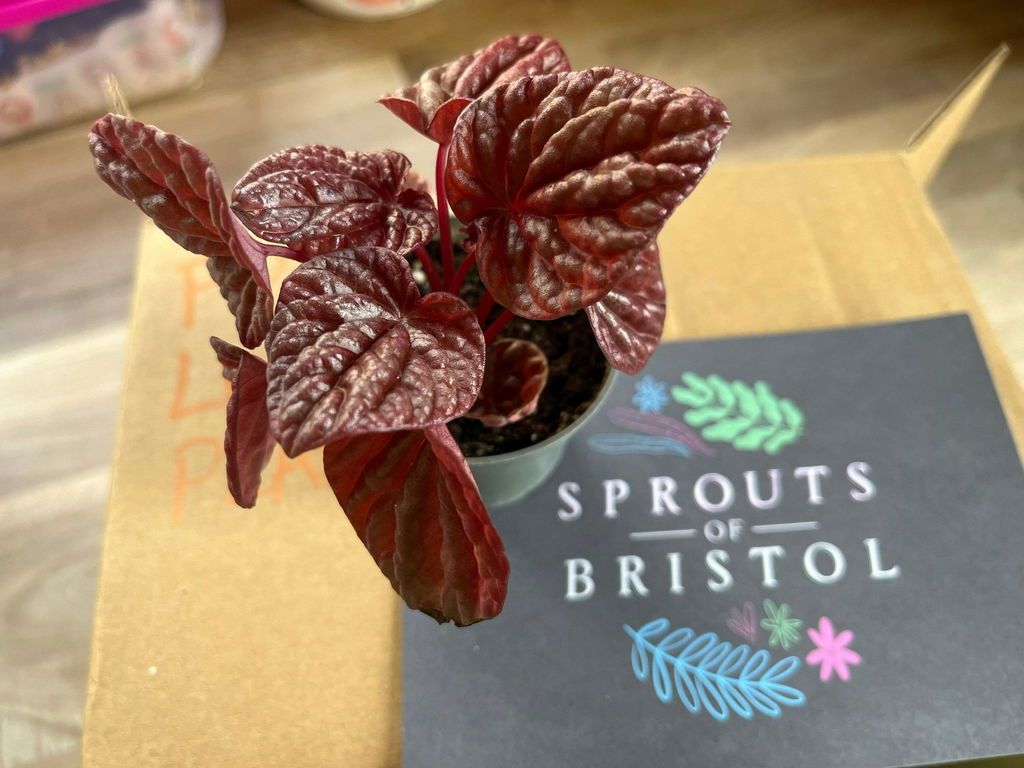
Peperomia caperata ‘Quito’ is a beautiful compact houseplant admired for its deeply textured, heart-shaped leaves in warm shades of copper, bronze, pink and reddish-brown. Its distinctive rippled foliage has an almost metallic sheen, creating a striking display of colour and texture. With its neat, bushy growth habit, this colourful Peperomia is perfect for shelves, desks and smaller spaces.
Scientific Name
Peperomia caperata ‘Quito’
Common Name(s)
Quito Peperomia, Ripple Peperomia, Radiator Plant
Origin
A cultivated variety of Peperomia caperata, a species native to the tropical rainforests of Brazil, where it grows in warm, shaded environments.
Light
Prefers bright, indirect light. Good light will help maintain the beautiful copper and reddish tones of its foliage. Avoid prolonged direct sunlight, which can scorch the leaves. It will tolerate moderate light levels, although its colouring may become less vibrant.
Water
Allow the top few centimetres of soil to dry between waterings, then water thoroughly and allow excess water to drain away. Its slightly succulent leaves store some moisture, making it more tolerant of occasional dryness than consistently wet soil. Reduce watering during autumn and winter.
Humidity
Prefers moderate humidity but generally adapts well to average household conditions. Avoid placing directly beside radiators or other sources of hot, dry air. Good airflow is important, particularly around its densely packed foliage.
Soil
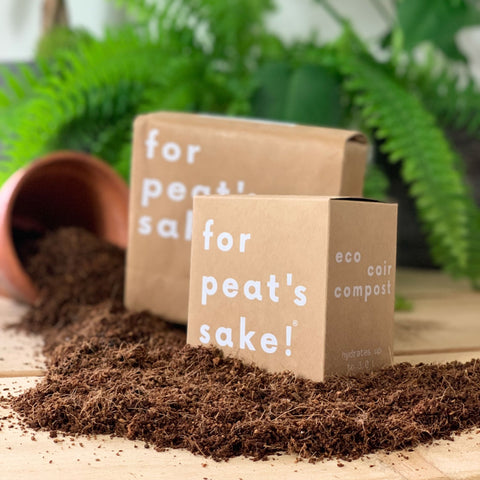
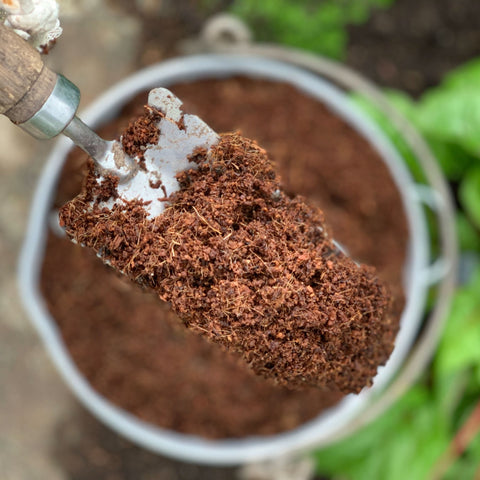
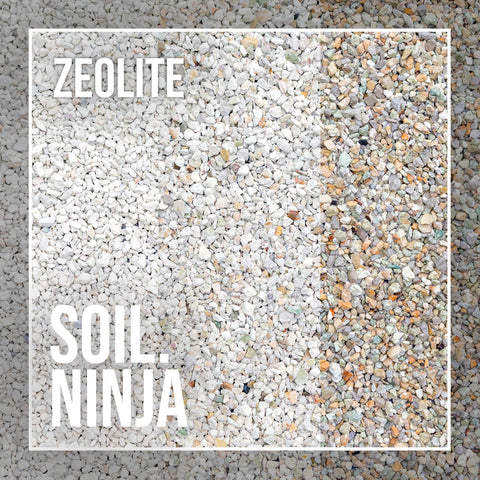
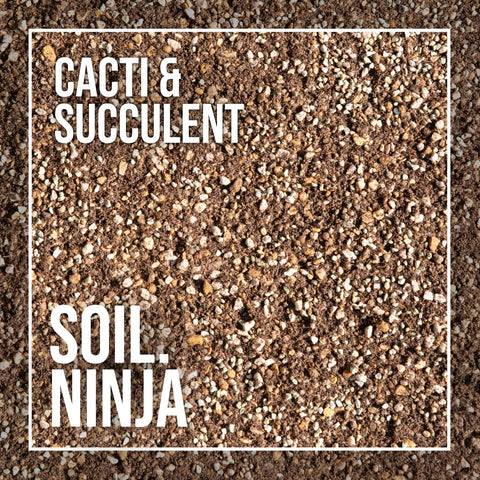
Use a light, airy and well-draining houseplant mix. Adding perlite and fine orchid bark will improve drainage and help prevent the roots from sitting in excess moisture.
Food
Feed every 4–6 weeks during spring and summer with a balanced liquid houseplant fertiliser diluted to half strength. Reduce feeding during autumn and winter when growth slows.
Temperature
Prefers warm temperatures between 18–26°C. Protect from cold draughts and avoid prolonged temperatures below 15°C.
Pet-safe
Yes. Peperomia caperata is generally considered non-toxic to cats and dogs.
Sprouts Top Tips
The biggest risk with Peperomias is overwatering. Allow the top layer of compost to dry before watering again, and avoid leaving water sitting in the centre of the plant’s dense foliage.
Give your ‘Quito’ plenty of bright, indirect light to encourage its beautiful warm colouring and compact growth.
Extras
‘Quito’ naturally forms a neat, compact mound of colourful foliage. Mature plants may produce slender, upright flower spikes that rise above the leaves. These are typical of Peperomias and are sometimes described as resembling tiny rat tails.
Did You Know?
The deeply wrinkled texture of Peperomia caperata gives it the common name Ripple Peperomia. The name caperata comes from Latin and refers to its wrinkled or crinkled appearance, while ‘Quito’ is particularly admired for its unusual coppery colouring.