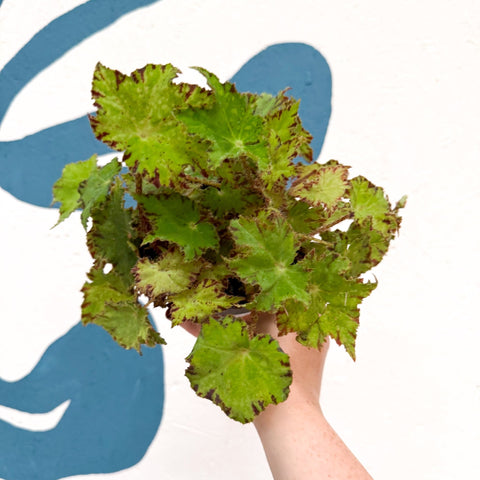
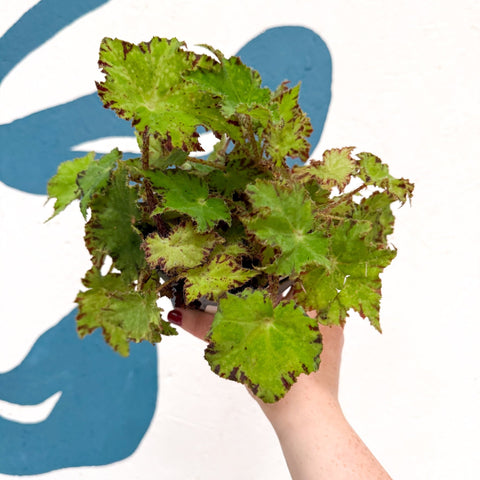
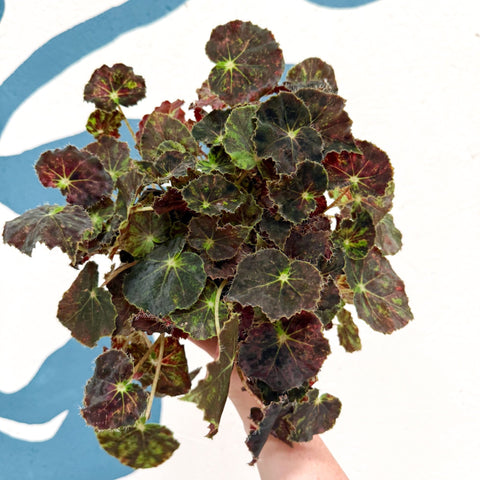
Begonia ‘Mishmi Silver’ is a striking foliage plant with broad, lobed leaves shimmering in shades of icy silver, veined with deep green and often tinged with plum beneath. Named after the Mishmi Hills of northeast India, this variety combines a wild, almost prehistoric look with a refined, silvery glow. It grows from thick rhizomes and stays compact, making it ideal for pots or bright, humid corners indoors.
Scientific Name
Begonia ‘Mishmi Silver’ (named after the Mishmi Hills in Arunachal Pradesh, India)
Believed to be a cultivar derived from rhizomatous species native to northeast India. ‘Mishmi Silver’ is grown for its distinctive leaf shape and rare, silvery tones – and may involve parentage from Begonia palmata or related species.
Common Name(s)
Mishmi Silver Begonia, Silver Leaf Begonia
Origin
Cultivar with parent species from the Eastern Himalayas (Arunachal Pradesh, India)
Light
Prefers bright, indirect light. Direct sun can scorch the leaves, but too little light may reduce colour contrast and slow growth.
Water
Water when the top 2–3cm of soil feels dry. Keep soil lightly moist in spring and summer, but never soggy. In winter, reduce watering and avoid wetting the rhizome or crown.
Humidity
Thrives in high humidity – aim for 50–70%. Avoid misting the leaves directly; instead, use a pebble tray or humidifier.
Soil
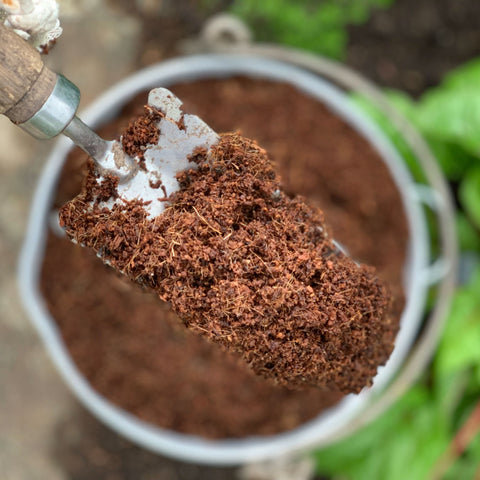
Likes a rich, free-draining mix – combine compost, orchid bark, and perlite. Rhizomatous begonias are prone to rot in compacted soil. Repot every 1–2 years in spring.
Food
Feed every 4–6 weeks in the growing season with a diluted balanced fertiliser. Avoid overfeeding.
Temp
Ideal temperature is 18–24°C. Protect from cold draughts and temperatures below 15°C.
Pet-safe
Toxic if ingested – keep out of reach of pets and children.
Sprouts Top Tips
Give the pot a quarter turn every week or so to keep the growth symmetrical. Wipe leaves gently with a soft brush or dry cloth to maintain their silvery shimmer.
Extras
Its creeping rhizome can be encouraged to branch by pinching the growing tips – helping the plant stay compact and bushy.
Did You Know?
This begonia is named after one of the most biodiverse regions of the Eastern Himalayas – home to cloud forests, rare orchids, and dozens of wild begonia species.