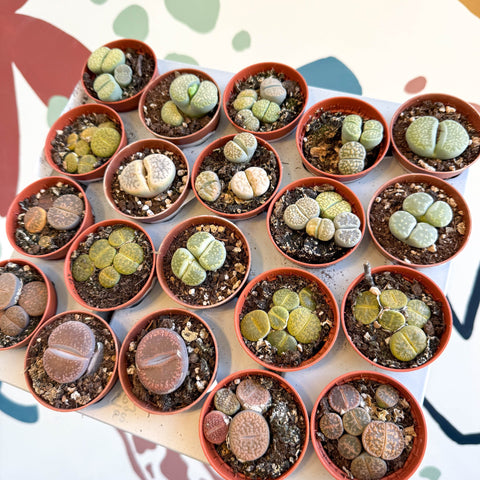
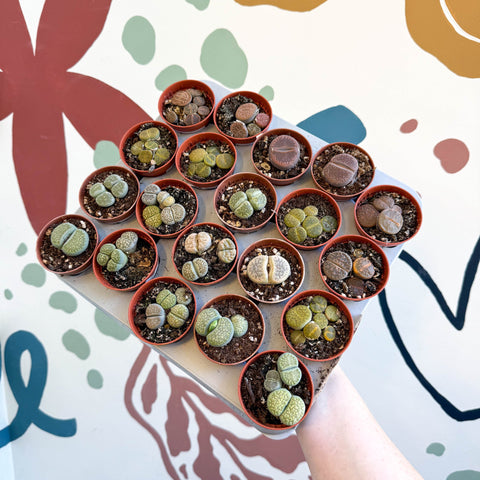
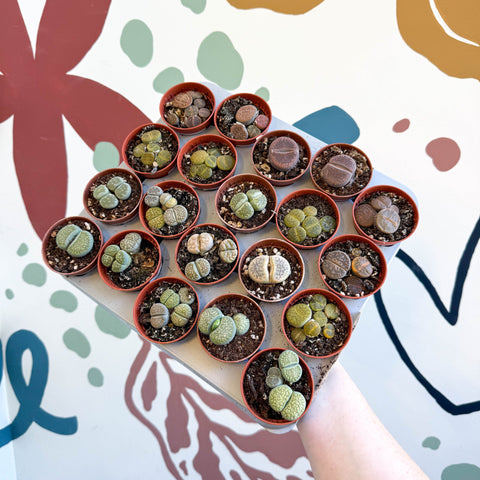
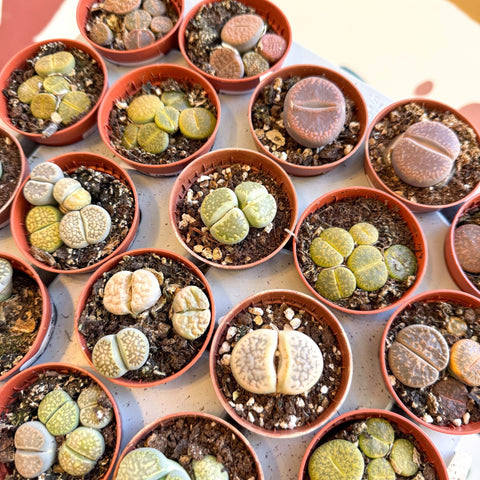
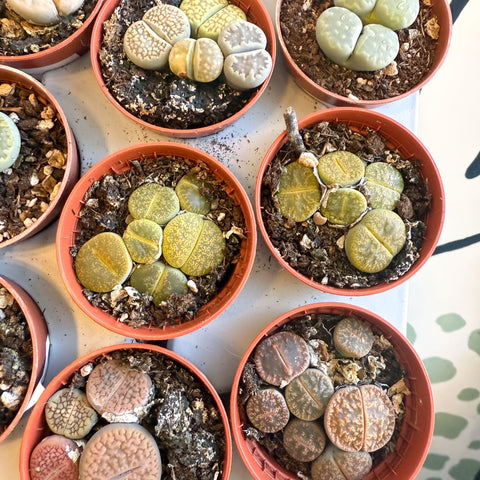
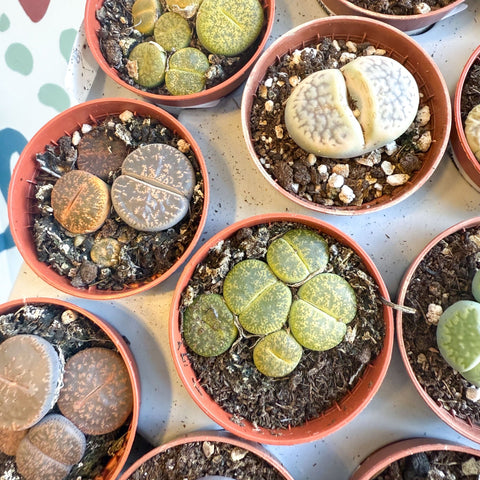
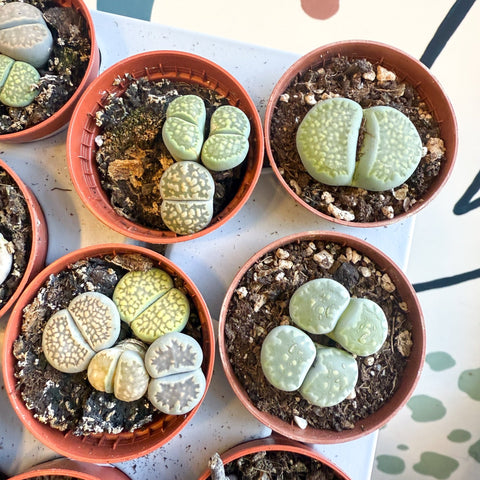
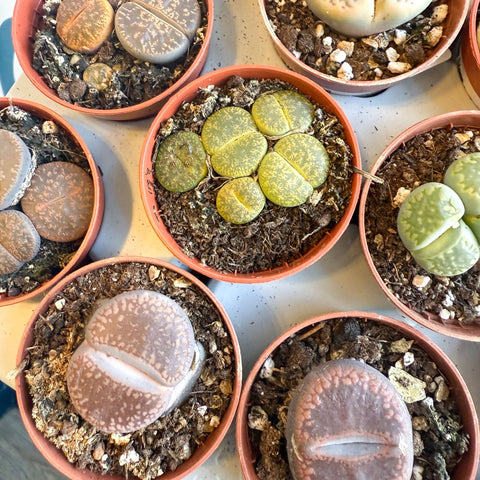
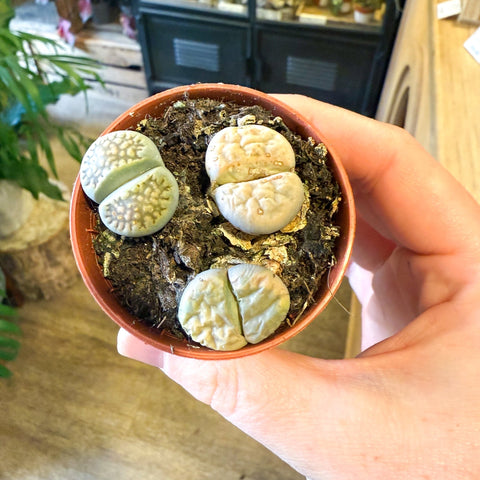
One of the most iconic species of Lithops, Lithops lesliei is prized for its stone-like appearance and intricately patterned leaves in earthy shades of brown, grey, or green. Native to South Africa, this slow-growing succulent blends into its surroundings in the wild to avoid being eaten – making it a true master of disguise. With the right care, it can also produce small daisy-like yellow flowers in late summer or autumn. Please note that the purchase is for one plant picked at random.
Scientific Name
Lithops lesliei (named after Rev. Leslie, who discovered the species)
Synonyms
None widely used, but often misspelt as “Lithops leslei”
Common Name
Living Stone, Pebble Plant, Flowering Stone
Origin
South Africa – particularly the Free State and Northern Cape provinces
Light
Needs bright, direct light to thrive. A sunny south-facing windowsill is ideal. If it stretches or becomes discoloured, it may need more sun.
Water
Water very sparingly. During spring and autumn, only water when the soil is completely dry. Do not water during winter or summer dormancy, especially during leaf replacement (when a new pair of leaves emerges from the old).
Humidity
Low humidity is best. Avoid misting or placing in humid areas like bathrooms.
Soil
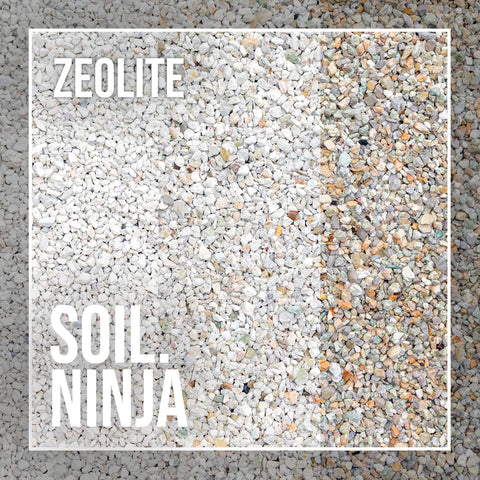
Use a free-draining gritty mix – cactus compost with added sand, pumice, or perlite. Lithops are highly prone to rot in dense soil.
Food
Fertiliser is optional – if used, apply a diluted cactus fertiliser once a year in spring only.
Temperature
Thrives between 18–25°C. Can tolerate higher temperatures if dry. Protect from cold drafts and temperatures below 10°C.
Pet-safe
Yes – non-toxic to pets and humans.
Sprouts Top Tips
Never water when the plant is splitting or replacing its leaves – let the outer leaves dry and shrink naturally before resuming watering. Overwatering during this phase is the most common cause of rot.
Extras
Can produce cheerful yellow daisy-like flowers in late summer or early autumn when mature.
Did You Know?
Each Lithops pair has a translucent “window” on the top surface that allows light to enter for photosynthesis – a clever desert adaptation!