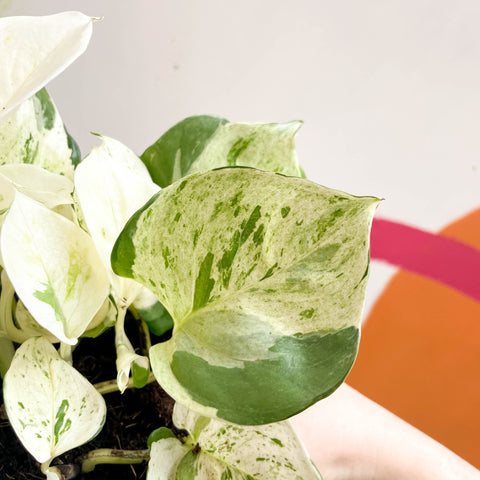
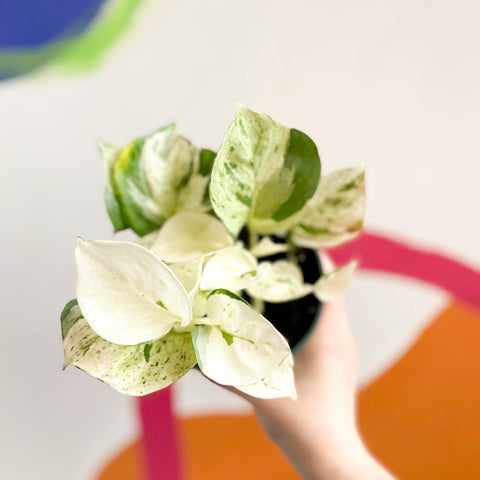
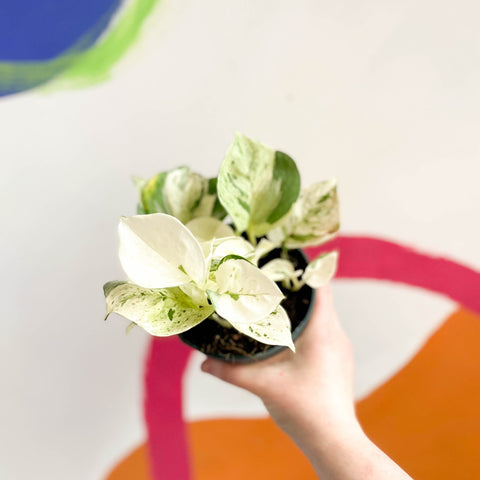
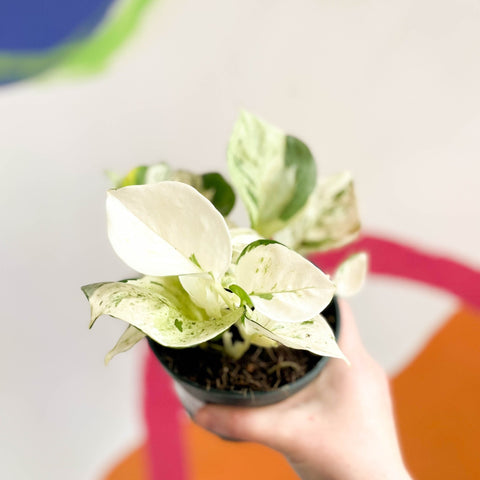
It's the high levels of variegation that really let this Pothos stand out from the crowd. Its leaves are almost entirely white, with speckles of various shades of green contrasting with and complementing the white. This stunning cultivar will need brihter light than most Pothoses to sustain this high level of variegation, but keep it happy and you're sure to get gorgeous foliage creeping along your shelves or up a moss pole for years to come. Yes, it's a creeper - and a keeper! Perfect in a hanging pot, oon a high shelf, or trained to climb, Pothos plants with their distinctive heart-shaped leaves are popular houseplants - add this one to your collection for some variety and a laid-back nature.
Scientific Name
Epipremnum aureum 'Happy Leaf' (golden plant which grows on the bottom of a tree, cultivar: happy leaf)
Synonyms: Pothos aureus, Rhaphidophora aurea, Scindapsus aureus
This plant was first described as a Pothos, and subsequently reclassified as both Rhaphidophora aurea and Scindapsus aureus before settling on the current scientific name: Epipremnum aureum.
Common Name
Happy Leaf Pothos, Majula Pothos, Happy Pothos, Devil's Ivy, Pothos Plant
Origin
This is a cultivated variety; the species originates in the Society Islands, French Polynesia
Light
Thrives in bright but indirect light. This plant tolerates lower light but may lose some of its white colouor if kept in too dim a spot. Avoid direct sunlight, which can scorch the leaves. If its variegation starts being overtaken by more green on newer leaves, gradually move it to a brighter location.
Water
Allow the top third of the soil to dry out between waterings. In shadier conditions, let about half the soil dry out to avoid waterlogging. Watch for soggy soil in winter, as overwatering can lead to root rot.
Humidity
Prefers average household humidity but enjoys higher humidity if available. Avoid misting directly, but occasional hosing down will help remove dust and keep leaves vibrant. Keep away from radiators and heaters that may dry the plant out.
Soil
Plant in a well-draining soil mix with chunky elements like bark or perlite for airflow. A mix designed for Monsteras or Philodendrons works perfectly. Repot every few years to refresh the soil and allow room for growth.
Food
Feed every four waters during spring and summer, reducing to every six waters in autumn and winter. Use a balanced liquid fertiliser at half strength.
Temperature
Thrives in temperatures of 18-30°C. Avoid temperatures below 12°C, as the plant may suffer cold damage.
Pet-safe
No, this plant is toxic to pets and small children if ingested.
Sprouts Top Tips
Give this plant room to grow or provide a pole or trellis for it to climb. With the right support, it can reach impressive lengths, making it perfect for larger spaces. Prune regularly to control growth and use cuttings to propagate new plants.
Extras
Manjula Pothos thrives with regular care and occasional grooming. Rotate the pot occasionally to ensure even growth and prevent leaning.
Did You Know?
In its native habitat, Epipremnum aureum can grow leaves up to 20m long and climb trees to dizzying heights, holding on with its impressive roots.