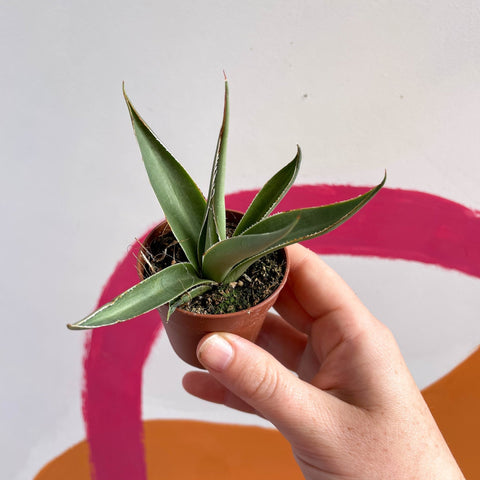
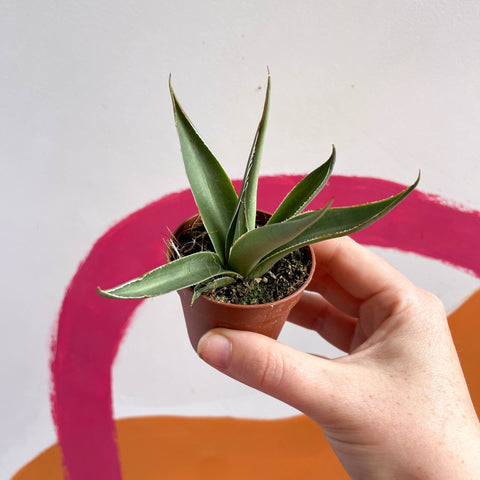
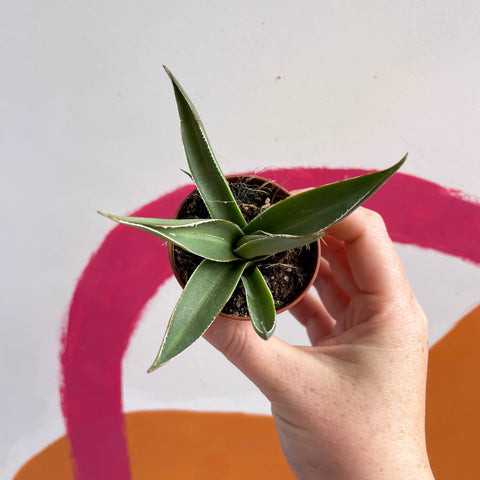
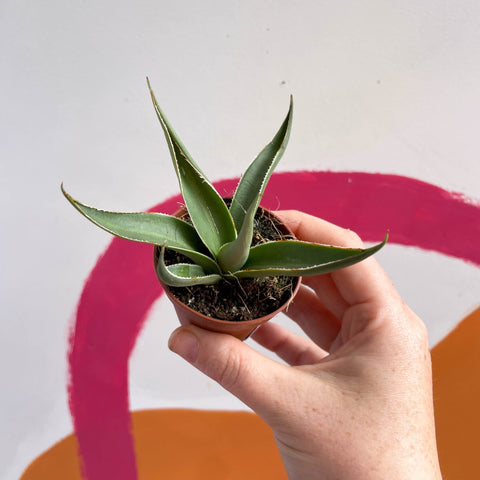
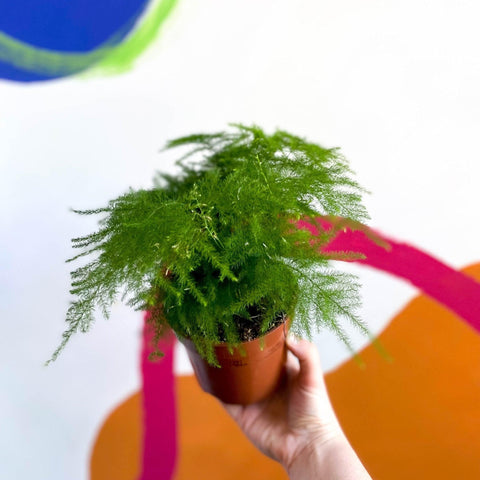
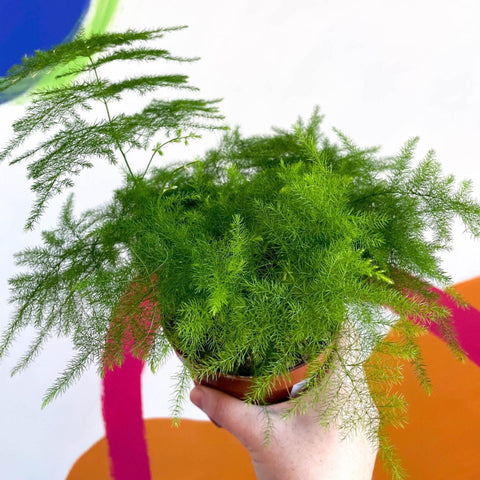
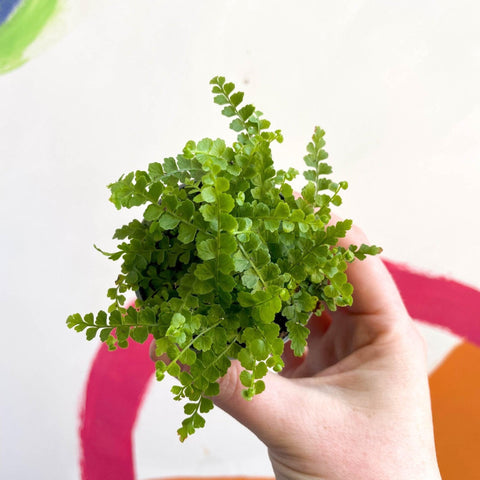
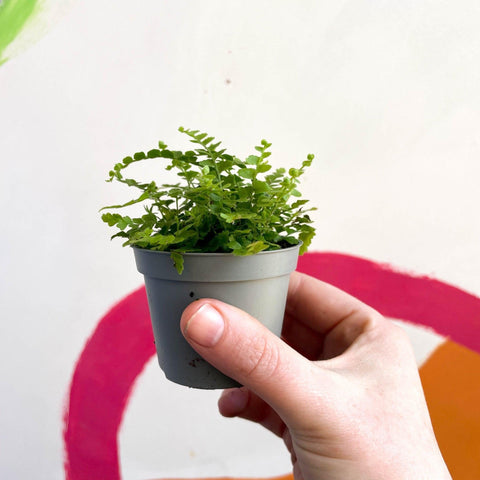
Agave filifera, commonly known as the Thread Agave, is a striking architectural succulent admired for its compact rosettes of narrow, pointed green leaves edged with delicate white threads. Its beautifully symmetrical growth habit and distinctive curling fibres give it an almost sculptural appearance. Slow-growing and wonderfully low-maintenance, this unusual Agave makes a fantastic addition to a sunny windowsill, succulent collection or sheltered outdoor display.
Scientific Name
Agave filifera
Common Name(s)
Thread Agave, Thread-Leaf Agave, Thread-Leaved Agave
Origin
Native to central Mexico, where it grows in rocky, mountainous environments with plenty of sunlight and excellent drainage.
Light
Prefers very bright light and several hours of direct sunlight each day. A sunny south-facing windowsill is ideal indoors. It can also be grown outdoors in a warm, sheltered position during summer. Introduce plants gradually to stronger sunlight to prevent scorching.
Water
Allow the soil to dry out completely between waterings, then water thoroughly and allow excess water to drain away. Agaves are highly drought-tolerant and store moisture in their thick leaves. Reduce watering significantly during autumn and winter, particularly when temperatures are cooler.
Humidity
Prefers low humidity and good airflow. Avoid particularly humid environments and do not mist the foliage.
Soil
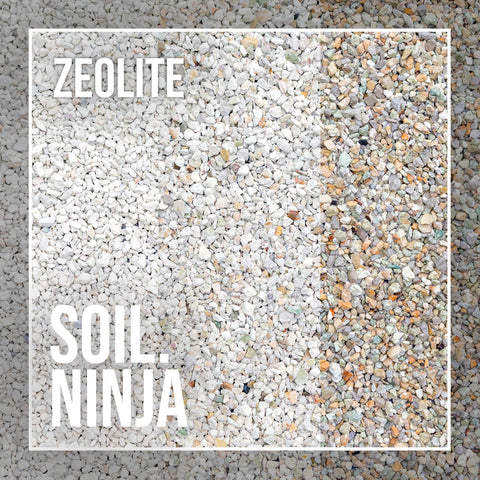
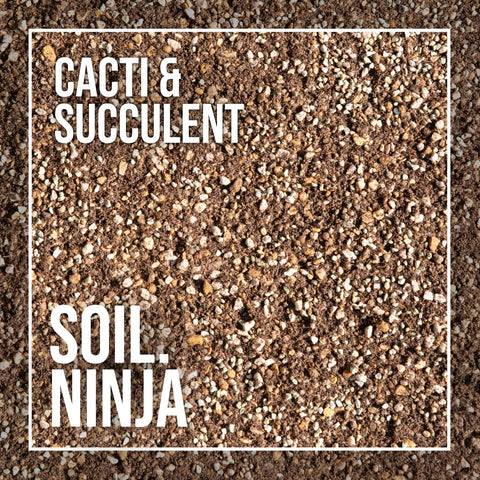
Use a very free-draining cactus and succulent mix with plenty of added mineral material such as perlite, pumice or grit. Excellent drainage is essential to prevent root rot.
Food
Feed lightly every 6–8 weeks during spring and summer with a diluted cactus and succulent fertiliser. Little to no feeding is required during autumn and winter.
Temperature
Prefers warm temperatures during active growth but can tolerate cooler conditions when kept dry. Protect container-grown plants from prolonged frost and excessive winter rainfall. In the UK, keeping it in a bright, sheltered, frost-free position during winter is the safest option.
Pet-safe
No. Agaves contain irritating compounds that can cause digestive upset if ingested, and their sharp leaf tips can cause physical injury. Keep out of reach of pets and children.
Sprouts Top Tips
The most important thing for your Thread Agave is plenty of sunlight and excellent drainage. Avoid overwatering, particularly during winter, and never allow water to collect around the centre of the rosette for prolonged periods.
Be careful when handling, as the leaves have sharp terminal spines despite their delicate, thread-like edges.
Extras
Agave filifera naturally forms a compact, symmetrical rosette and may gradually produce offsets around its base, creating a small cluster of plants over time.
Mature specimens can eventually produce a tall flowering stalk, although flowering is rare in plants grown indoors and usually occurs only after many years.
Did You Know?
The name filifera comes from Latin and means “thread-bearing”, referring to the distinctive white fibres that curl away from the edges of its leaves.
Like many Agaves, Agave filifera is monocarpic, meaning an individual rosette flowers once before dying. However, established plants may produce offsets that continue growing after the original rosette has flowered.