
Preguntas frecuentes sobre plantas: ¿Por qué se reclasifican las plantas?
|
|
Tiempo de lectura 13 min
|
|
Tiempo de lectura 13 min
Cuando buscas plantas de interior, es posible que observes algunas palabras sin sentido adjuntas a cada planta. Este es el nombre científico de la planta, dado en latín botánico. Curiosamente, este lenguaje también incorpora palabras griegas y muchos nombres de lugares y personas de todo el mundo de la horticultura. El sistema de clasificación que usamos actualmente se aplica a todos los organismos vivos, y se llama el Sistema Linneano de Clasificación, en honor al científico que lo estableció, Carl Linnaeus.
La Clasificación Linneana da un nombre científico único a cada organismo, lo que ayuda a que el descubrimiento y la investigación científica sean consistentes en diferentes idiomas e instituciones. La nomenclatura de algas, hongos y plantas es independiente de la de los animales, y es en esta sección en la que nos centraremos aquí. Es un sistema útil porque, si bien una planta puede tener 20 (¡o más!) nombres comunes, solo tendrá un nombre científico. Bajo el sistema de clasificación, el mundo natural se divide y subdivide en las secciones:
Reino (aquí, estamos en el reino vegetal, o Plantae)
Filo (las plantas se dividen en musgos (Bryophyta), helechos (Pteridophyta),y plantas con semillas (Spermophyta))
Clase (hay 24 clases de plantas, divididas principalmente por cómo se disponen los estambres en las flores)
Orden (esta sección agrupa familias relacionadas)
Familia (esto agrupa géneros de plantas por características similares; puede ser útil saber cuáles de nuestras plantas de interior pertenecen a la misma familia, ya que el cuidado suele ser similar)
Género (una agrupación de especies que están bastante estrechamente relacionadas entre sí; nuevamente, esto es útil para los cuidadores de plantas de interior, ya que el cuidado de cualquier miembro de un género es probablemente similar al de otros)
Especie (esta es la unidad más pequeña en la que encajará cada planta u organismo, generalmente definida como un grupo de organismos que pueden reproducirse entre sí y producir descendencia fértil)
En la vida cotidiana, solo necesitamos preocuparnos por estos dos últimos; son los que usamos y los que tienen más probabilidades de cambiar a medida que mejora la comprensión.
Un nombre científico se compone del nombre del género y de la especie (también conocido como "epíteto específico"). Son los más específicos, por lo tanto, los más útiles para la identificación. Nombrar las otras cinco secciones, cada vez, sería excesivo y un poco aburrido. El nombre del género siempre se escribe con mayúscula, y este epíteto específico, que da la especie, nunca se escribe con mayúscula. Un nombre científico siempre debe escribirse en cursiva. Si se habla de muchas especies diferentes del mismo género, se puede usar una especie de taquigrafía, abreviando el género a su primera letra, es decir: Genus species se abrevia a G. species.
Los cambios en el nombre científico ocurren cuando se realizan más descubrimientos y las clasificaciones de diferentes organismos cambian. Espero que ahora entiendas cómo funciona el sistema, pero ¿por qué podrían cambiar los nombres?
Hay dos factores principales que influyen en los cambios de nombre de nuestras plantas de interior favoritas…
Precedencia: El primer nombre publicado para una planta tiene precedencia, por lo que si se encuentra un nombre anterior o se descubre que dos plantas son iguales cuando se pensaba que eran diferentes, el nombre anterior se convierte en el aceptado. Reglas como esta están codificadas en el Código Internacional de Nomenclatura, un documento elaborado para gobernar la denominación de organismos en el reino vegetal.
Mejoras en la comprensión científica: El análisis de ADN está mejorando nuestra comprensión de la clasificación de las plantas, y la mayoría de las que se reclasifican ahora se deben a esto. Las plantas se renombran cuando se descubre que son genéticamente idénticas o distintas de otra planta cuando se pensaba lo contrario. Cuando se descubre que pertenecen a un lugar ligeramente diferente en las categorías en las que hemos dividido el reino vegetal, el nombre científico aceptado, el utilizado como estándar por científicos e investigadores, cambia.
Básicamente, ¡nuestra comprensión científica siempre está mejorando! Y es emocionante ver esto a medida que la clasificación de las plantas cambia y se desarrolla.
En nuestra investigación sobre las plantas que tenemos en stock, hemos encontrado bastantes historias diferentes sobre la reclasificación de plantas. Sigue leyendo para encontrar algunos de mis ejemplos favoritos personales, y descubre si alguna de tus propias plantas de interior ha tenido un cambio de nombre científico.
Por favor, ten paciencia mientras unimos las historias. Incluso con altos niveles de digitalización, es difícil rastrear plantas por sus nombres a lo largo de la historia, ¡especialmente cuando cambian a mitad de la discusión científica!

Algunas plantas son inicialmente clasificadas en un Género antes de ser trasladadas a otro. A veces, esto ocurre con todo un grupo de plantas. En los ejemplos siguientes, algunas de las plantas comenzaron como el mismo género que otro grupo completo antes de ser trasladadas al suyo propio, mientras que otras comenzaron como un género totalmente separado antes de ser trasladadas al mismo y fusionadas, cuando resultó que eran más similares de lo que los científicos habían creído inicialmente.
En 1832, se publicó por primera vez el género Homalomena. Dentro de las plantas que originalmente se pensaba que formaban parte de este género, más tarde se descubrió que un grupo era más distinto de lo que se había pensado inicialmente. Estas fueron trasladadas al género Adelonema después de su establecimiento en 1860. Sin embargo, este es un proceso largo: ¡la planta Reina de Corazones, Adelonema wallisii, solo fue trasladada de Homalomena a Adelonema en 2016!
Un género con el que quizás estés más familiarizado es el género Calathea. Pero, ¿sabías que la mayoría de las Calatheas de plantas de interior se encuentran ahora en un género diferente? Este desarrollo reciente ha visto a muchas especies dar el salto de Calathea a Goeppertia, ya que el análisis ha revelado que son genéticamente más similares a ese género.
¿Has oído hablar de la rara planta de interior Apoballis acuminatissima? Quizás no, yo no la conocía antes de que la tuviéramos en stock el año pasado. Y solo tiene ese nombre desde 2010, cuando un estudio la reclasificó del género Schismatoglottis, más conocido como plantas de lengua caída. La similitud visual las mantuvo agrupadas durante casi 150 años, pero la ciencia del siglo XXI ha cambiado también esta clasificación.
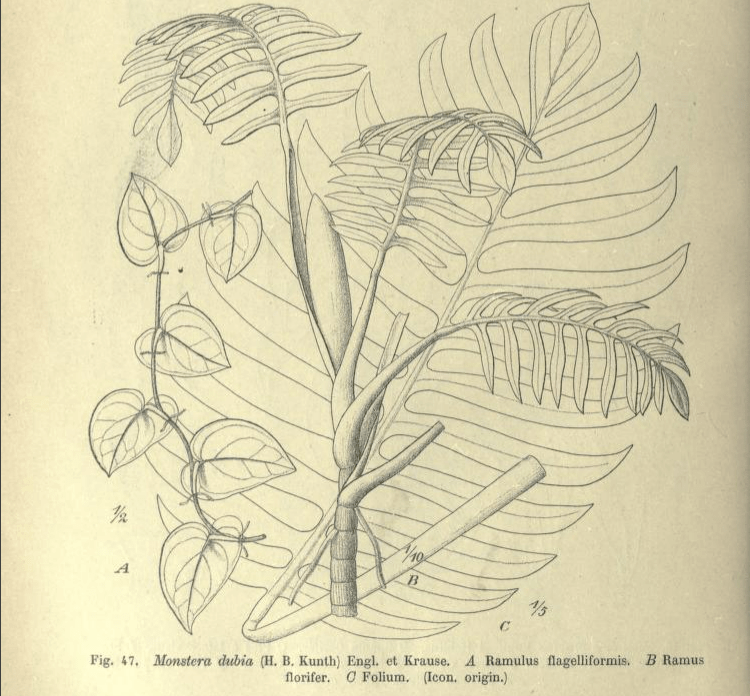
En 1825, una planta epífita encontrada en Venezuela fue nombrada Marcgravia dubia, catalogada en una lista de descubrimientos de una exposición en lo que entonces era Nueva Andalucía. El epíteto dubia significaba que el científico que la publicó, Kunth, no estaba seguro de si este era el género correcto. En 1908, se publicó un artículo que proponía otro nombre de género, y esta clasificación se ha mantenido aceptada desde entonces: Monstera dubia. Una razón por la que esta planta es tan difícil de clasificar es el dimorfismo que muestra: las hojas juveniles tienen un aspecto totalmente diferente a las hojas adultas.
Finalmente, quizás conozcas bien la planta de serpiente, también conocida como Lengua de suegra; es una planta de interior popular por lo fácil que es de cuidar. Incluso puede que hayas oído llamarla Sansevieria. Pero, ¿sabías que un análisis reciente ha cambiado esta clasificación? Sansevieria se había utilizado desde que el nombre fue publicado en Nápoles en 1787, pero ahora ha sido agrupada en el mismo género que el Drago, Dracaena, ya que no había tanta diferencia genética como se pensaba. Este es un desarrollo bastante reciente, y la mayoría de las veces todavía verás plantas de serpiente a la venta como Sansevieria, porque es el nombre que más gente reconocerá. Además, esta es una buena demostración de que a veces solo cambia el género, pero a veces cambia todo el nombre. Sansevieria trifasciata, nombrada en 1903, se convirtió en Dracaena trifasciata en 2017. Pero encontrarás Sansevieria zeylanica en dos lugares. La planta a la que se le dio este nombre en 1799 mantuvo el nombre de la especie, convirtiéndose en Dracaena zeylenica, pero la que fue identificada como tal en 1805 se descubrió que era diferente. En 1829, se identificó como Sansevieria roxburghiana, y ahora el género ha cambiado, a partir de 2018, este es el nombre de la especie que ha mantenido: Dracaena roxburghiana.
Algo más que quizás veas es más simple: una simple confusión. Antes nos vendían plantas como Syngonium nephthytis, ¡pero esta planta no existe! Este nombre es una confusión, porque el género Nephthytis a menudo se confunde con Syngonium, lo que significa que a veces ambos nombres terminan en la planta. En este caso, la planta que realmente teníamos era un Cultivar del buen Syngonium podophyllum.
La prioridad de publicación se tiene en cuenta al nombrar plantas. ¿Qué es eso cuando está en casa? Te oigo preguntar. Significa quién llegó primero. La primera persona en publicar un nombre de planta tiene prioridad para nombrarla.
Así que cuando, por ejemplo, se descubrió que la especie Agave lophanta era sinónimo de Agave univittata —las dos eran genéticamente idénticas— el nombre no se decidió al azar. A. lophantha se publicó en 1850, pero A. univittata la había superado por 19 años, habiendo aparecido por primera vez en 1831. Así que el nombre de ambas plantas, ahora conocidas como una sola especie, es oficialmente A. univittata.
La especie Hoya latifolia contiene un par de plantas que se pensaba que eran especies distintas —H. macrophylla y H. polystachya se descubrieron más tarde que eran idénticas a Hoya latifolia. Fueron descartadas por diferentes razones: H. polystachya se publicó más tarde, por lo que latifolia tuvo prioridad de publicación. Pero H. macrophylla se publicó en 1834, tres años antes de H. latifolia en 1837. Sin embargo, fue calificada como un "nombre ilegítimo" (la notación para esto es nom. illeg.). Esto significa que violó las reglas del Código Internacional de Nomenclatura en ese momento y no se consideró válido. Esta es otra forma en que los nombres de plantas pueden ser descartados y reemplazados.
Puede que veas "var." o "ssp." en medio de un nombre científico. Estos significan "variedad" y "subespecie" respectivamente, ambas formas en que las especies se subdividen debido a ligeras diferencias naturales. Y a veces un nombre científico cambia porque se descubre que una variedad o subespecie es más o menos distinta de lo que se pensaba inicialmente:
Puede que hayas oído hablar del Aloe vera, pero ¿sabías que esta suculenta originalmente se pensaba que era una variedad de una especie diferente? Originalmente fue clasificada como Aloe perfoliata var. vera en 1753, pero para 1768 otro estudio la había identificado como una especie separada, y hasta el día de hoy, es conocida en todo el mundo como Aloe vera.
Y luego está Anthurium ellipticum, una planta que inicialmente se pensó que era una especie propia, y que a menudo se vende como tal. Sin embargo, la Jungle Bush es en realidad una variedad de otra especie, Anthurium crassinervium var. crassinervium para ser exactos.
Los híbridos se forman cuando dos especies diferentes se reproducen, creando una planta completamente nueva. El polen de una planta progenitora encuentra el estigma de la otra, y la semilla que producen es una combinación de las dos especies. La mayoría de los híbridos botánicos se cultivan, pero es posible que esto también ocurra de forma natural.
Una de mis plantas híbridas diseñadas por humanos favoritas es el Helecho Madre. Tiene ese bonito aspecto de helecho, pero no es tan delicado como muchos otros helechos. ¡Y eso es porque fue criado para ser más resistente como planta de interior! Es un híbrido entre dos especies australianas de Asplenium, A. dimorphum y A. difforme. Para este nombre científico, obtenemos una fórmula híbrida que muestra su parentesco: Asplenium dimorphum x difforme (más el nombre del cultivar 'Parvati')

A veces, hay una historia larga y complicada detrás de la clasificación actual aceptada de las plantas. Aquí tienes algunos ejemplos complejos...
La impresionante planta de nervios se conoce ahora como Fittonia albivenis. Pero no siempre fue tan simple. Originalmente, las plantas de nervadura blanca y de nervadura roja se clasificaban como especies diferentes. En la década de 1860, eran Gymnostachyum argyroneurum (para la nervadura blanca) y G. verschaffeltii (para la nervadura rosa o roja). En esa misma década, fueron reclasificadas al género Fittonia , nombrado en honor a las hermanas Fitton, pero manteniendo los mismos epítetos específicos. Este siguió siendo el nombre aceptado durante más de un siglo, pero una investigación publicada en 1979 vio que las dos especies fueron reclasificadas como una, y desde entonces, han sido Fittonia albivenis , con dos grupos de cultivares, 'Argyroneurum' y 'Verschaffeltii' para los colores de las nervaduras blanca o rosa/roja.
La Orquídea Zygo es impresionante en tonos morados y verdes. Pero ha tardado un tiempo en llegar a su estado actual de denominación. Tomemos la Zygopetalum maculatum. A lo largo del siglo XIX, se movió de género en género, primero como Dendrobium (1816), luego como Broughtonia (1826) y finalmente se estableció en Maxillaria maculata (1832). ¡Pero no por mucho tiempo! En 1970, la especie fue revisada y reclasificada como Zygopetalum maculatum, el nombre que todavía conserva hoy. Podrías preguntarte cuántas orquídeas hay, eso se debe a que la orquídea es una familia completa de plantas (las Orchidaceae), por lo que hay muchos géneros dentro de ella.
Mi tercer ejemplo es uno de los pilares de las plantas de interior: el Pothos Dorado, Epipremnum aureum. Si alguna vez te has preguntado por qué nos referimos a tantas plantas con el nombre de "Pothos", es porque este fue el nombre del género que se les dio a muchas de ellas cuando se descubrieron inicialmente. El nombre proviene del nombre común de la planta en cingalés, un idioma de Sri Lanka, y se aplicó a muchas enredaderas trepadoras. Sin embargo, una vez que se realizaron mejores análisis científicos y, finalmente, genéticos, resultó que no todas estaban tan estrechamente relacionadas, a pesar de sus formas similares. Lo que hoy conocemos como E. aureum comenzó como un Pothos (Pothos aureus), en 1880, y posteriormente fue descrito como Epipremnum mooreense en 1899, Scindapsus aureus en 1908 y Rhaphidophora aurea en 1963. La clasificación actual sigue un artículo de 1964, y afortunadamente, esa ha sido hasta ahora la última palabra.
A veces, un nombre no cambia, pero un nombre posterior se populariza. La Planta de Brillante Plateado a menudo se vende bajo el nombre Pilea glaucophylla como planta de interior. Este nombre proviene de un artículo de 1936. Sin embargo, el nombre aceptado no cambió como resultado de este artículo: la planta sigue siendo conocida como Pilea multiflora, como fue nombrada en 1852. Este nombre fue dado a un espécimen tipo diferente, por lo que es posible que durante un tiempo se pensara que era una planta diferente hasta que se notó y confirmó la similitud, pero no antes de que el nombre se hubiera popularizado mucho en el cultivo de plantas.
A menudo las plantas se venden sin un epíteto específico, y solo se indica el género. Este fue el caso cuando empezamos a almacenar Tradescantia 'Green Hill', pero después de investigar descubrimos que había sido identificada en 2018 como Tradescantia mundula, así que ahora la vendemos con ese nombre.
La otra razón por la que es posible que no se obtenga un epíteto específico es si la planta es un híbrido de parentesco desconocido, o si hay demasiadas plantas parentales para enumerar. Este es el caso a veces con plantas que han estado en cultivo durante mucho tiempo; a menudo nos resulta difícil confirmar las especies de Begonia, por ejemplo, aunque hay una base de datos disponible para algunos de los cultivares. Y así, a menudo la Lirio Leopardo (Dieffenbachia) llega sin nombre de especie, y no se puede encontrar ninguno. Lo más probable es que sean híbridos, ¡pero aún no he encontrado una lista de estos para confirmarlo!
¡Espero que hayas encontrado la lectura sobre los entresijos de la clasificación de plantas casi tan fascinante como yo he encontrado aprender sobre ella! Definitivamente no es necesario tener un conocimiento profundo de la nomenclatura científica para poder cuidar las plantas de interior, pero a veces es útil saber qué plantas están más estrechamente relacionadas. Puede ayudarte a averiguar dónde crecerán más felizmente, o si una planta que estás considerando comprar tendría necesidades de cuidado similares a las que ya tienes. Como mínimo, conocer el nombre científico de tu planta te facilitará la búsqueda de información sobre ella; por ejemplo, 'Planta de oración' puede referirse a cualquier planta de la familia Marantaceae, pero si sabes si tienes una Maranta, Goeppertia o Ctenanthe, podrás encontrar información mucho más específica (el juego de palabras está muy intencionado).
Y ya sea que te encanten los nombres latinos o sientas que todavía te suena a chino, al menos ahora sabes qué hace en la etiqueta de tus plantas favoritas.
Para clasificaciones de plantas actualizadas, me he remitido, como siempre, a la Lista de Plantas en World Flora Online y a Plants of the World Online de Kew Gardens. Ambos proporcionan enlaces a artículos, especialmente útiles para clasificaciones más antiguas, como el artículo de Monstera dubia con ilustraciones en Das Pflanzenreich. También consulté el Código Internacional de Nomenclatura para algas, hongos y plantas para obtener información detallada sobre las convenciones de nomenclatura. Mi recurso familiar para los significados de los nombres de plantas es Stearn’s Dictionary of Plant Names (William T. Stearn, 1996).
Rhianna Bangham
Rhianna trabaja en la tienda y contribuye al contenido de Sprouts of Bristol, incluyendo notas de cuidado de plantas, descripciones de productos y publicaciones de blog. Con una licenciatura en Clásicas, el amor de Rhianna por los idiomas —incluido el latín— es perfecto para descifrar nombres de plantas y añadir detalles extra a nuestras guías de cuidado de plantas. Fuera del trabajo, le gusta remar, andar en bicicleta y aprender a tocar el violín. ¿Su planta favorita? ¡La siempre popular planta araña, por supuesto!