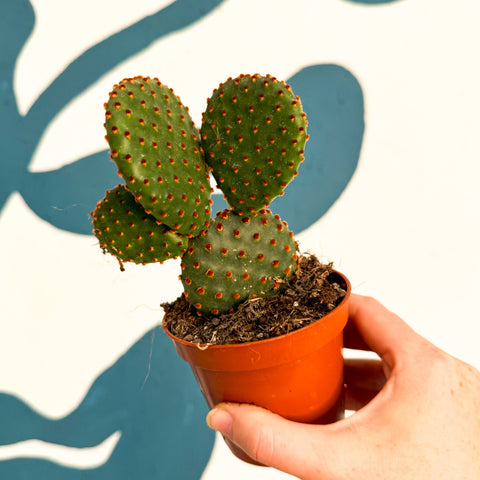
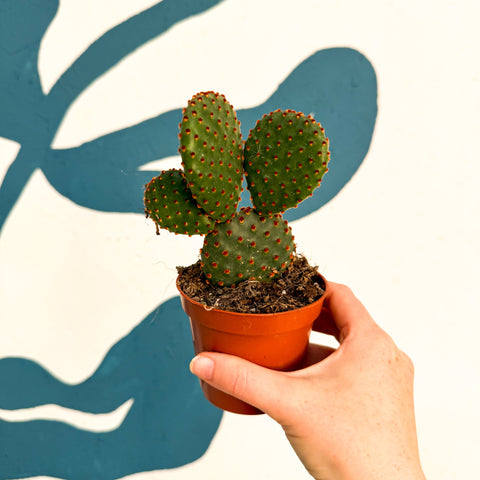
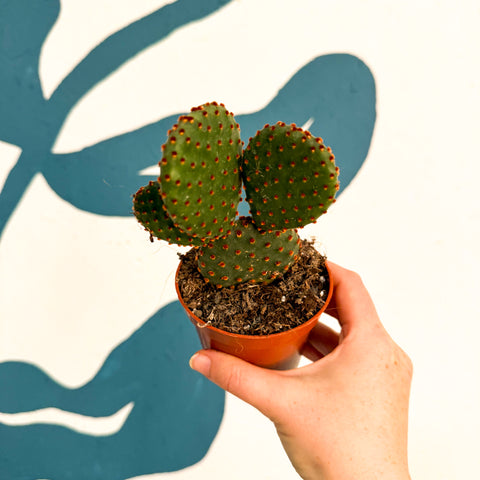
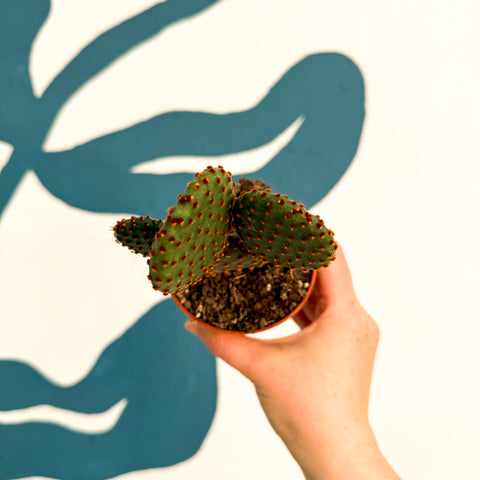
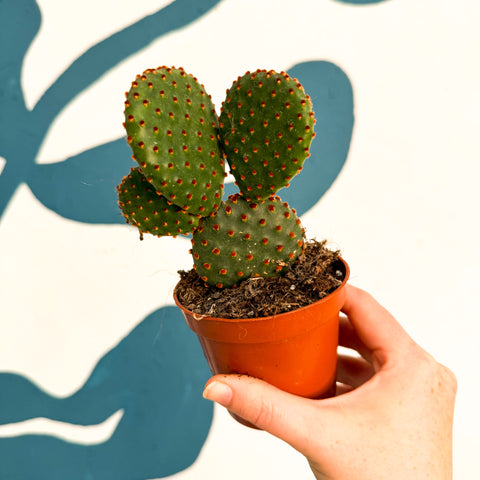
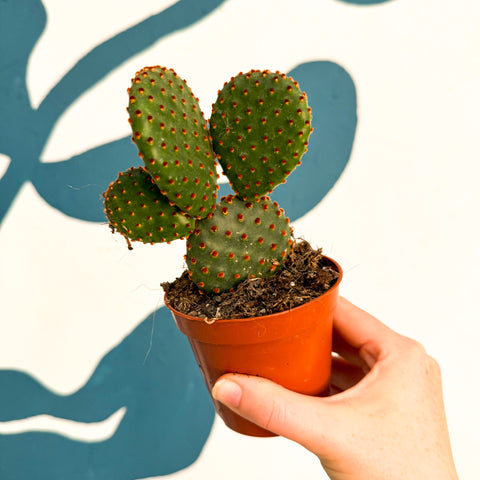
Opuntia rufida, commonly known as the Cinnamon Bunny Ears Cactus, is a wonderfully characterful cactus admired for its flattened, rounded pads covered in tiny reddish-brown spines. Its distinctive pads grow in pairs and clusters, creating a playful, bunny-ear appearance. With its sculptural shape and warm cinnamon-coloured markings, this unusual cactus makes a fantastic addition to a sunny windowsill or succulent collection.
Scientific Name
Opuntia rufida (sometimes sold as Opuntia microdasys var. rufida)
Common Name(s)
Cinnamon Bunny Ears Cactus, Bunny Ears Cactus, Blind Prickly Pear
Origin
Native to northern Mexico and parts of Texas, USA, where it grows in hot, dry and rocky desert environments.
Light
Prefers very bright light and several hours of direct sunlight each day. A sunny south-facing windowsill is ideal. Introduce plants gradually to stronger sunlight to prevent scorching, particularly if they have previously been grown in lower light conditions.
Water
Allow the soil to dry out completely between waterings, then water thoroughly and allow excess water to drain away. During spring and summer, water when the compost is fully dry. Reduce watering significantly during autumn and winter, particularly when temperatures are cooler.
Humidity
Prefers low humidity and good airflow. Avoid placing in particularly humid environments such as bathrooms, and do not mist the plant.
Soil
Use a very free-draining cactus and succulent mix with plenty of added mineral material such as perlite, pumice or grit. Good drainage is essential to prevent root rot.
Food
Feed every 4–6 weeks during spring and summer with a diluted cactus and succulent fertiliser. Little to no feeding is required during autumn and winter.
Temperature
Prefers warm temperatures between 18–30°C during active growth. It can tolerate cooler conditions when kept completely dry, but protect from frost and prolonged temperatures below 5°C, particularly in containers.
Pet-safe
Although not generally considered highly toxic, this cactus is not pet-safe due to its numerous tiny, irritating spines. Keep away from pets and children.
Sprouts Top Tips
Despite its soft, fuzzy appearance, Bunny Ears Cacti should never be touched with bare hands. The tiny reddish-brown dots are actually clusters of extremely fine, barbed spines called glochids, which can easily become embedded in skin.
Always wear thick gloves or use folded newspaper and suitable tools when handling or repotting. Give your cactus plenty of direct sunlight to encourage strong, compact growth.
Extras
As it matures, Opuntia rufida develops additional rounded pads, creating an increasingly branching, sculptural appearance. Established plants grown in suitable conditions may occasionally produce yellow to orange flowers, followed by fleshy fruits.
New pads emerge from the edges of existing pads and gradually expand as they mature.
Did You Know?
The Cinnamon Bunny Ears Cactus gets its name from the reddish-brown clusters of glochids covering its pads. Unlike the long, obvious spines found on many cacti, these tiny barbed hairs can look almost velvety but are surprisingly irritating if touched.
Its other common name, Blind Prickly Pear, refers to the difficulty of spotting these tiny spines rather than the plant being harmless to touch.