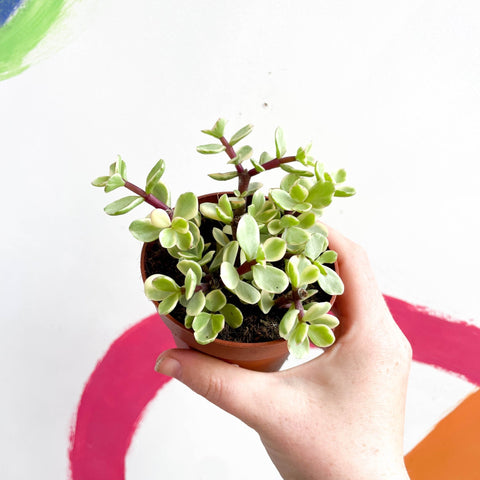
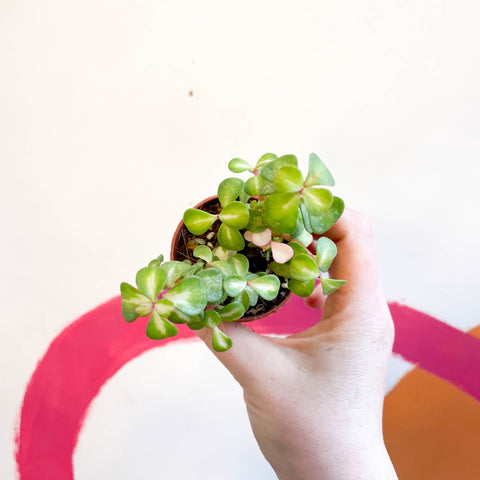
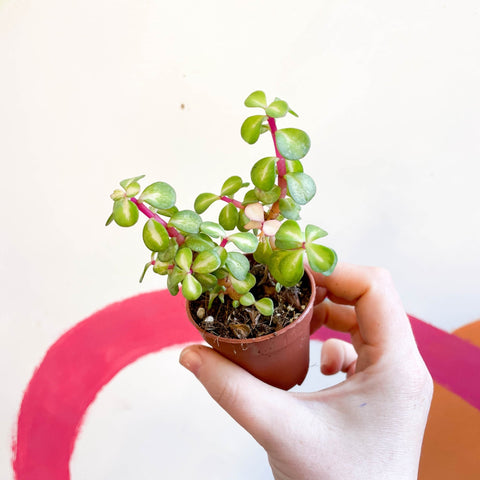
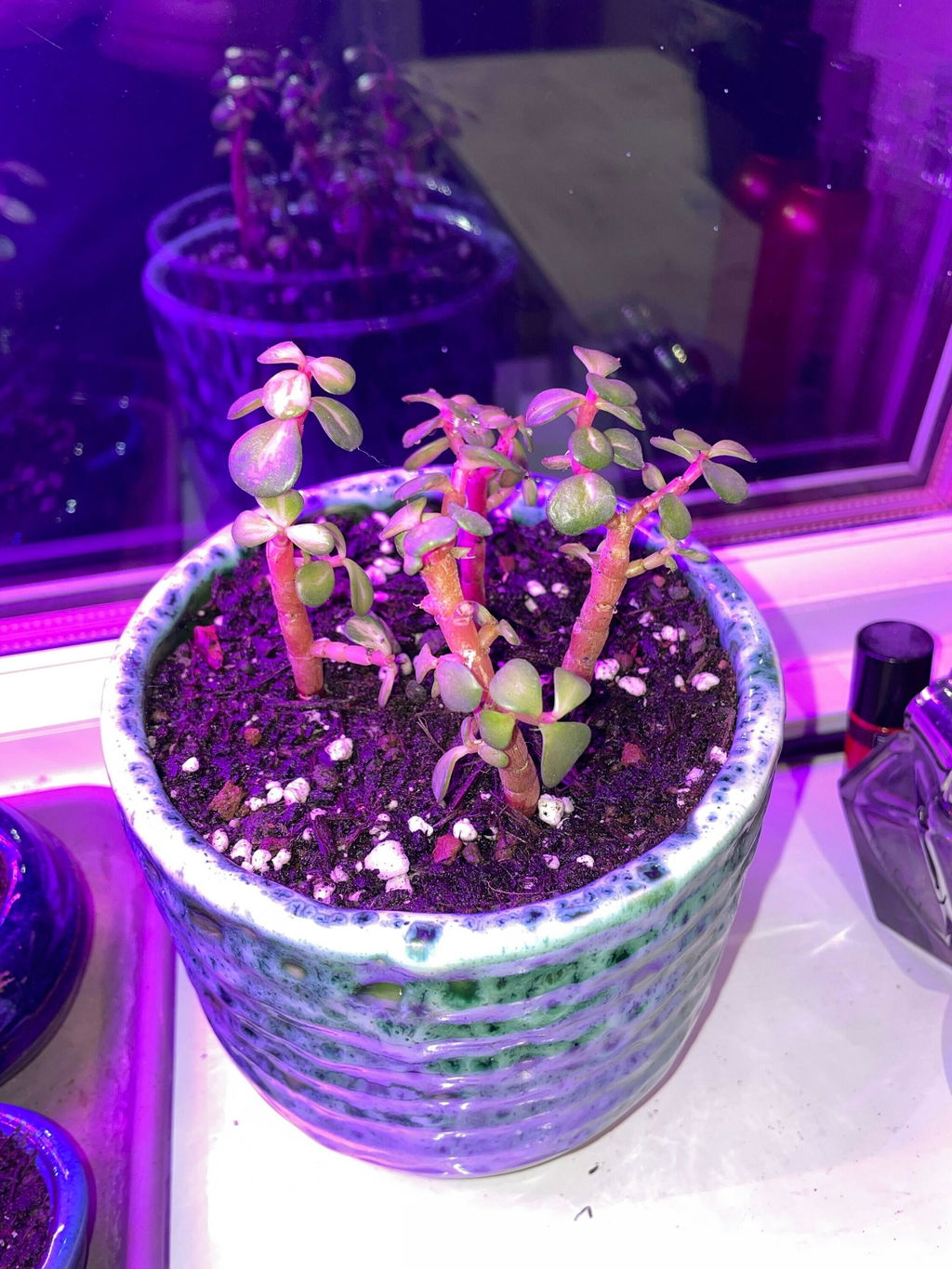
The Rainbow Bush lives up to its name with the variety of colour across its foliage! Its red stems are set off against the green leaves with their splashes of pale, creamy variegation. This tiny-leaved succulent is part of the staple diet for African elephants where it grows in the wild, hence the name 'Elephant Bush'. As it grows older, these shoots will become woody and thicker; sometimes this plant is even grown as a bonsai due to its naturally small leaves! However you choose to cultivate it, be sure not to overwater and this plant will reward your care with its vibrant, eyecatching foliage- and in summer, if it's really feeling at home in your home, you may see clusters of tiny, scented pink flowers adding to your rainbow!
Scientific Name
Portulacaria afra (African plant that's like a Portulaca (plant family name)) ‘Medio-picta’
Common Name
Rainbow Bush, Elephant Bush, Midstripe Rainbow Bush, Dwarf Jade Plant, Elephant's Food
Origin
Native to South Africa
Light
Likes bright light and will do well with a couple of hours of morning or evening sun per day. An east- or west-facing window which doesn't get too much midday/afternoon sun would be ideal
Water
Allow all the soil to dry out between waters; in its native South Africa, the Rainbow Bush gets watered by monsoons every so often so is used to getting all its water in one big downpour, then going for long periods without! Use lukewarm water and try and use rainwater, or leave your tapwater to stand for 24 hours
Humidity
Low humidity is what this planyt is used to. An occasional hosing down of the leaves will help keep it hydrated as long as the foliage dries out thoroughly afterwards!
Soil
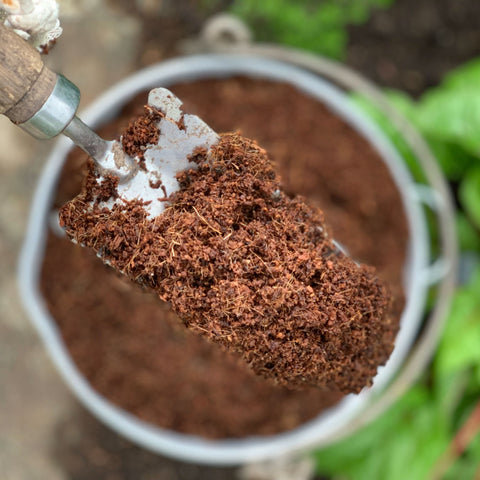
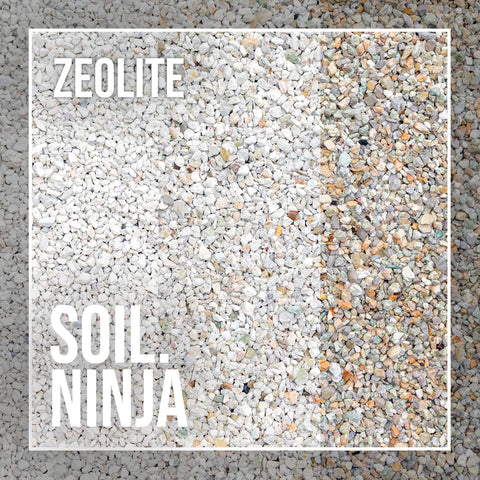
Use a well-draining soil with added sand and grit; a blend designed for cacti and succulents will work well here. Repot every 1-2 years in spring.
Food
Feed every two months in the growing season, reduce to every three in autumn and winter. A fertiliser designed for cacti will be most suited for this plant, though generic houseplant feed will also do.
Temperature
Average household temperatures of about 15-26°C are fine- make sure it doesn't drop below 10°C in winter.
Pet-safe
The elephant bush is non-toxic but can cause a bad reaction if eaten by some pets, especially in larger amounts! They are a good food source for African elephants and tortoises, though.
Sprouts Top Tips
If you want to keep your Rainbow Bush small, it is important to prune it; there are many different styles you can choose to do this in, but if you want to follow a particular asthetic it may be worth looking up bonsai cultivation tips! Without pruning, the plant can grow up to 2m in height, though this will take 5-10 years and lots of diligent repotting.