


Tillandsia cyanea ‘Biancini’ - White Quill Plant
Buy with confidence
Everything we do is designed to get your order to you safely and happily.
🌿 Packed with care in Bristol, UK
⭐ Loved by thousands of happy Sprouts customers
📦 Royal Mail Tracked delivery
💚 Independent & Real Living Wage Employer
If your plant arrives damaged or unhappy, we’ll put it right. Find out more here
Every plant is carefully packed by our small, plant-loving Bristol team using protective, mostly plastic-free packaging.
Occasionally, you may find reused bubble wrap – this has been donated to us, and we encourage you to reuse it too.
Orders are usually packed and dispatched within 2–4 working days. We may occasionally delay dispatch during periods of extreme weather to protect your plants. We always prioritise plant health over speed of delivery.
Delivery is £5 for any number of items, or free on orders over £60. We deliver across the UK only.
We also offer local, bike-powered delivery in Bristol for £5 via Pedal Collective, a gentler option for plants and the planet.
We believe in paying people fairly, that’s why we’ve been a Real Living Wage Employer from the very beginning. We’re an independent Bristol business, packing every order ourselves.
Supporting us means supporting fair work.
Questions before ordering? Just drop us a message – we’re always happy to help.
Head to our contact page and fill in the contact form and one of the team will be in touch shortly
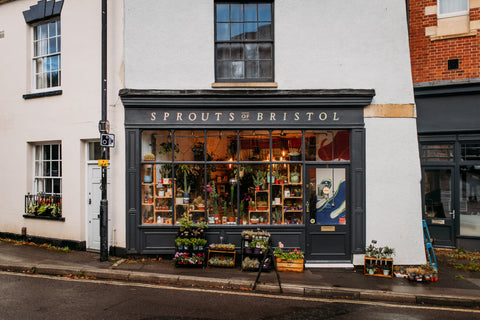
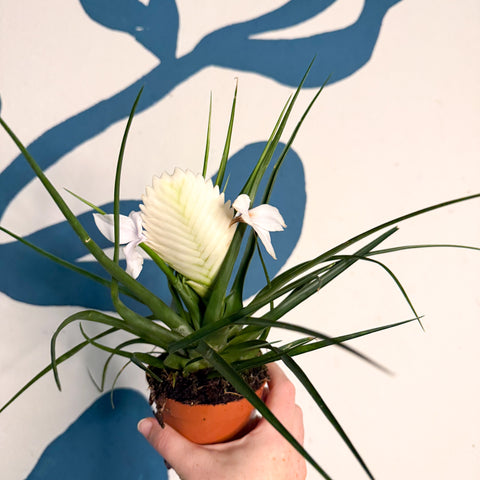
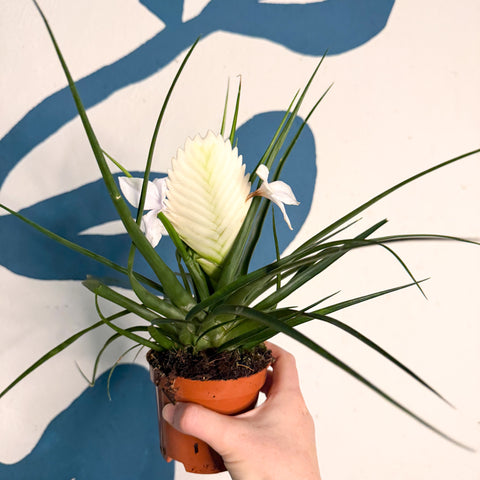
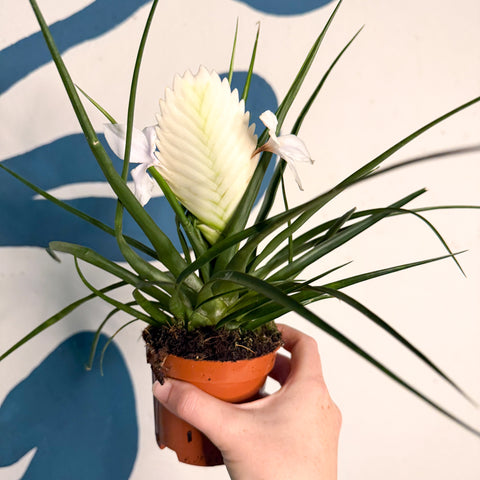
Tillandsia cyanea ‘Biancini’ is a beautiful tropical bromeliad admired for its elegant foliage and distinctive creamy-white flower spike. Its slender, arching green leaves form a graceful rosette, while the pale, paddle-shaped bracts create a striking display above the foliage. Delicate flowers emerge from between the bracts, adding another layer of interest to this unusual houseplant. Compact and full of tropical charm, this beautiful white-flowering variety is a wonderful choice for bright shelves, windowsills and indoor plant collections.
Scientific Name
Wallisia cyanea ‘Biancini’ (formerly Tillandsia cyanea ‘Biancini’)
Common Name(s)
White Quill Plant, White Quill Bromeliad
Origin
A cultivated variety of Wallisia cyanea, a bromeliad species native to Ecuador, where it naturally grows as an epiphyte on trees in warm, humid tropical forests.
Light
Prefers bright, indirect light. Gentle morning or evening sunlight is usually well tolerated, but avoid prolonged strong midday sun, which can scorch the leaves and damage the delicate white bracts. A bright east-facing windowsill or a position slightly away from a south or west-facing window is ideal.
Water
Keep the growing medium lightly moist, allowing the surface to begin drying between waterings. Water thoroughly and allow excess moisture to drain away, avoiding waterlogged compost.
Unlike many other bromeliads, White Quill Plants do not need a permanent reservoir of water in their central rosette. Avoid leaving water sitting around the base of the flower spike, as this can encourage rot.
Reduce watering slightly during cooler months.
Humidity
Prefers moderate to high humidity, ideally around 50–70%. A bright bathroom or kitchen can provide suitable conditions. A humidifier is helpful in particularly dry homes, but ensure there is good airflow around the plant.
Soil
Use a light, airy and well-draining bromeliad mix. A combination of fine orchid bark, perlite and a little peat-free compost works well. Its roots appreciate good aeration and should never remain in heavy, saturated soil.
Food
Feed every 6–8 weeks during spring and summer with a heavily diluted bromeliad or orchid fertiliser. Avoid overfeeding, as bromeliads require relatively few nutrients. Little to no feeding is needed during autumn and winter.
Temperature
Prefers temperatures between 18–27°C. Protect from cold draughts, sudden temperature changes and prolonged temperatures below 12°C.
Pet-safe
Yes. White Quill Plants are generally considered non-toxic to cats and dogs.
Sprouts Top Tips
The beautiful creamy-white, paddle-shaped structure is made up of bracts rather than petals. These can remain attractive for several weeks or even months, while the individual flowers are much shorter-lived.
Avoid soaking the flower spike or allowing water to collect around its base. Once the bracts have faded and dried, they can be carefully removed with clean scissors.
Extras
White Quill Plants are epiphytic bromeliads, meaning they naturally grow attached to trees rather than rooted in the ground. Their roots primarily help anchor them in place, while their foliage can absorb moisture from the surrounding environment.
‘Biancini’ is particularly attractive for its unusual pale flower spike, which offers a softer alternative to the bright pink bracts of the traditional Pink Quill Plant.
Like many bromeliads, each mature rosette flowers only once. After flowering, the parent plant gradually produces offsets, known as pups, which can be left to form a fuller clump or separated once established.
Did You Know?
The name ‘Biancini’ reflects this variety’s beautiful pale colouring, distinguishing it from the familiar pink-bracted form of Wallisia cyanea.
Despite its traditional botanical name, the White Quill Plant is no longer classified within the genus Tillandsia. It is now recognised as Wallisia cyanea, although the older name remains widely used in the houseplant trade.
Add a Pot & Care Essentials
Most customers add a pot or soil when purchasing this plant.










Check out The Sprouts Blog
Sprouts insights to house plants, gardening, our favourite brands and plant hire case studies.