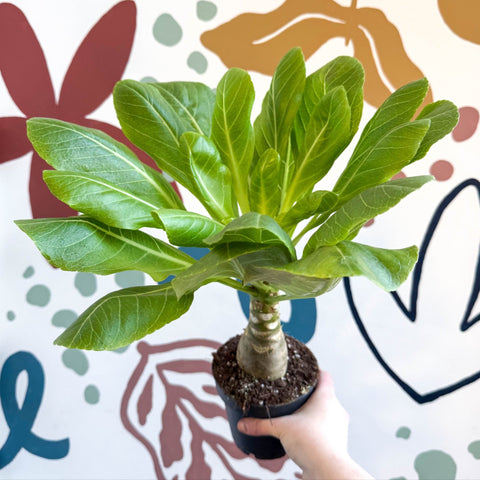
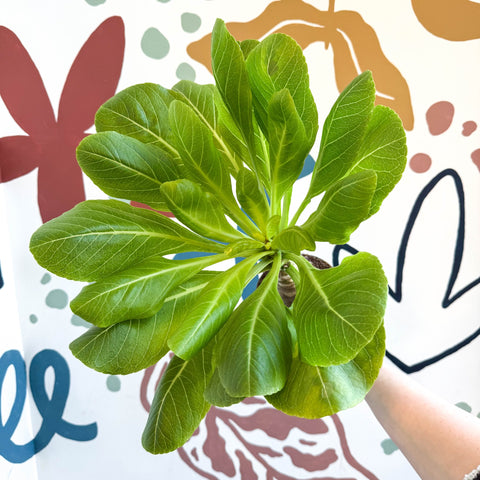
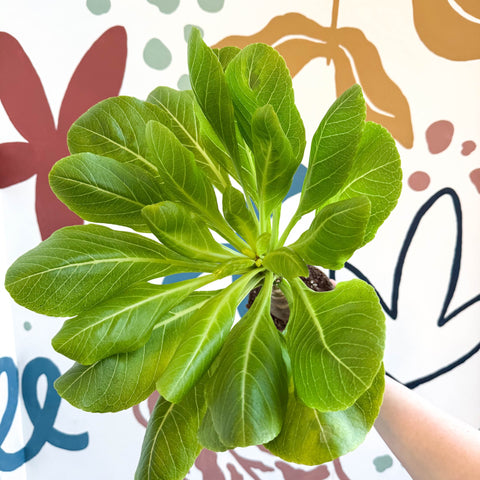
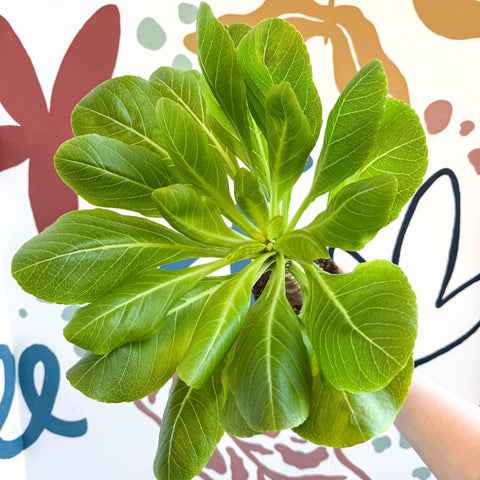
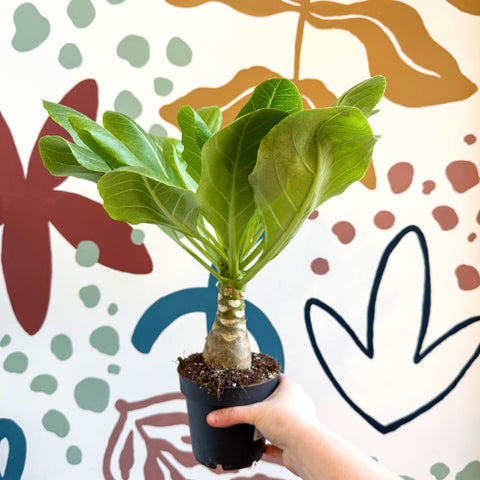
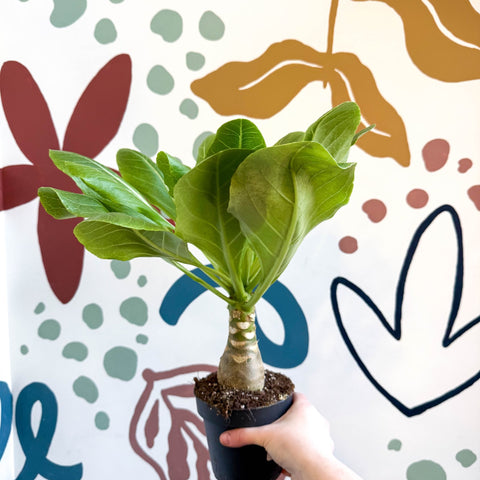
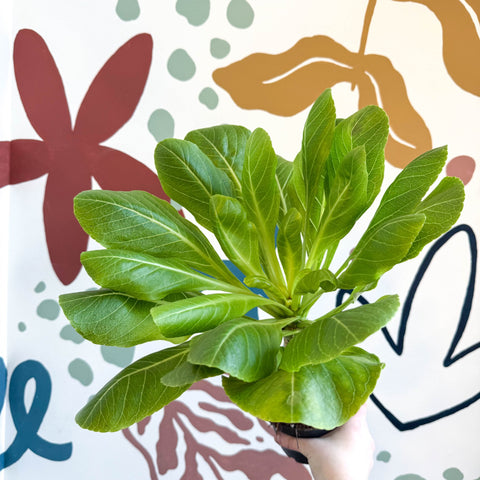
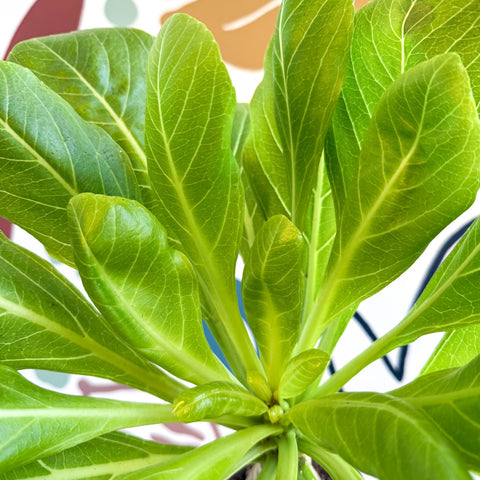
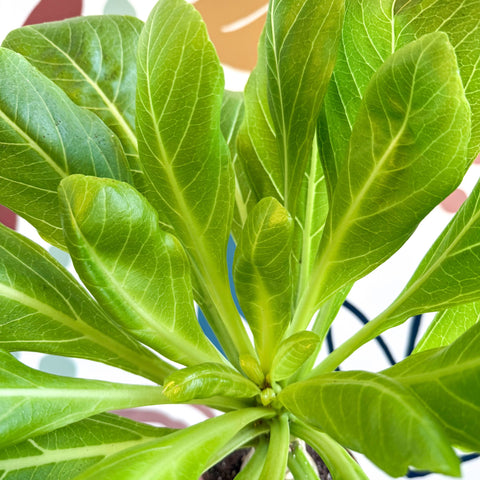
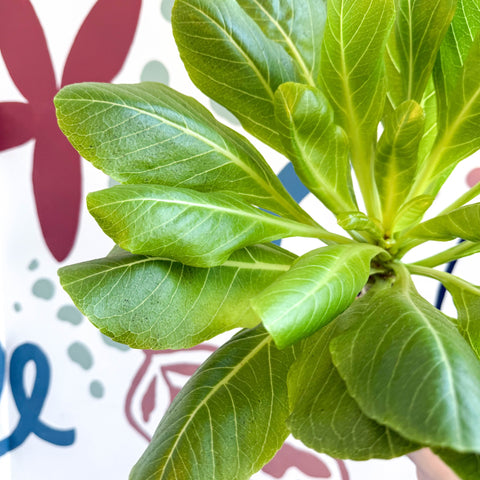
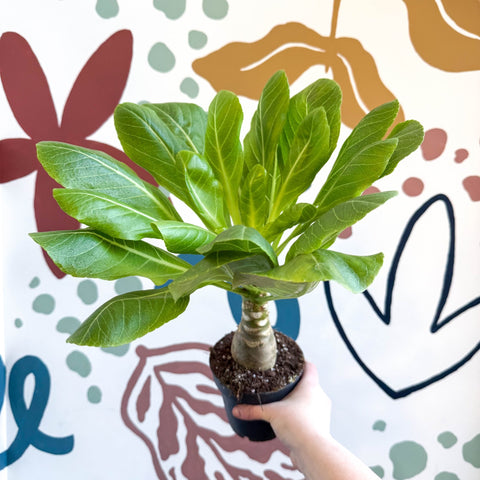
These funky houseplants truly look out-of-this-world. Like a cross between a cabbage and a pineapple, this rare tropical houseplant will add an extra dimension to your sideboard arrangements. Its trunk grows wide, and its broad, pale green leaves sprout from the top, wide and long and lush. Looking like a miniature tree, this plant is an ideal way to bring the tropical into your home. Despite its rarity (both as a houseplant, grown in nurseries, and in its native Hawaii, where it is endangered), it is easygoing as a houseplant - just make sure it gets bright light and doesn't suffer too much in winter cold.
Scientific Name
Brighamia insignis (Brigham's plant, distinguished species)
Synonyms
Brighamia citrina
This plant's scientific name was first published in 1867 by botanist Asa Gray.
Common Name(s)
Cabbage on a Stick, Vulcan Palm, Hawaiian Palm, Hawaiian Vulcan Palm, Lettuce on a Stick
Origin
This plant is endemic to Hawaii, (North America / Pacific Ocean, tropical climate)
Light
This plant will do best with mostly bright, indirect light with an hour or so of morning or evening sun. In an east- or west-facing window, this plant will get a bit of weaker sunlight to boost its photosynthesising, without it being enough to burn its leaves.
Water
These palms are, in fact, succulents, so they like their soil to dry out totally between waters. They store water in their stem, or caudex, so are quite happy to sit with dry soil for a while. When the pot feels light to pick up, it's probably time for a water. Watering with lukewarm water will also help reduce stress.
Humidity
This plant is a big fan of high humidity; regular misting of the leaves or the introduction of a humidity tray will stop its leaves turning brown and crispy. A bathroom or kitchen with consistent humidity can also be a good spot for this plant.
Soil
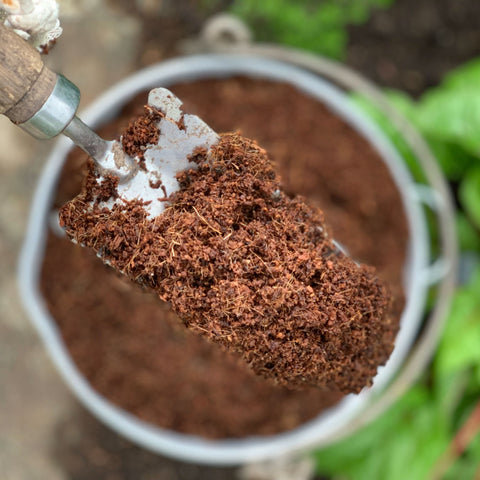
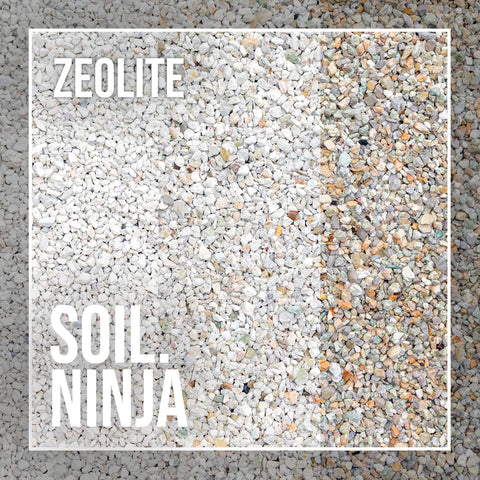
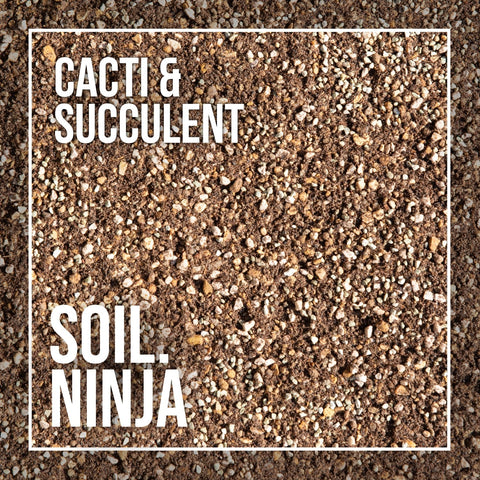
Plant in a well-draining soil mix, such as a cactus or succulent blend, with added sand or grit. Ensure the pot has good drainage to prevent waterlogging.
Food
Feed every four waters during the growing season (spring and summer) with a balanced, water-soluble fertiliser. Reduce feeding to every six waters in autumn and winter when the plant's growth slows.
Temperature
Prefers temperatures between 20-27°C. Protect from cold drafts and avoid exposure to temperatures below 15°C. This plant is sensitive to low temperatures.
Pet-safe
Yes, this plant is non-toxic to pets and humans, making it a safe choice for family homes.
Sprouts Top Tips
To encourage healthy growth, rotate the plant occasionally to ensure even light exposure. Keep an eye on the leaves; drooping can be a sign of overwatering or poor drainage, if the soil is being left moist.
Extras
In its native habitat, Brighamia insignis relies on moths for pollination. Indoors, it rarely flowers, but in the right conditions, it may produce yellow, bell-shaped flowers at the top of its trunk.
Did You Know?
The Hawaiian Palm is critically endangered, with only a handful of specimens left in the wild. Conservationists have had to hand-pollinate plants to preserve the species.