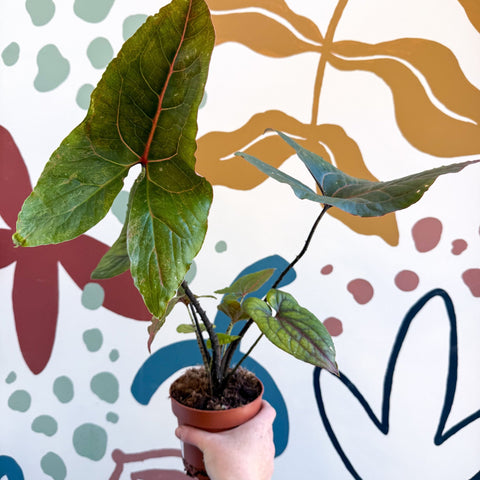
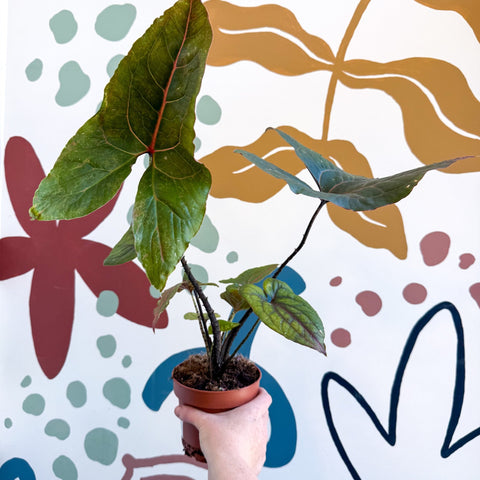
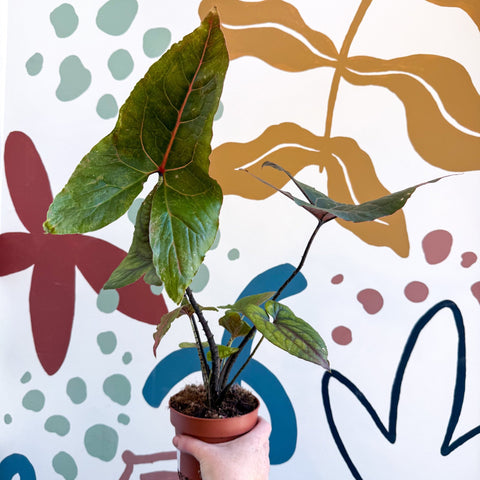
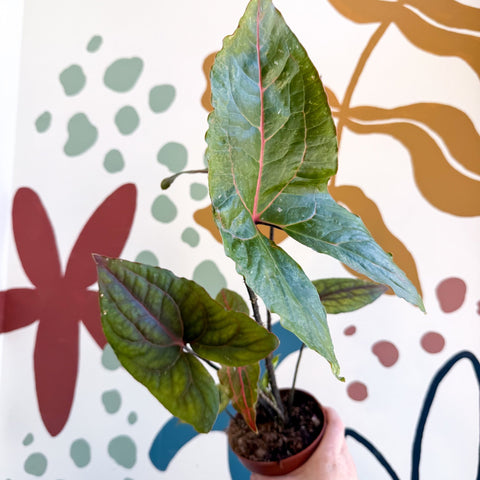
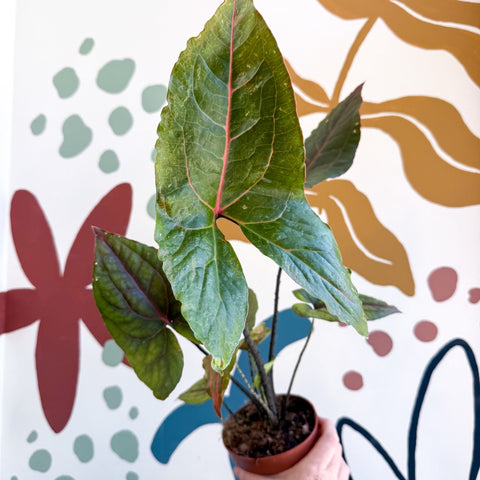
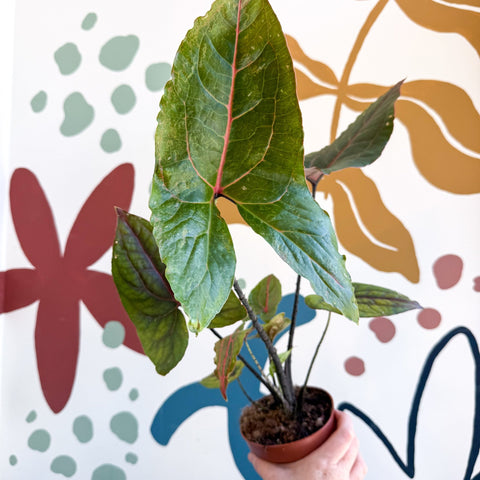
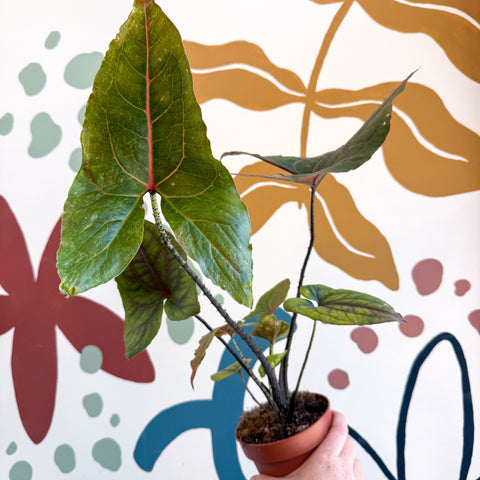
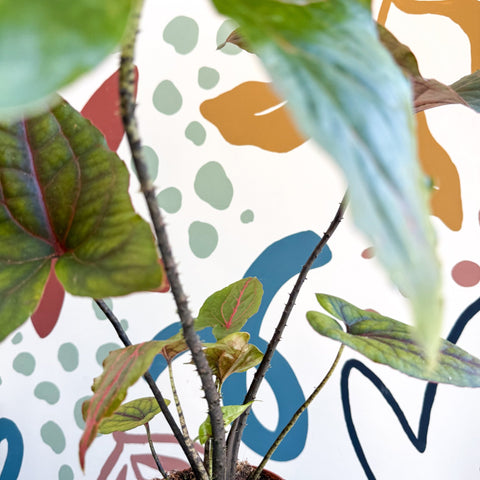
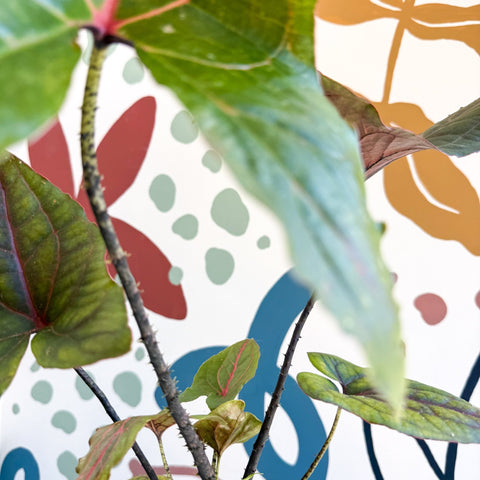
Cyrtosperma johnstonii / Alocasia ‘Black Jack’

Size
Regular price £28.00
This product is not available for pickup at any store

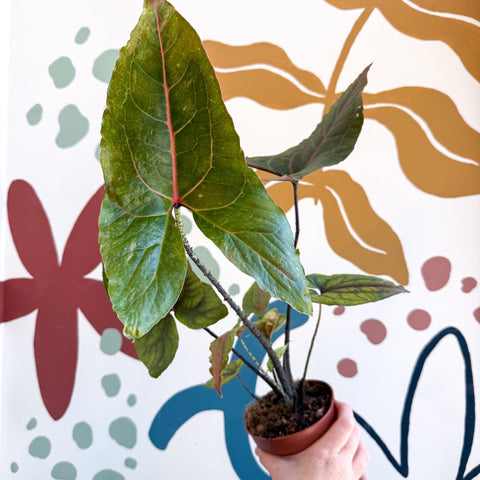
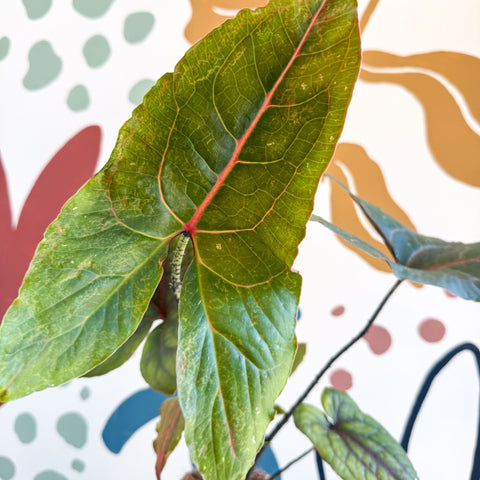
This unusual houseplant has the arrowhead leaf shape, upright growth and enigmatic silhouette of the Alocasia plant, but it's actually part of a whole different genus. On closer examination, you may notice that the leaf shape is less rounded, and the texture of it more interesting. The veining traces pale red lines across each leaf, lending it extra colour and vibrancy. And each stem is slightly more thorny than your average Alocasia... This is the Cyrtosperma johnstonii, and it makes a standout impression in any collection, tall and proud and full of colour and texture.

Scientific Name
Cyrtosperma johnstonii (Johnston's arched-seed plant)

Synonyms: Alocasia johnstonii

Originally thought to be an Alocasia when discovered in 1876, this plant was reclassified in 1882 and retains this second name to this day.

Common Name(s)
Giant Elephant Ear, Spiny Taro, Alocasia 'Black Jack'

Origin
This plant is native to the Solomon Islands in Oceania

Light
This plant will appreciate bright but indirect light. Used to the forest understory, it can scorch in too much direct sun, but with too much shade growth will slow.

Water
Allow the top inch or so of soil to dry between waters; this plant won't like being waterlogged, so make sure to water less over autumn and winter when it will dry out more slowly.

Humidity
Above-average humidity will be helpful for this plant. Make sure to keep it away from cold draughts or operating heaters.

Soil
This plant will need a mix that retains moisture while allowing oxygen to reach its roots. One designed for Alocasias, or containing a mix of coir, vermiculite, bark and zeolite, will work well here.

Food
Feed every few weeks in the growing season (spring & summer). A balanced houseplant feed should work well; make sure to dilute as the packaging instructs.

Temperature
Ideally, grow this plant between 18-28°C; make sure it doesn't drop below 15°C for longer periods or very suddenly in winter.

Pet-safe
No, this plant is toxic to pets and small humans, so keep curious fingers and paws away.

Sprouts Top Tips
Consistency is particularly helpful with this plant, so ensuring that the temperature and humidity levels don't dip suddenly will help it stay happy. 

Did You Know?
Though rare in cultivation, related species of Cyrtosperma have been cultivated for centuries across the Pacific for their starchy roots – though these require lengthy processing to be made edible due to natural toxins.

Check out The Sprouts Blog

Sprouts insights to house plants, gardening, our favourite brands and plant hire case studies.
We’re Growing – Welcome to Sprouts HQ! - Sprouts of Bristol
Sprouts of Bristol is expanding with the launch of Sprouts HQ – a new South Bristol premises that will house a dedicated packing space for online orders, an office, studio, and more room for rare and exciting plants. While the Kingsdown shop remains open as usual, the new HQ allows Sprouts to grow behind the scenes and offer even better service both in-store and online. This blog post shares the story behind the move, what customers can expect, and how to keep supporting this independent plant shop through the transition.
Jessy EdgarAugust 15, 2025
Terrarium & Wreath Workshops in Bristol – Autumn & Winter 2025 - Sprouts of Bristol
Join Sprouts of Bristol for terrarium, kokedama, and Christmas wreath workshops this autumn–winter. Creative, plant-filled fun in the heart of Bristol!
Jessy EdgarAugust 5, 2025
Build Your Own Terrarium: A Step-by-Step Guide from Sprouts - Sprouts of Bristol
Fancy creating your own tiny, self-contained world of green? Our DIY terrarium kits are the...
Jessy EdgarJuly 20, 2025