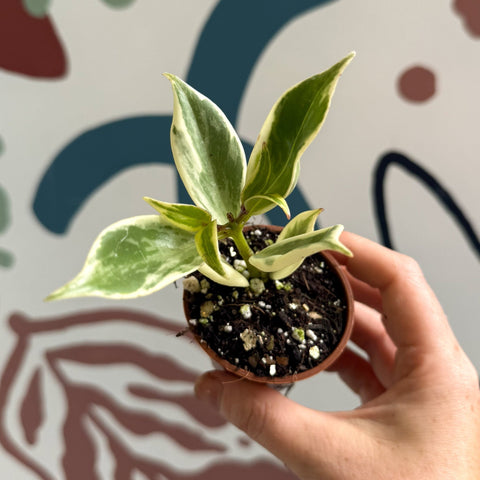
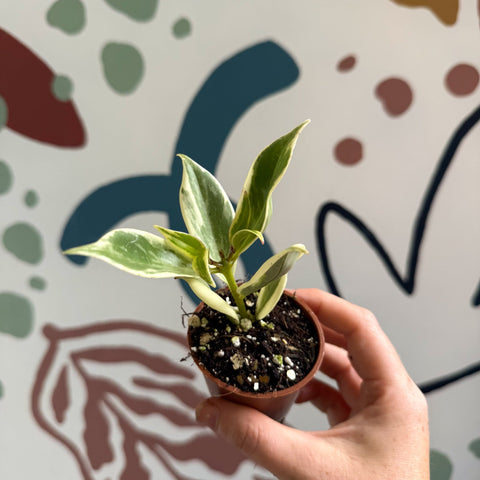
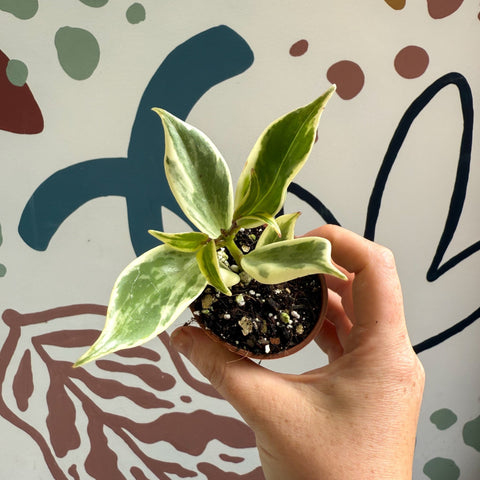
This trailing beauty features cascading stems of waxy, variegated leaves marked with creamy whites, greens, and sometimes hints of pink under high light. A rare form of the classic Lipstick Plant, Aeschynanthus ‘Thailand Variegated’ gets its name from the tubular, bright red blooms that emerge from dark buds like lipstick from a case. Perfect for hanging pots or high shelves, it brings colour and movement to any room.
Scientific Name
Aeschynanthus sp. ‘Thailand Variegated’ (from Greek aischynē, “shame”, and anthos, “flower” – possibly referencing the bold red blooms that emerge shyly from dark buds)
Aeschynanthus is a large genus in the Gesneriaceae family. While the exact species behind this Thai variegated form is not always specified, it likely originates from Aeschynanthus radicans or a closely related species. This cultivar is prized for its foliage as much as its flowers.
Common Name(s)
Variegated Lipstick Plant, Thai Lipstick Plant, Aeschynanthus ‘Thailand Variegated’
Origin
Cultivar derived from species native to Thailand and Southeast Asia, typically found trailing from trees in humid forests
Light
Bright, indirect light is ideal. Too much sun can scorch variegated leaves, while too little can fade both colour and blooming. Filtered light through a curtain or a spot near a north/east window is perfect.
Water
Water when the top 2–3cm of soil feels dry. Likes consistent moisture but hates soggy roots. Reduce watering in winter and always use room-temperature water.
Humidity
Prefers moderate to high humidity. Mist occasionally or use a pebble tray. Excellent in bright bathrooms or kitchens where humidity stays higher.
Soil
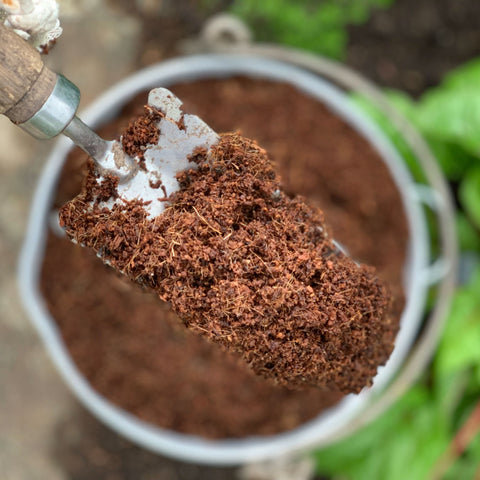
Use a light, airy mix – orchid bark, perlite, and peat-free compost or coir will work well. Ensure good drainage. Repot every 1–2 years in spring or when pot-bound.
Food
Feed every 4 weeks in spring and summer with a diluted high-potassium liquid fertiliser to support flowering. Hold off feeding in winter.
Temp
Thrives in 18–26°C. Avoid cold draughts and temperatures below 15°C.
Pet-safe
Non-toxic – safe for pets and children.
Sprouts Top Tips
This plant will bloom best when slightly root-bound and given enough light. If it’s all leaf and no flower, try increasing brightness and feeding during the growing season.
Extras
Its semi-succulent leaves hold moisture, so avoid overwatering. Trimming leggy vines encourages fuller growth.
Did You Know?
Lipstick Plants are epiphytes in the wild, often growing in the crooks of tree branches – which is why they thrive in loose, well-draining mixes and appreciate regular misting.