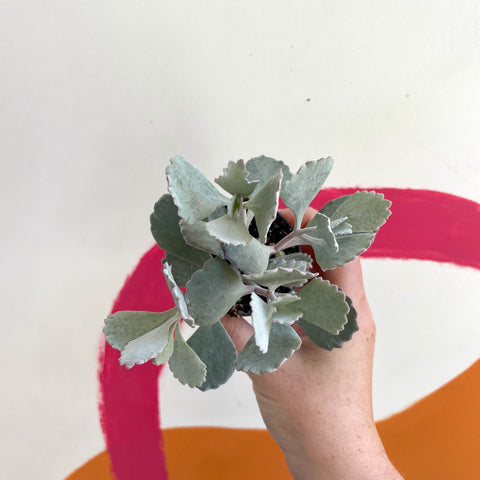
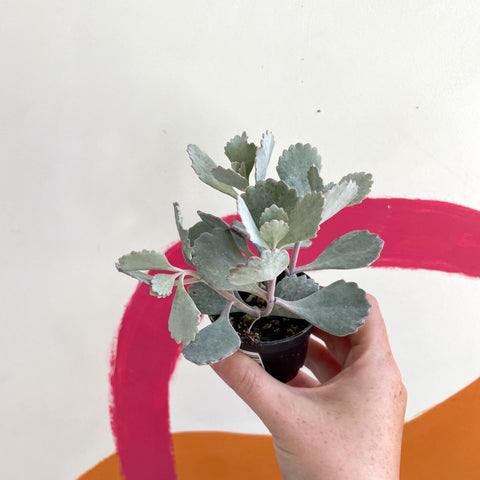
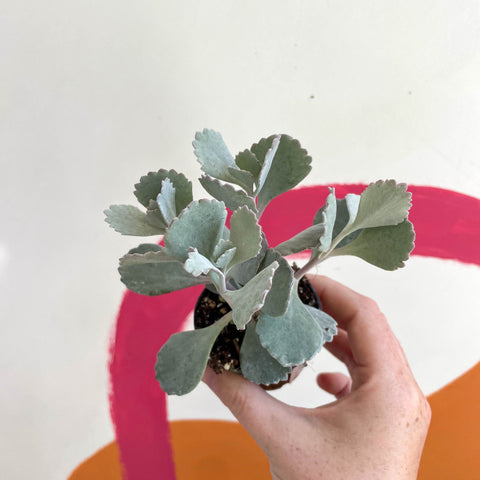
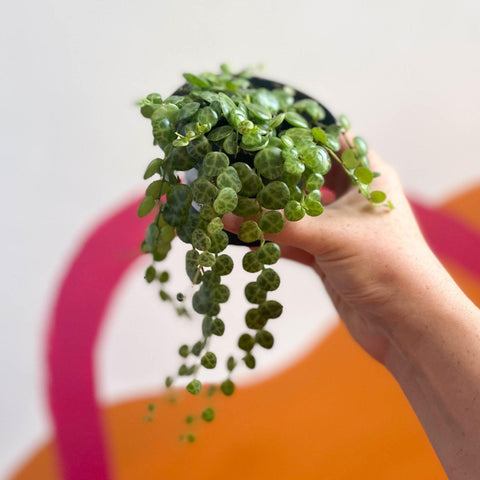
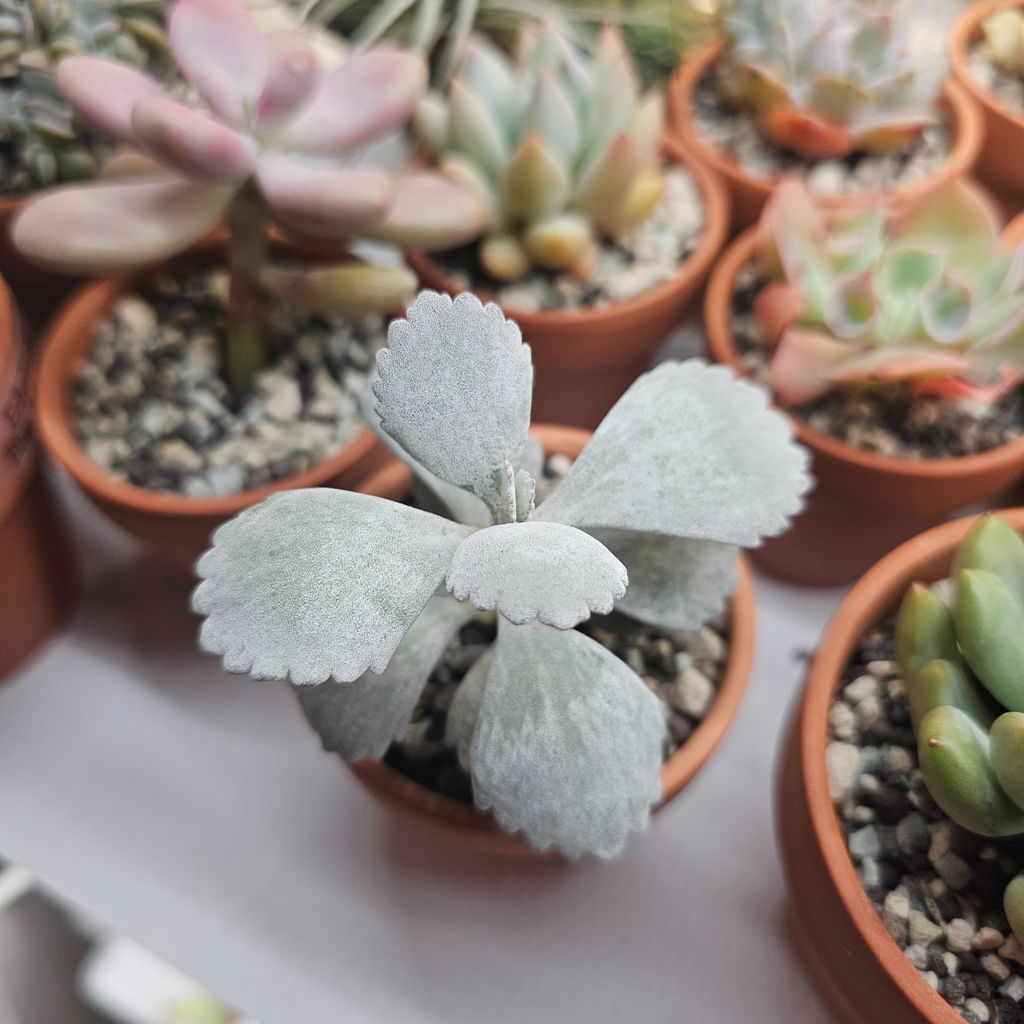
A compact, trailing succulent with a frosted look, Kalanchoe pumila forms low mounds of silvery-grey leaves coated in a soft, powdery bloom. In late winter to early spring, it bursts into bloom with clusters of small, magenta-pink flowers, adding bright contrast to its cool-toned foliage. Its tidy size and cascading habit make it perfect for hanging pots, shallow bowls, or sunny windowsills.
Scientific Name
Kalanchoe pumila (from Latin pumilus, meaning “dwarf” – referring to its small size)
A long-recognised species in the Crassulaceae family, Kalanchoe pumila is native to Madagascar and remains in the same genus it was originally classified under.
Common Name(s)
Flower Dust Plant, Dwarf Kalanchoe
Origin
Native to Madagascar, where it grows in dry, rocky habitats
Light
Thrives in bright, indirect light and will tolerate some direct sun, which helps maintain its compact shape and silvery colour. Insufficient light may lead to leggy growth.
Water
Allow the soil to dry out completely between waterings. Water thoroughly, then let any excess drain away. In winter, reduce watering significantly.
Humidity
Prefers low humidity. Avoid placing in steamy rooms like bathrooms. Good airflow helps prevent rot and fungal issues.
Soil
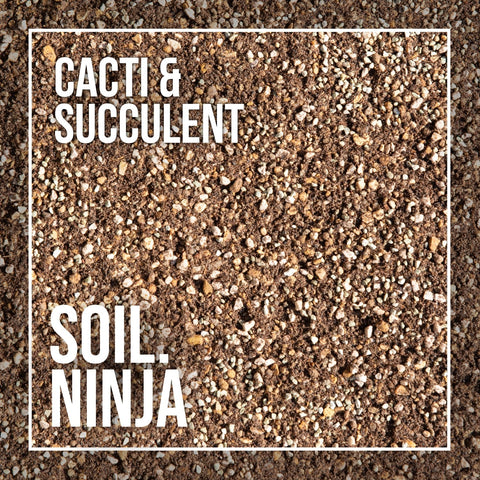
Requires a free-draining mix – use cactus or succulent compost, or amend standard compost with sand, grit, or perlite. Repot every 2–3 years or when pot-bound.
Food
Feed every 6–8 weeks during the growing season with a diluted cactus or succulent fertiliser. Avoid feeding in winter.
Temp
Prefers 18–24°C. Protect from temperatures below 10°C and keep away from draughts or frost-prone areas.
Pet-safe
Toxic if ingested – keep out of reach of pets and children.
Sprouts Top Tips
To maintain its compact form and prevent legginess, give it as much light as possible and rotate regularly. Avoid getting water on the leaves, as this can damage the powdery coating.
Extras
After flowering, trim spent blooms and lightly prune to encourage bushy growth. Can be propagated easily from stem cuttings.
Did You Know?
The soft, frosted appearance of the leaves is due to a natural waxy coating called farina – it helps reflect sunlight and reduce water loss in the plant’s arid native environment.