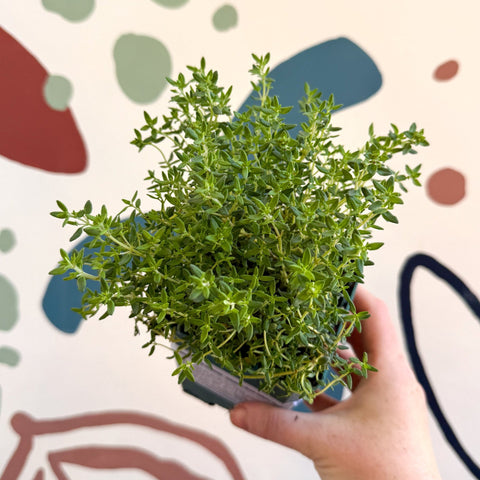
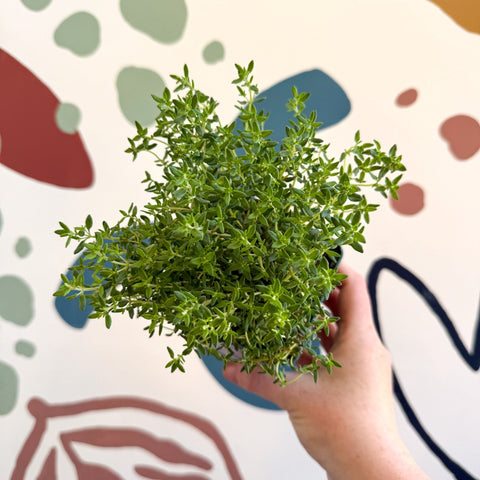
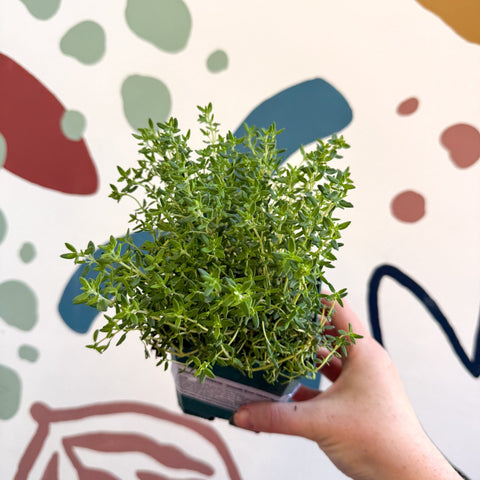
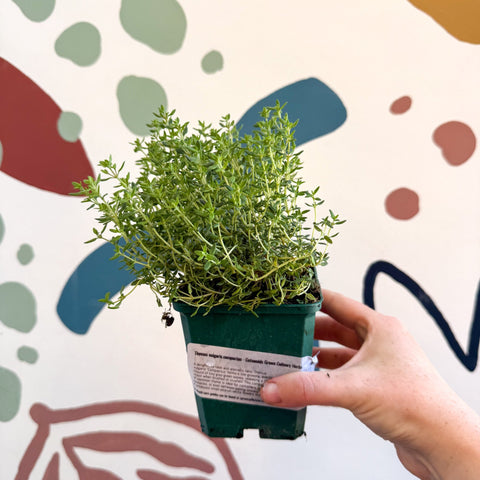
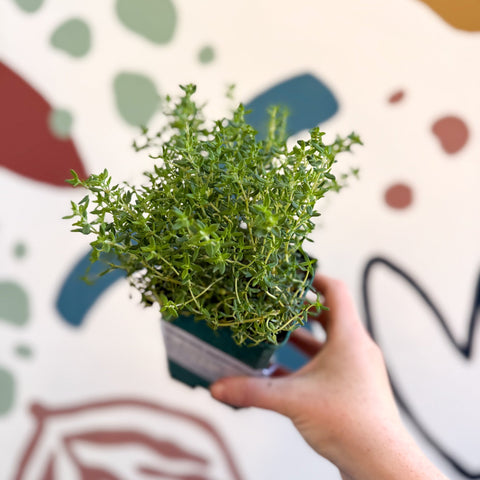
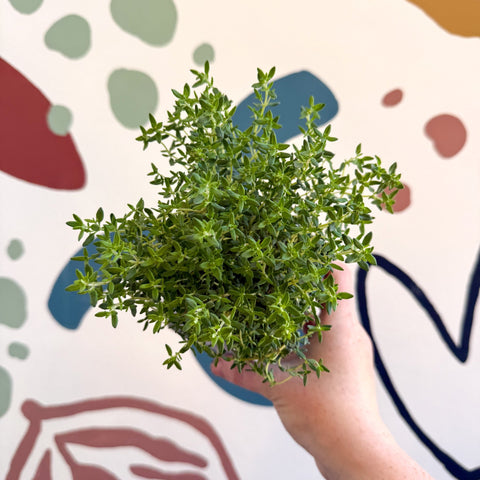
A delightfully neat and aromatic herb, Thymus vulgaris ‘Compactus’ forms a low-growing, evergreen mound of tiny grey-green leaves, releasing a rich scent when brushed or crushed. This compact variety of common thyme is ideal for containers, borders, rockeries, or even between paving stones. In summer, it produces small pinkish-white flowers that are a hit with bees and other pollinators.
Thymus vulgaris ‘Compactus’, commonly known as Compact Garden Thyme, is a culinary and ornamental favourite – offering flavour in the kitchen and texture in the garden.
Perennial
Low-growing, Evergreen, Year-round Interest
Flowers: June–August
Foliage: Year-round
Scientific Name
Thymus vulgaris ‘Compactus’ (from Greek thymos, meaning “courage” or “to fumigate,” due to its ancient uses)
Synonyms
Sometimes listed as Thymus vulgaris ‘Compacta’
Common Name
Compact Garden Thyme, Dwarf Common Thyme
Origin
Cultivated variety; parent species native to the Mediterranean region
Pruning Tips
Lightly trim after flowering to maintain a tidy shape and encourage fresh, bushy growth. Avoid cutting into old, woody stems.
Wildlife Value
Flowers are rich in nectar and attract bees, butterflies, and other beneficial insects.
Positioning
Full sun is essential. Prefers an open position with good air circulation. Ideal for herb gardens, gravel beds, pots, and wall crevices.
Water
Drought-tolerant once established. Water during extended dry periods but avoid waterlogged conditions.
Soil
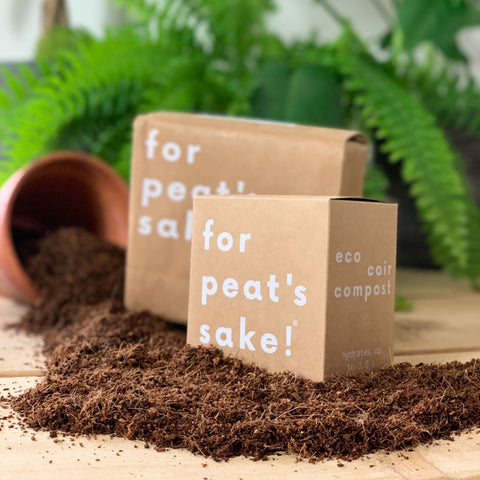
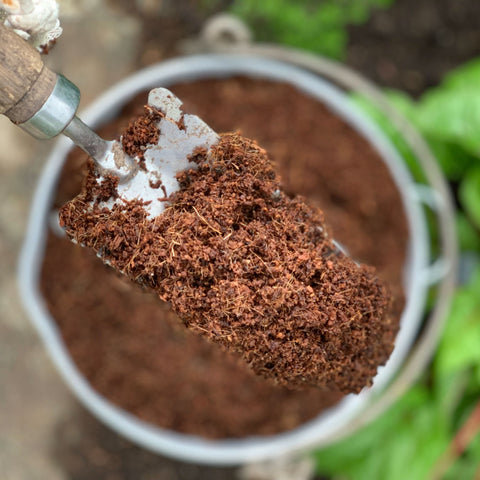
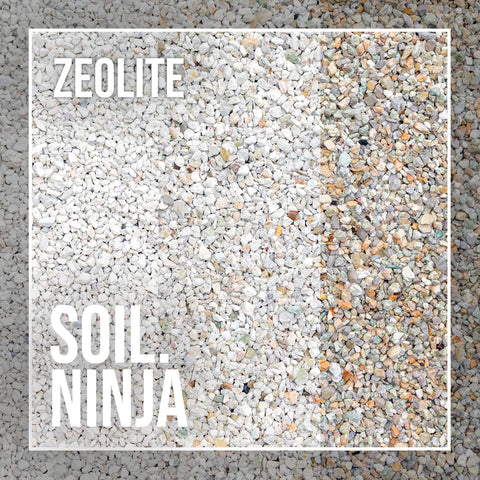
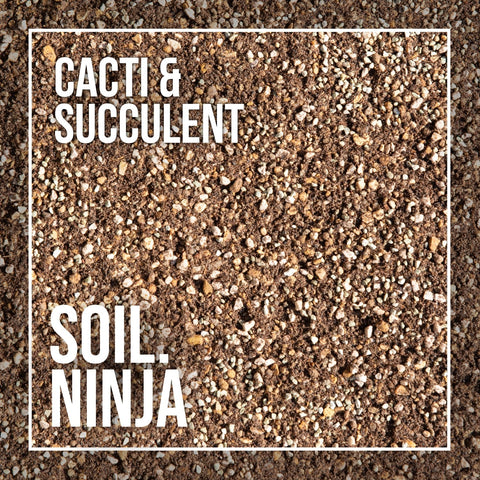
Free-draining soil is crucial. Prefers sandy, stony, or poor soils. Avoid heavy clay or overly rich compost.
Food
Minimal feeding required – too much fertiliser reduces flavour and scent. If desired, apply a very light feed in spring.
Pet-safe
Non-toxic and safe for pets.
Sprouts Top Tips
Snip a few sprigs as needed for cooking – thyme pairs beautifully with roast vegetables, stews, and stuffing. For the strongest flavour, harvest just before flowering.