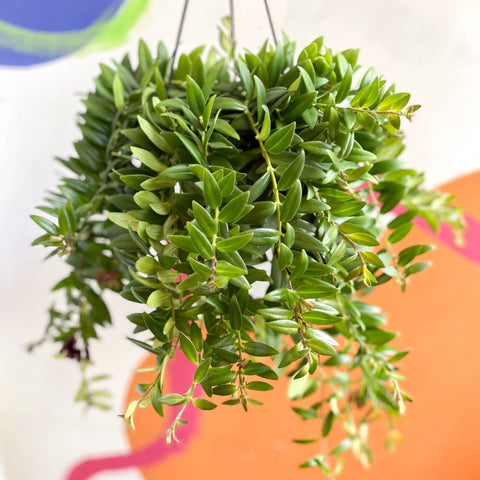
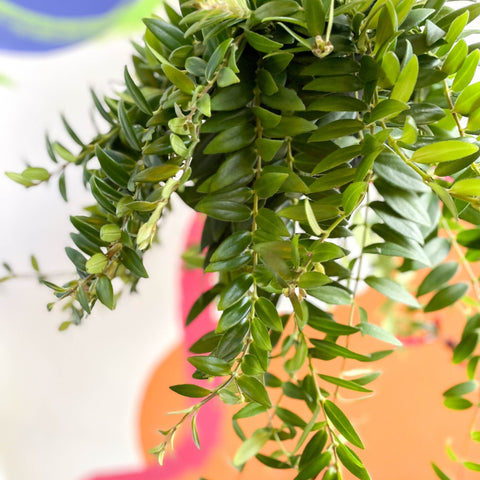
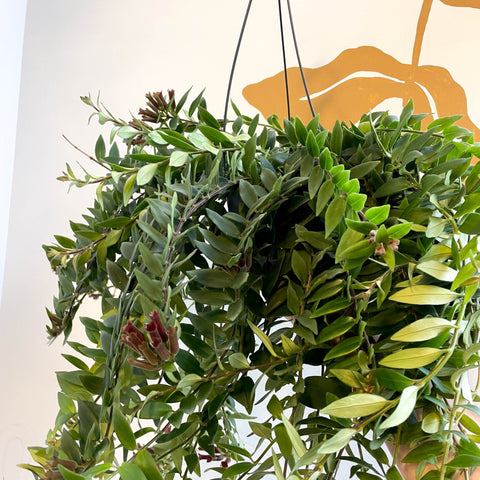
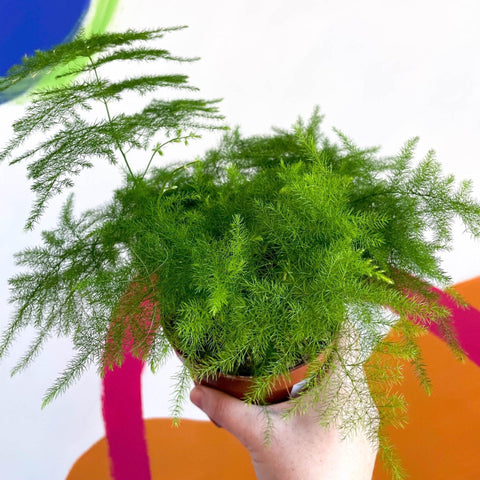
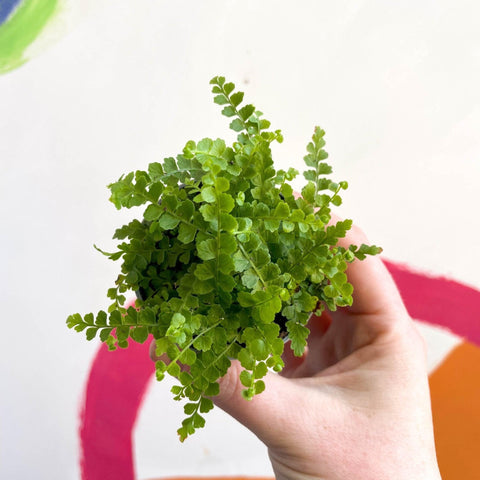
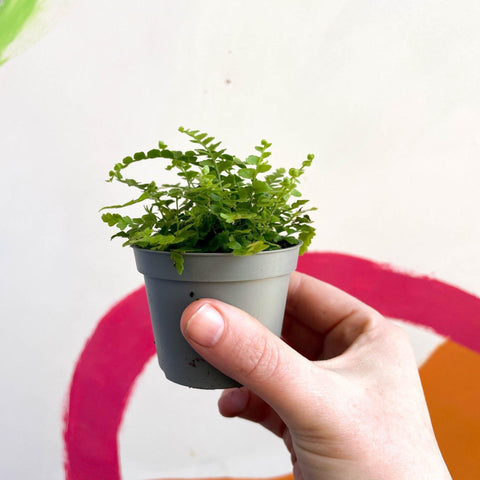
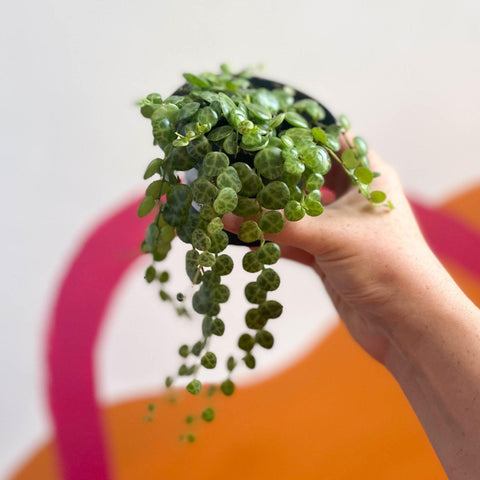
The Lipstick Plant gets its common name from the striking shape and colour of its flowers. They are tubular and bright red, and right before they open their shape is exactly like the diagonal end of a tube of lipstick. These flowers are a fantastic contrast with its narrow, bright green leaves. Looking fabulous in hanging or trailing in your home, the leaves are paler on their undersides, contrasting with the bold colour on top, and provide plenty of lush, jungly interest in between flowering. Pop this plant in a spot with a couple of hours of morning or evening sun, and wait for its pot to feel light before you next water it, and you'll keep your Aeschynanthus happy.
Scientific Name
Aeschynanthus radicans 'Caroline' (disgraced flower, taking root, cultivar: Caroline)
Synonym
Trichosporum ovatum, Trichosporum radicans
This plant was first identified in a paper in 1823, and keeps the same name it was given then, A. radicans
Common Name
Lipstick Plant, Lipstick Vine, Basket Vine
Origin
Native to Southeast Asia (tropical rainforests in Borneo, Malaysia, Sulawesi, Sumatera and Thailand)
Light
Prefers bright, indirect light. A few hours of morning or evening sun are acceptable, but avoid intense midday sun. A spot near a north- or east-facing window works best.
Water
Allow the top 2–3 inches of soil to dry out between waters. Water thoroughly when the pot feels light, and reduce watering in winter to mimic its natural dormancy. Avoid using cold water during blooming to prevent flower drop.
Humidity
Thrives in high humidity, so using a humidity tray can be beneficial. The foliage should not be left wet, though, so we wouldn't recommend misting.
Soil
Requires a well-draining, airy soil mix suited to epiphytes. Orchid or Anthurium potting mixes are ideal. Repot only when necessary, usually every two years in spring.
Food
Feed every fourth water during the growing season. In autumn and winter, reduce to every sixth water.
Temperature
Prefers room temperatures between 18-26°C. Keep above 15°C in winter.
Pet-Safe
Yes, but it’s best kept out of reach of pets to prevent over-nibbling, which can stress the plant.
Sprouts Top Tips
Ensure your plant receives adequate light and humidity for optimal growth. Watch for yellowing leaves (overwatering), crispy leaf edges (too much sun or low humidity), and mildew (indicating excess moisture or low light).