Ctenanthe 'Compact Star' - Never Never Plant

Size
Regular price £14.00
This product is not available for pickup at any store

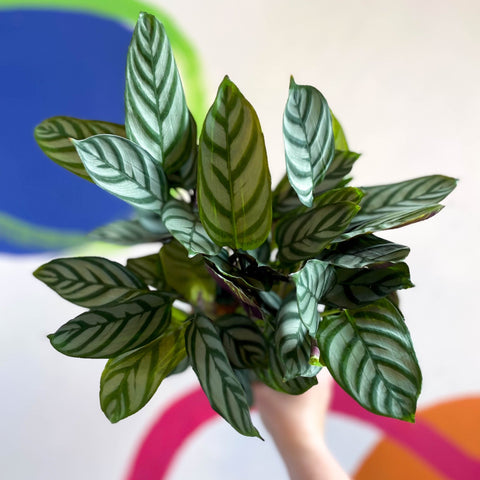
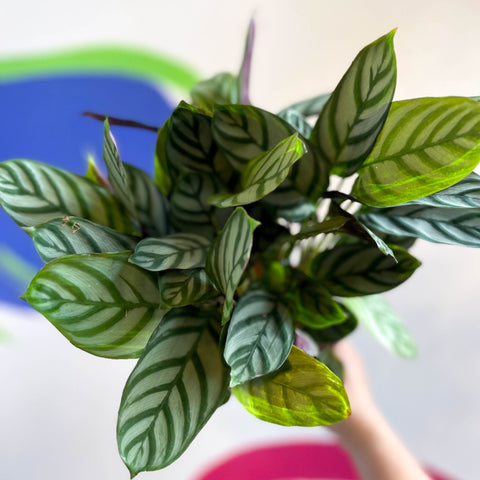
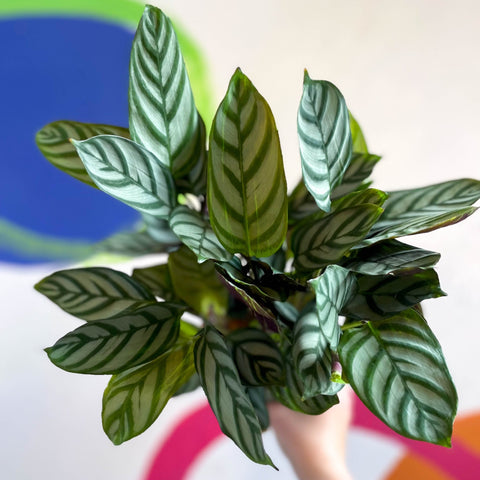
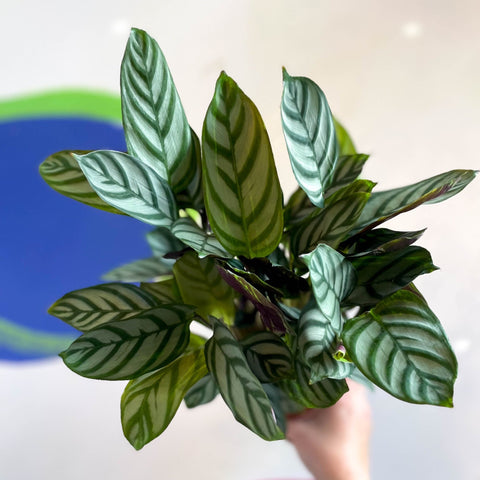
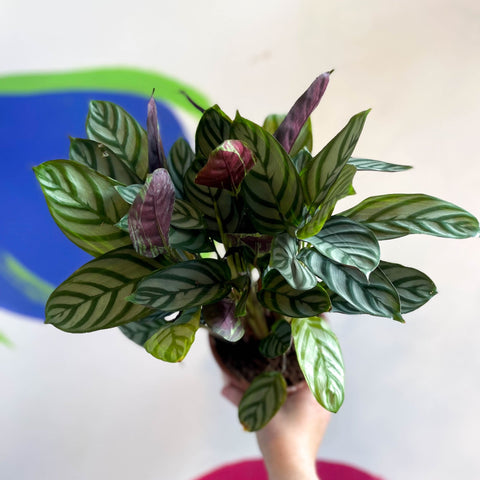
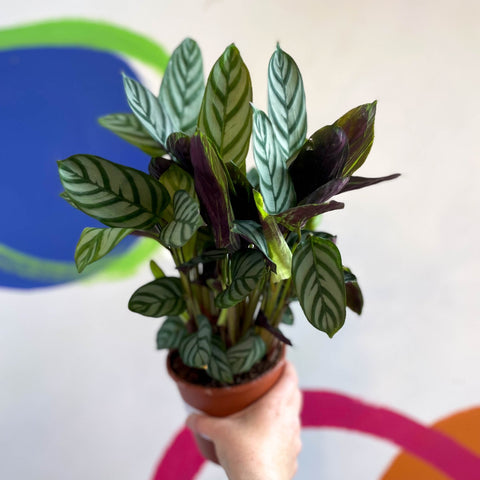
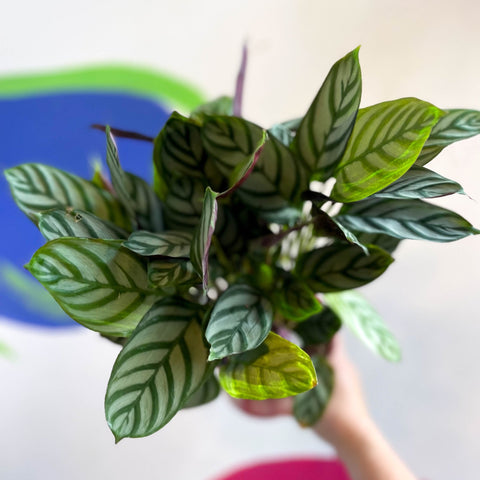
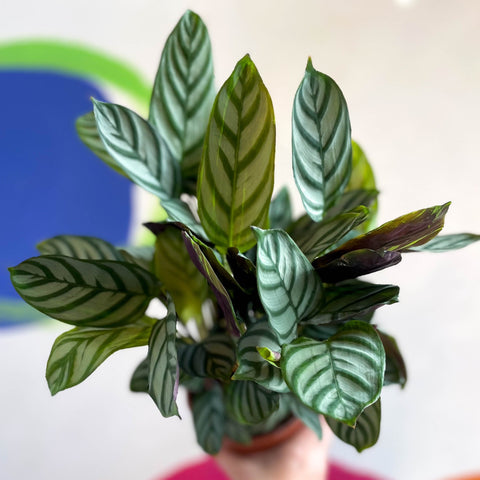
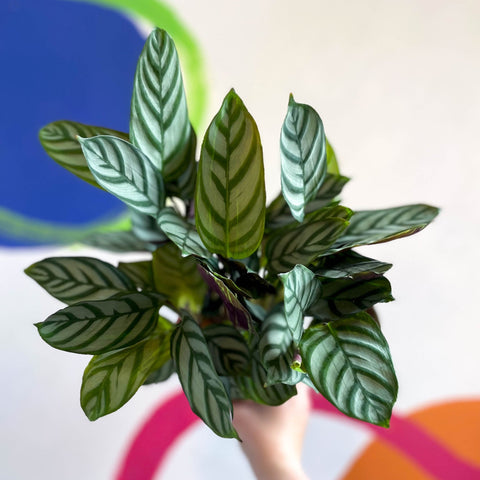
The Never Never Plant brings a vibrant display to your home with its patterned green-and-silver leaves and their deep red undersides. This clever plant will move its leaves according to light level, so if it looks more closed up overnight, you know it's getting enough light in the daytime! The key with this plant is not letting it dry out, so make sure it's not in direct sun or near an operating heater, which would both dry it out far too much. Think of its rainforest undergrowth home when caring for it, where it is sheltered from the harsh rays of the sun whilst still benefitting from its warmth, and in a moist environment while still getting some airflow. Choose this plant to add a splash of colour and zany pattern to your home, and it will reward your care with its character and vibrancy.

Scientific Name
Ctenanthe setosa 'Compact Star' (hairy, flower-bearing plant)
Ctenanthe is pronounced 'ten-ANTH-ie', with a silent C at the start!

This species was identified as both a Maranta and a Stromanthe before its eventual classification as Ctenanthe in 1884, which is the currently accepted name.

Common Name
Never Never Plant, Prayer Plant

Origin
This plant is native to South America, mainly the Amazon basin.

Light
Direct sun can easily scorch this plant, so make sure it's in a bright spot but away from the sun's strong rays.

Water
Let the top few inches of soil dry out between waters; Ctenanthes like their soil to be moist but not soggy.

Humidity
Ctenanthes love high humidity and will be grateful if you use a humidity tray. And don't keep them anywhere near an operating radiator!

Soil
Use a well-draining, moisture-retentive soil to keep this thirsty plant happy. A mix with added coir and perlite, or one designed for Calatheas and Marantas, should keep your Ctenanthe happy too! Repot every couple of years in Spring.

Food
Feed every four waters in the growing season, reduce to every six in autumn and winter.

Temperature
Keep this plant happy with temperatures between is 15-27°C; they need to stay above 12°C in winter.

Pet-safe
Yes, but too much nibbling won't be good for pets, small humans or the plant!

Sprouts Top Tips
A common issue with Ctenanthes is crisping brown edges of leaves. This is usually caused wither by too much sun or not enough moisture. Check that your plant is not getting any direct sun, that the soil is not drying out beyond the top few inches, and if necessary introduce a humidity tray to keep the local moisture level in the air higher.

Check out The Sprouts Blog

Sprouts insights to house plants, gardening, our favourite brands and plant hire case studies.
We’re Growing – Welcome to Sprouts HQ! - Sprouts of Bristol
Sprouts of Bristol is expanding with the launch of Sprouts HQ – a new South Bristol premises that will house a dedicated packing space for online orders, an office, studio, and more room for rare and exciting plants. While the Kingsdown shop remains open as usual, the new HQ allows Sprouts to grow behind the scenes and offer even better service both in-store and online. This blog post shares the story behind the move, what customers can expect, and how to keep supporting this independent plant shop through the transition.
Jessy EdgarAugust 15, 2025
Terrarium & Wreath Workshops in Bristol – Autumn & Winter 2025 - Sprouts of Bristol
Join Sprouts of Bristol for terrarium, kokedama, and Christmas wreath workshops this autumn–winter. Creative, plant-filled fun in the heart of Bristol!
Jessy EdgarAugust 5, 2025
Build Your Own Terrarium: A Step-by-Step Guide from Sprouts - Sprouts of Bristol
Fancy creating your own tiny, self-contained world of green? Our DIY terrarium kits are the...
Jessy EdgarJuly 20, 2025