
Calathea rufibarba 'Elgergrass' - Purple Velvet Calathea

Size
Regular price £14.00
This product is not available for pickup at any store

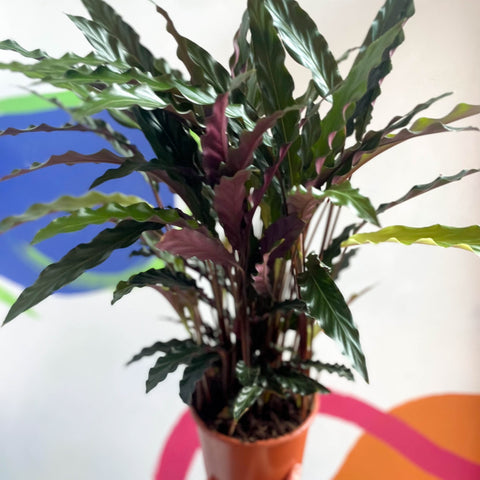
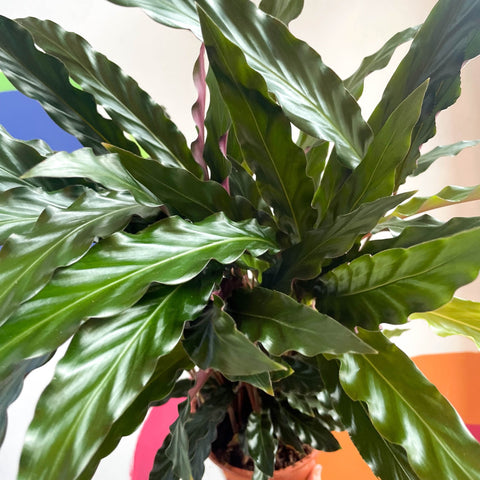
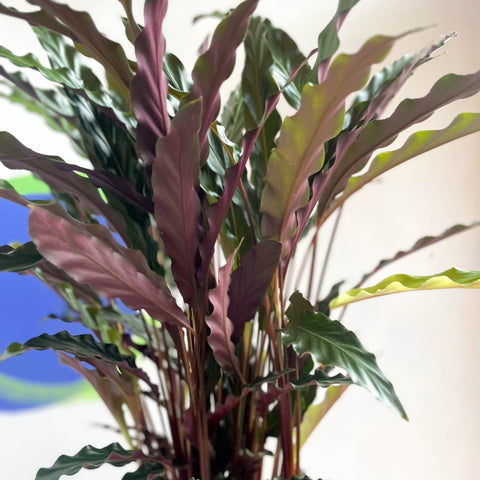
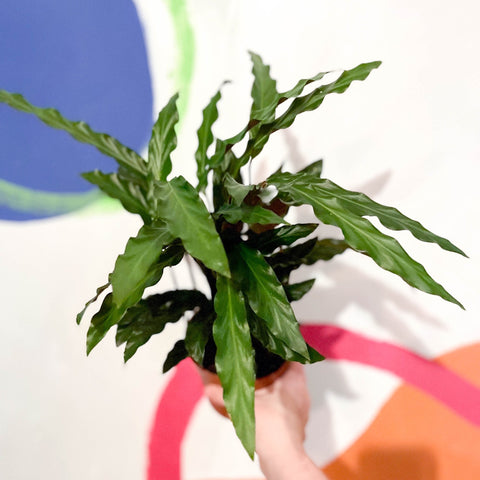
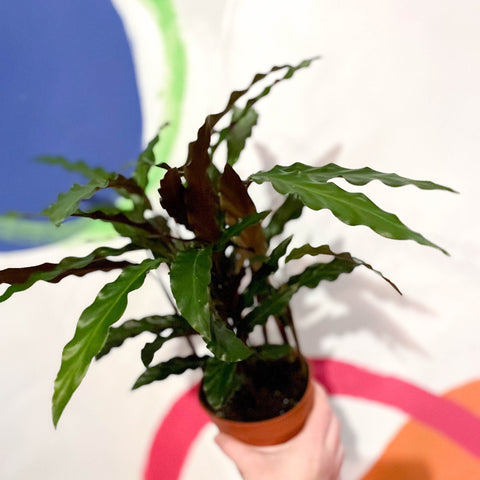
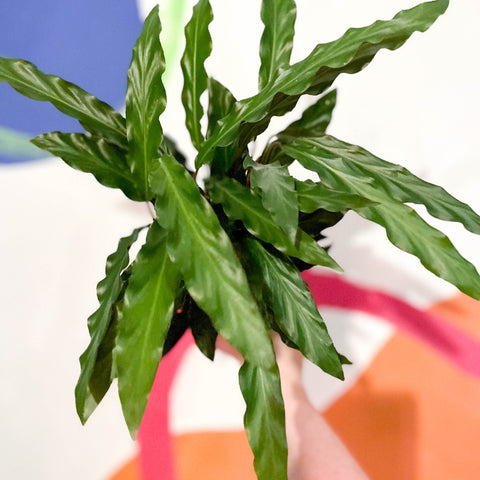
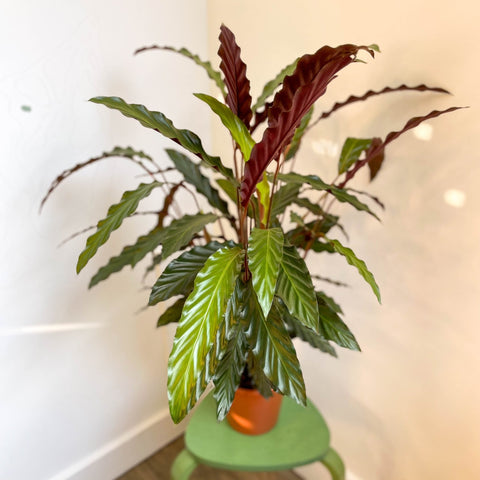
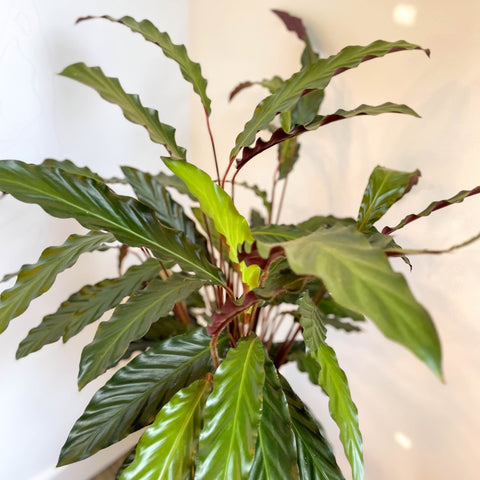
This Calathea's beautiful, long, thin leaves stand out thanks to both their colour and texture. While the tops of the leaves are a lush forest green, the undersides are tinted red and they are covered in tiny hairs, giving them a fluffy texture which is both aesthetic and tactile. The wavy texture of the leaves, alongside the fluff, adds extra interest to the plant and brings a little part of the rainforest into your home. Give this plant a nice humid spot with plenty of bright light and it will reward you with plenty of textured, colourful foliage!

Scientific Name
Calathea rufibarba (basket plant with a red beard)

Synonyms: Goeppertia rufibarba (correct classification), Phyllodes rufibarba

This plant has recently changed Genus, so the scientific name is now technically Goeppertia rufibarba, though Calathea is still most commonly used

Common Name
Velvet Calathea, Purple Velvet Calathea, Furry Feather Calathea

Origin
Native to tropical rainforest in Northeastern Brazil

Light
Thrives in bright, indirect light, but will tolerate some shade as the red undersides of its leaves stop too much light escaping.

Water
Allow the top few inches of soil to dry out in between watering; if possible, use rainwater rather than tapwater, or at least allow tap water to sit out for 24 hours to allow chemicals in it to settle. Water with tepid or lukewarm water to avoid shocking the plant.

Humidity
Your Calathea will prefer high humidity. Keeping it in a damper kitchen or bathroom, grouped with other plants or on a pebble tray will help keep its foliage fresh. Make sure to keep it away from operating radiators which can dry it out.

Soil
Plant in fast draining, but moisture retentive soil. A mix with added bark or perlite would, or one designed for Calatheas or Marantas, be ideal. Repot every two years in spring, and water a day in advance to combat transplant shock.

Food
Feed every four waters in the growing season, reduce to every six in autumn and winter. Pre-water the soil before applying 'ready to use' products to protect the roots.

Temperature
Ideal temperature is above 20°C; make sure it does not get colder than 12°C in winter.

Pet-safe
Yes, but too much nibbling won't be good for pets, small humans or the plant!

Sprouts Top Tips
This plant can be fussy so choose your location carefully. If it's in an especially bright spot a humidity tray is a good idea to help maintain humidity levels!

Check out The Sprouts Blog

Sprouts insights to house plants, gardening, our favourite brands and plant hire case studies.
We’re Growing – Welcome to Sprouts HQ! - Sprouts of Bristol
Sprouts of Bristol is expanding with the launch of Sprouts HQ – a new South Bristol premises that will house a dedicated packing space for online orders, an office, studio, and more room for rare and exciting plants. While the Kingsdown shop remains open as usual, the new HQ allows Sprouts to grow behind the scenes and offer even better service both in-store and online. This blog post shares the story behind the move, what customers can expect, and how to keep supporting this independent plant shop through the transition.
Jessy EdgarAugust 15, 2025
Terrarium & Wreath Workshops in Bristol – Autumn & Winter 2025 - Sprouts of Bristol
Join Sprouts of Bristol for terrarium, kokedama, and Christmas wreath workshops this autumn–winter. Creative, plant-filled fun in the heart of Bristol!
Jessy EdgarAugust 5, 2025
Build Your Own Terrarium: A Step-by-Step Guide from Sprouts - Sprouts of Bristol
Fancy creating your own tiny, self-contained world of green? Our DIY terrarium kits are the...
Jessy EdgarJuly 20, 2025