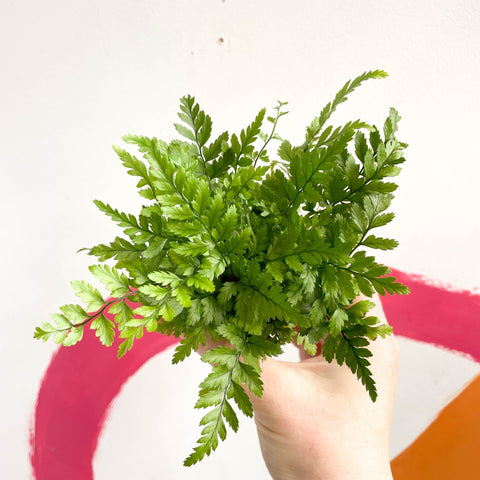
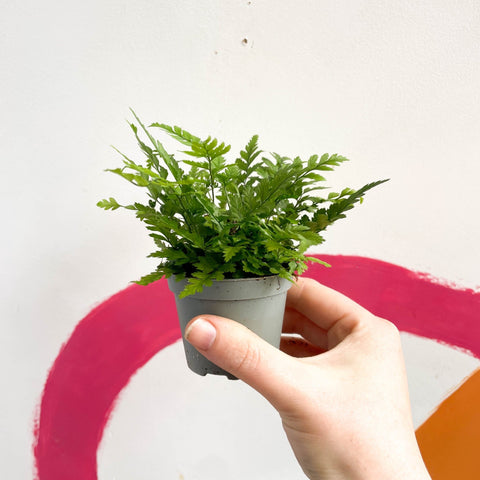
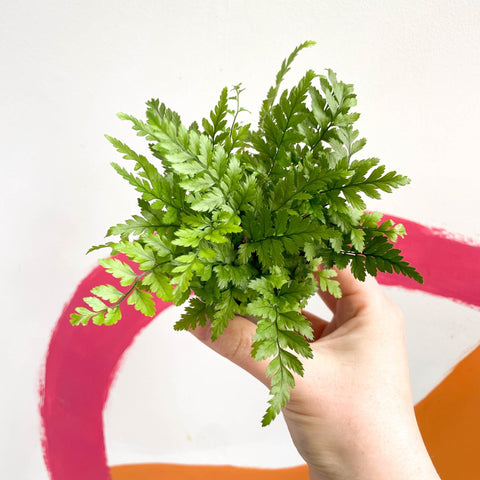
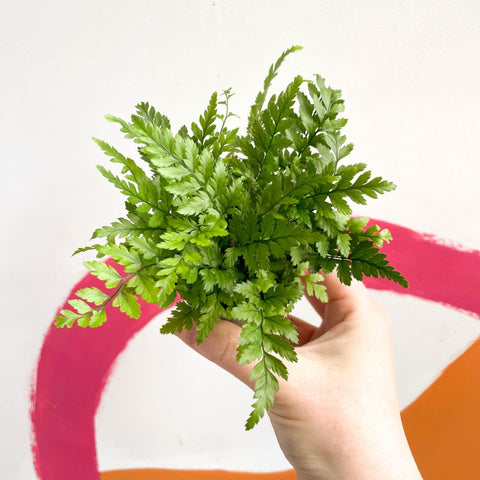
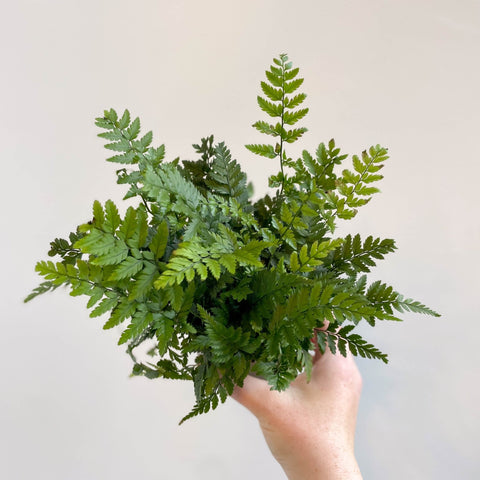
Polystichum tsussimense - Korean Rock Fern
Let customers speak for us

Very happy with my order, nice fresh bunch

Nice plant thanks

V excited to add these little fellows to my house plant collection.
Love it and love Sprouts! Fabulous shop.

Can't fault the plants healthiness but sadly my ability to keep a maidenhair fern alive yet again foiled me. Me n ferns don't mix.

Cute plant - healthy and reasonably priced

Great seller, fast delivery even during Christmas period
Many thanks will buy from again

The cones were great for my wreath making.
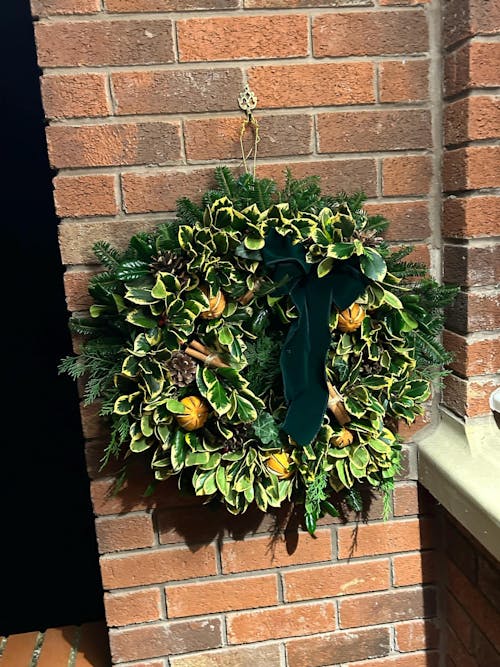
Lovely for the wreath I made.
Really great delivery timescale, even though it was so close to Christmas.

Great communication with the seller. Moss looks very healthy. Thank you 😊
![The 'Hot Toddy' Fresh Foliage Christmas Wreath [Made to Order]](https://cdn.shopify.com/s/files/1/0490/2774/3905/products/the-hot-toddy-fresh-foliage-christmas-wreath-240111_500x500.jpg?v=1637626402)
Gorgeous!

Fabulous plant! Better than I was expecting, lovely big plant! Fab packaging, excellent delivery! 😄

Such a beautiful addition to my Christmas decorations. Beautifully crafted and gorgeous colours. Thank you so much.

What can I say other than the plant is perfect! I have a few others that I will be buying in the new year and Sprouts of Bristol will be my first port of call.

Beautiful plant, very well packed.
What customers think about the store
Sprouts of Bristol offers high-quality, well-packaged plants with excellent customer service. Customers praise the healthy condition of plants upon arrival, speedy delivery, helpful staff, and the store's commitment to sustainability. The rescue plant boxes ar...
AI-generated from customer reviews.
Check out The Sprouts Blog
Sprouts insights to house plants, gardening, our favourite brands and plant hire case studies.