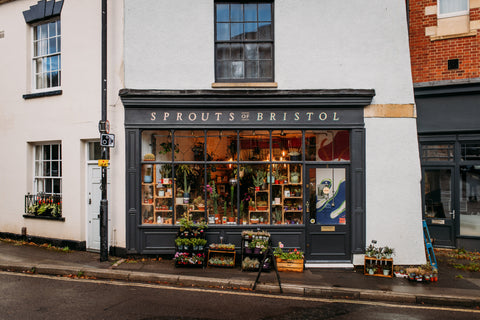
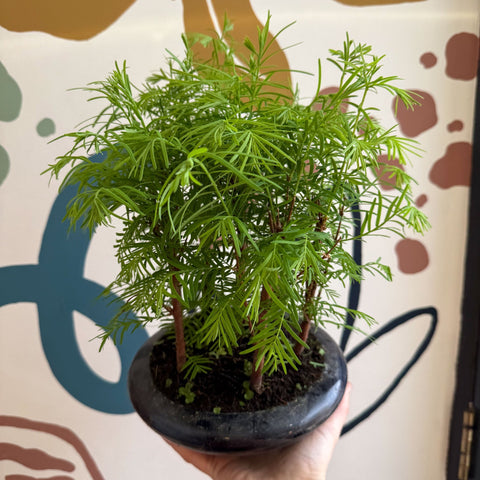
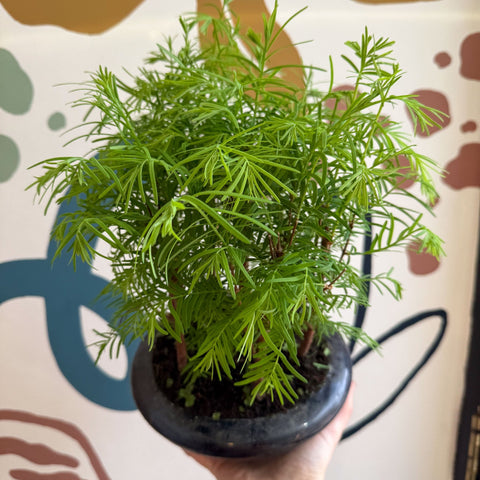
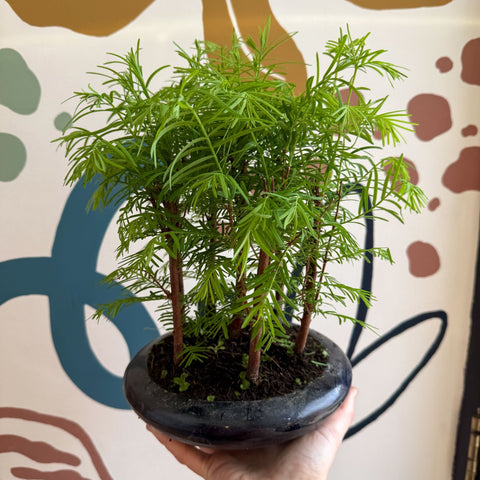
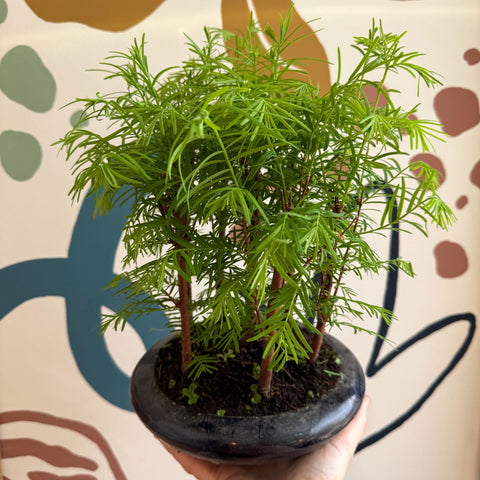
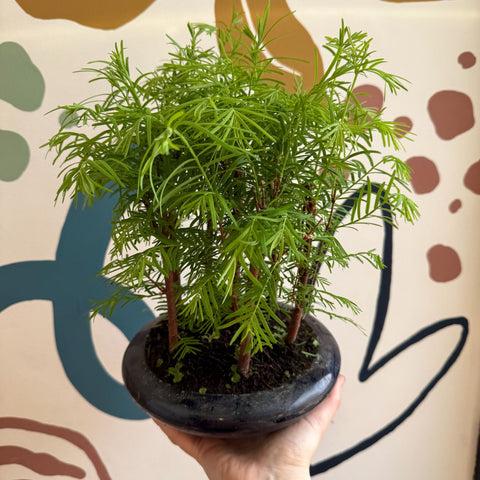
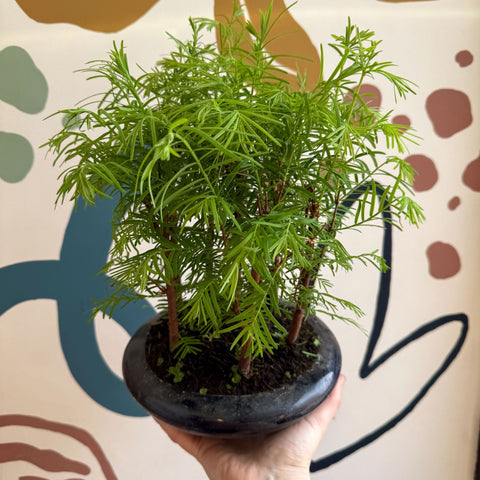

Metasequoia - Dawn Redwood Bonsai
Buy with confidence
Everything we do is designed to get your order to you safely and happily.
🌿 Packed with care in Bristol, UK
⭐ Loved by thousands of happy Sprouts customers
📦 Royal Mail Tracked delivery
💚 Independent & Real Living Wage Employer
If your plant arrives damaged or unhappy, we’ll put it right. Find out more here
Every plant is carefully packed by our small, plant-loving Bristol team using protective, mostly plastic-free packaging.
Occasionally, you may find reused bubble wrap – this has been donated to us, and we encourage you to reuse it too.
Orders are usually packed and dispatched within 2–4 working days. We may occasionally delay dispatch during periods of extreme weather to protect your plants. We always prioritise plant health over speed of delivery.
Delivery is £5 for any number of items, or free on orders over £60. We deliver across the UK only.
We also offer local, bike-powered delivery in Bristol for £5 via Pedal Collective, a gentler option for plants and the planet.
We believe in paying people fairly, that’s why we’ve been a Real Living Wage Employer from the very beginning. We’re an independent Bristol business, packing every order ourselves.
Supporting us means supporting fair work.
Questions before ordering? Just drop us a message – we’re always happy to help.
Head to our contact page and fill in the contact form and one of the team will be in touch shortly
The Dawn Redwood tree is a deciduous native of China; until living specimens were found there in 1941, it was thought extinct and only known from fossil records. It is suitable as a beginner bonsai, though, so don't be put off by its long backstory. By growing this plant, you'll be growing a little piece of prehistory! In nature, it grows very upright and tall, and as a bonsai it is usually kept in the same upright growth shape. Relatively large for bonsai trees, you will have to keep an eye on the strong growth of this species. This hardy species is best grown outdoors, but be careful of harsh outdoor frosts which can damage roots in shallow pots. If you need to grow it indoors, make sure it has a sunny spot and gets some decrease in temperature over winter - an unheated conservatory would be a perfect spot.
Scientific Name
Metasequoia glyptostroboides (like Sequoia's tree with carved cones)
Synonyms: Metasequoia neopangaea, Metasequoia honshuenensis
This plant had been identified from fossilised remains and was thought to be extinct until live specimens were identified in China in 1941.
Common Name
Dawn Redwood Bonsai, Dawn Redwood, Water Fir, Water Larch, Metasequoia, Living Fossil
Origin
This plant is native to Southeast and South-Central China
Light
Your Dawn Redwood will grow best in a sunny spot, but should be shaded from the harshest summer sun to prevent its leaves being scorched.
Water
Keep the soil moist, especially in summer while the tree is actively growing. You'll need to reduce this over winter, and make sure that the soil is never soggy, as trees in puddles can get rotten roots. In summer, it can be easy to underwater this thirsty plant; don't worry too much if the leaves become crispy, though, as it should grow new branches quickly enough to replace them.
Humidity
This tree will benefit from above-average humidity to help keep its soil moist and its leaves happy.
Soil
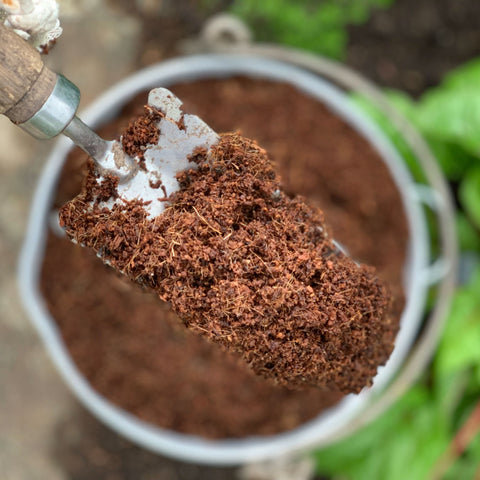
Use a well-draining but moisture retentive soil - Ficus soil is usually good for bonsais - to ensure your bonsai gets the right amount of water. Repot every two years. The roots will grow quickly and start to push the plant out of the pot; you will need to prune the roots each time to keep it bonsai-sized.
Feeding
Fertilise in spring and summer; you can use a high-nitrogen fertiliser in spring, but feed mor cautiously in summer so you don't get too much growth. No feeding is necessary in autumn and winter.
Pruning
Pinch back new growth in spring and summer to maintain shape and encourage ramification. Structural pruning should be done in late winter or early spring before buds break. Avoid heavy pruning once in active growth.
Wiring
Can be wired during dormancy (late winter) while branches are flexible. Check regularly to avoid wire cutting into the bark – Metasequoia grow quickly.
Temperature
This bonsai species is hardy, and is best grown outdoors; it can stand temperatures down to -15°C, but it should be protected from frost which can damage it. Protection in a greenhouse or unheated conservatory should work well over winter.
Pet-safe
Yes, your bonsai is non-toxic to pets, though eating large amounts will not be great for pets' tummies or your plant.
Sprouts Top Tips
Prune the shoot tips 2-3 times a year to keep the branches compact.
Your Dawn Redwood will benefit from seasonal weather and temperature changes so you can either grow it outdoors in a sheltered spot, or indoors where it gets plenty of sun in summer and some cold in winter.
Dropping of leaves in autumn is completely normal; this conifer is deciduous and will hibernate with no leaves over winter before sprouting fresh in spring.
Did You Know?
This species has been introduced into the wild here in the UK
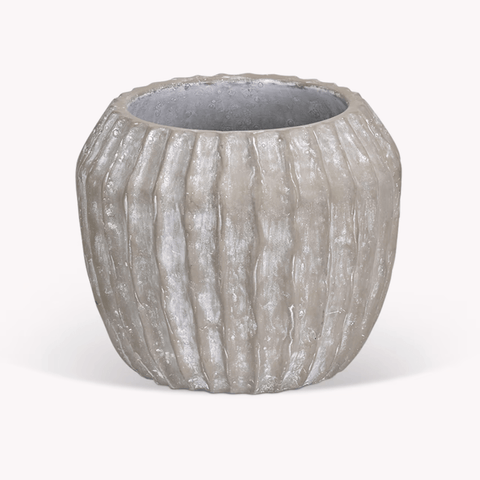
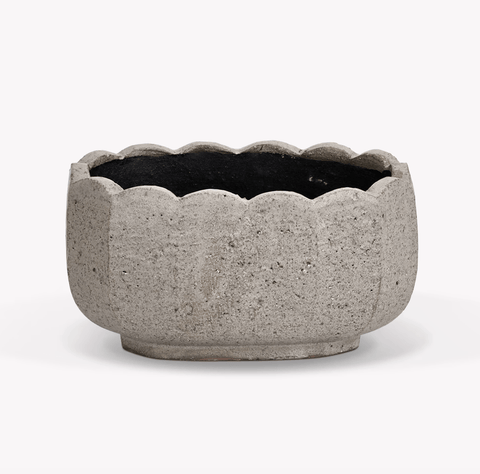
Add a Pot & Care Essentials
Most customers add a pot or soil when purchasing this plant.













Check out The Sprouts Blog
Sprouts insights to house plants, gardening, our favourite brands and plant hire case studies.