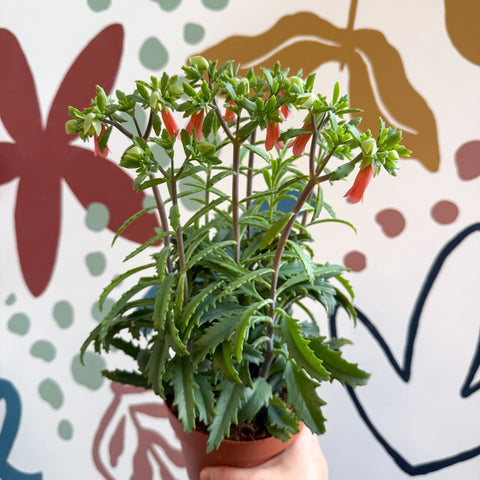
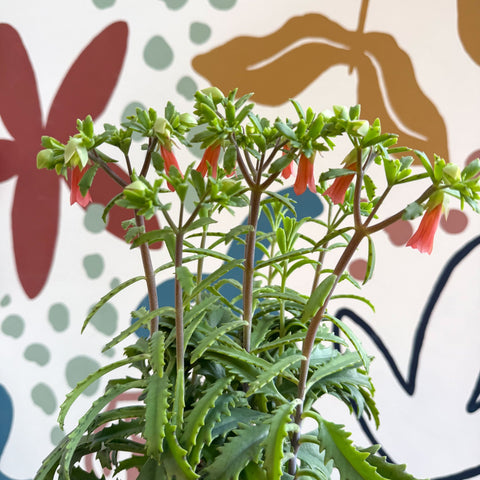
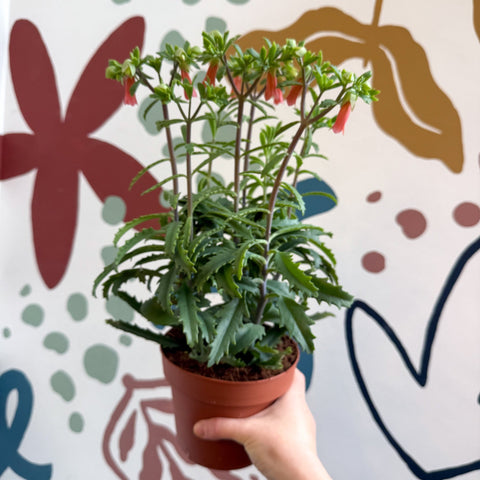
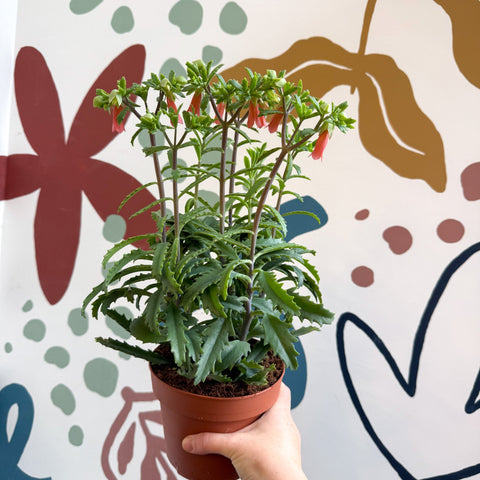
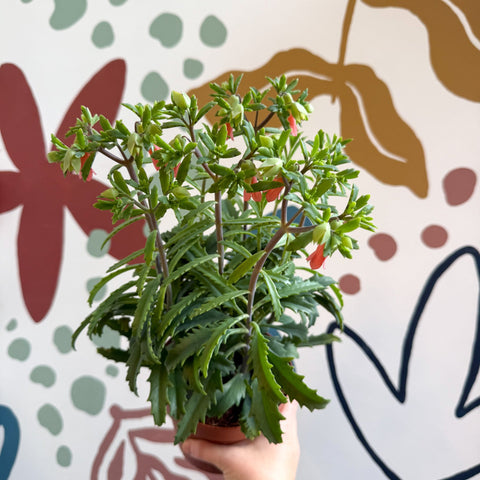
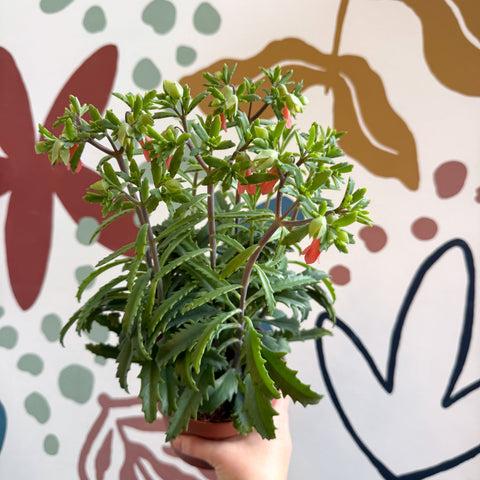
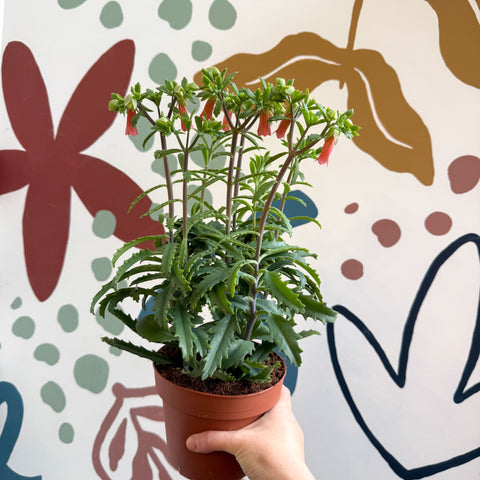
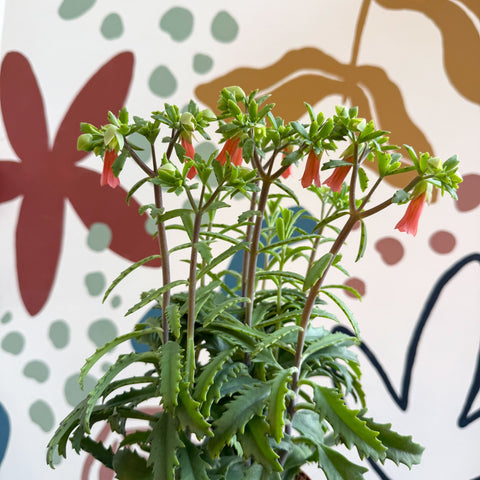
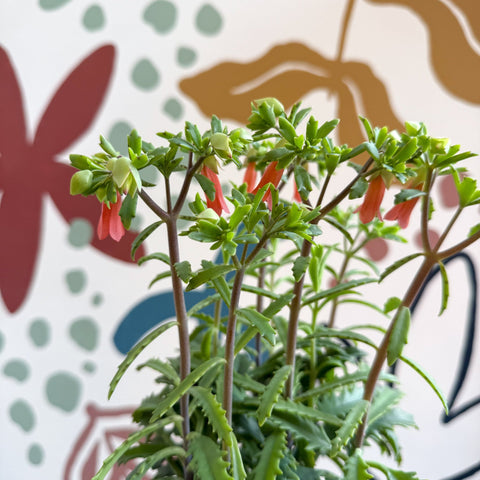
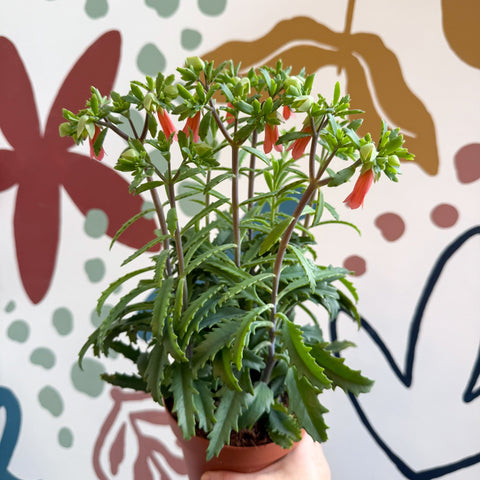
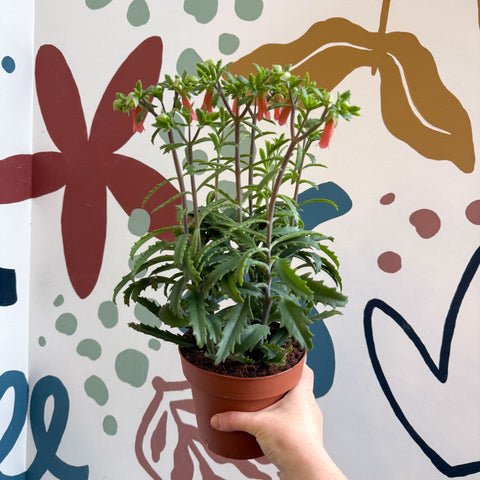
Kalanchoe ‘Lucky Bells’ is a striking and unusual succulent, loved for its upright stems adorned with clusters of drooping, bell-shaped flowers in coral-orange and salmon-pink tones. These pendant blooms emerge above blue-green succulent leaves and can last for several weeks, adding both height and interest to your plant display. Drought-tolerant and low maintenance, ‘Lucky Bells’ is a flowering succulent that thrives on minimal fuss and maximum sunlight.
Scientific Name
Kalanchoe manginii × Kalanchoe pinnata ‘Lucky Bells’ (hybrid of bell-bearing and air-plant Kalanchoes)
A cultivated hybrid developed for ornamental flowering. The parent species are native to Madagascar and known for their bell-shaped blooms and ease of propagation. ‘Lucky Bells’ was bred to combine showy flowers with structural form.
Common Name(s)
Lucky Bells Kalanchoe, Bellflower Kalanchoe, Pendant-flowered Kalanchoe
Origin
Hybrid – parent species originate from Madagascar
Light
Loves bright, direct light. A sunny windowsill is ideal, especially in winter. Without enough light, the plant may become leggy and refuse to bloom.
Water
Allow the soil to fully dry out between waterings. Water sparingly in winter and avoid getting water into the centre of the plant. Overwatering can lead to root rot or wilting leaves.
Humidity
Tolerates low household humidity very well. Avoid misting – this plant prefers dry air and is adapted to arid environments.
Soil
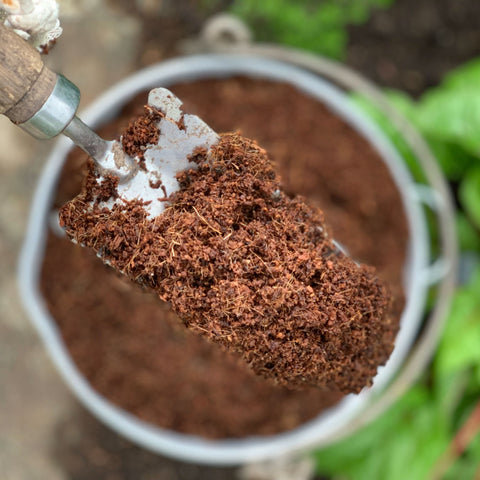
Use a very well-draining cactus or succulent mix. You can also amend regular compost with grit, sand, or perlite to improve drainage. A shallow pot with drainage holes is ideal.
Food
Feed once every 6–8 weeks during spring and summer with a balanced liquid fertiliser, or a specialist cactus feed. No feeding required in autumn and winter.
Temp
Ideal temperature range is 18–24°C. Avoid temperatures below 10°C – protect from frost and cold windowsills.
Pet-safe
No – toxic if ingested by pets or humans. Keep out of reach of cats, dogs, and children.
Sprouts Top Tips
To encourage blooming, make sure the plant gets a rest period in winter with reduced watering and long nights. Try placing it somewhere dark for 12–14 hours a day for 4–6 weeks to help initiate flowering.
Extras
After flowering, you can trim back the flower stalks and allow the plant to rest. It may rebloom the following year if given enough light and care.
Did You Know?
Many Kalanchoe species, including this one, are known as “mother of thousands” plants because of their ability to produce plantlets or pups along their leaves or stems. While ‘Lucky Bells’ doesn’t typically do this, it still shares the same resilience and drought tolerance.