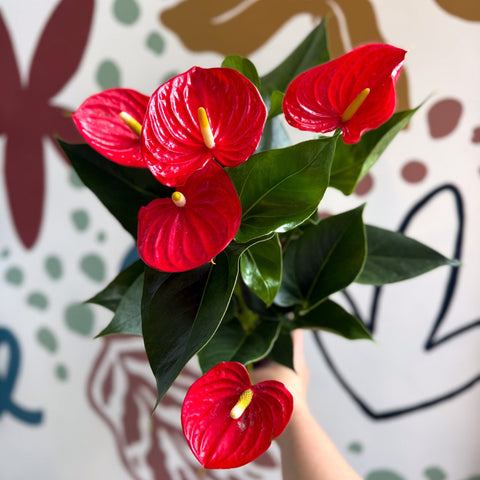
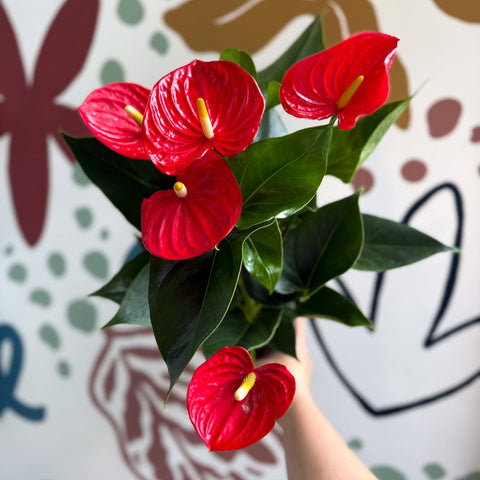
With its sculptural, waxy blooms and vibrant, heart-shaped spathes, Anthurium ‘Esudo’ is a standout variety of the classic flamingo flower. This cultivar produces glossy, sculpted blooms in shades of coral-pink to red, often with a ripple or wave in the spathe for added texture. A beautiful way to bring year-round colour and tropical elegance to your home.
Scientific Name
Anthurium andraeanum – cultivar: ‘Esudo’
Synonyms
Often listed simply as Anthurium ‘Esudo’ in trade listings
Common Name(s)
Esudo Anthurium, Flamingo Flower, Laceleaf
Origin
Hybrid cultivar derived from species native to Colombia and Ecuador
Light
Prefers bright, indirect light. Too little light will reduce flowering, while harsh direct sun can scorch leaves. East or north-facing windows are ideal.
Water
Keep soil lightly moist but not soggy. Water when the top 2–3cm of soil feels dry. Reduce watering slightly in winter.
Humidity
Thrives in higher humidity (60%+). Mist regularly, use a pebble tray, or place near a humidifier – especially in centrally heated rooms.
Soil
Prefers a rich, airy mix. A blend of orchid bark, perlite, and peat or coir works well to keep roots happy. Avoid compacted soils.
Food
Feed every 4–6 weeks during spring and summer with a balanced houseplant fertiliser. Reduce or pause feeding in autumn and winter.
Temp
Ideal range is 18–26°C. Keep away from cold draughts and never let it drop below 13°C.
Pet-safe
Toxic if ingested – keep away from pets and small children.
Sprouts Top Tips
Clean the leaves with a damp cloth to keep them glossy and dust-free – this also helps prevent pests. If your Anthurium stops flowering, it may need brighter light or a short rest period with slightly cooler temps.
Extras
Blooms can last for several weeks and are technically not flowers but modified leaves called spathes – the true flowers grow on the central spike (spadix)!
Did You Know?
The name Anthurium comes from the Greek anthos (flower) and oura (tail), referring to the long spadix that protrudes from each bloom.