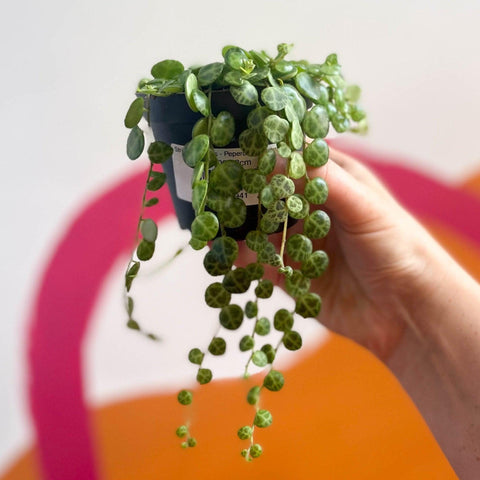
Enigmatic, mysterious, melancholic... this cultivar of weeping fig's deep green foliage would be suited to the most gothic of settings, its bushy silhouette striking with the dark colour and pointed leaves. It may be tropical, but it wouldn't look out of place in the enchanted woods - or the forbidden forest. It will be best kept indoors, though, and even there will probably notice the dip in temperatures over winter. If you lose some foliage in the colder and darker months, don't worry, it's perfectly normal and they should grow back in spring. Love this plant for its lush, dramatic foliage and keep it happy to keep those leaves coming.
Scientific Name
Ficus benjamina 'Danielle' (Benjamin's fig, cultivar: Danielle)
Synonyms: Urostigma benjaminum, Ficus benjaminoides, Ficus striata, Urostigma nitidum, Ficus neglecta (amongst others - a lot of specimens have been given different scientific names and then found to be this species)
The current name was first published in 1767, and despite other names cropping up in the interim, it has remained accepted.
Common Name
Weeping Fig, Benjamin Tree, Weeping Ficus, Ficus Tree, Ornamental Fig, Danielle Weeping Fig, Dark Green Weeping Fig
Origin
Native to tropical and subtropical parts of Asia and Oceania. Found in Bangladesh, Borneo, Cambodia, Southern China, India, Laos, Indonesia, Malaya, Myanmar, Nepal, New Guinea, Philippines, Thailand, Vietnam, Northeastern Australia, Taiwan and many island nations in between.
Light
In summer, keep out of harsh direct sun but make sure it's still plenty bright. It should be near a window but may struggle right in the window, especially facing south or west. A bit of direct sun will be more welcome in autumn and winter when it's generally more dark, and moving it into a brighter spot over these months will help keep it happy and not losing leaves.
Water
Water when the top third has dried - measure using your finger or an untreated wooden skewer or chopstick. Lukewarm water will keep the sensitive roots happiest, and make sure excess water drains away so it isn't sat soggy.
Humidity
This plant likes being humid. Make sure it isn't too close to operating heaters which will dry and crisp its leaves. Consider using a humidity tray, or humidifier, if it's especially dry where you are.
Soil
Use a mix containing elements like coir, bark, perlite and sand to ensure it drains well but holds some moisture. A mix designed for Ficus plants like this one will be perfect. Repot every three years as the plant grows, into a pot size just a little bigger and change over as much soil as you can for best results.
Food
A feed every four waters in summer, and less frequently (e.g. every six waters) in winter will be perfect for keeping that growth going evenly.
Temperature
For best growth, your Weeping Fig will like to be between 16-26°C. Make sure it doesn't get below 12°C for long periods over winter.
Pet-safe
No, this plant is toxic to pets and small humans.
Sprouts Top Tips
When they aren't happy, weeping figs can be prone to dropping their leaves. There are a few reasons this could happen, though, so it's important not to misunderstand:
If you've just bought it, your plant may just be distressed at moving; give it time to get used to its new surroundings.
If it's somewhere very shady, try moving it somewhere brighter; in darker locations your plant will get upset and drop leaves. Make sure you can comfortably read by the natural light around your plant.
Finally, make sure you aren't leaving the plant sat in soggy soil; it can rot if it's left wet, preferring slightly damp soil and for the top to dry out before you water it again.