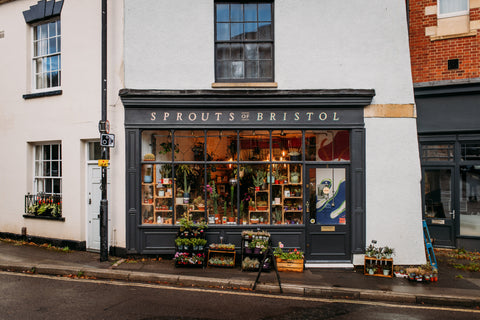
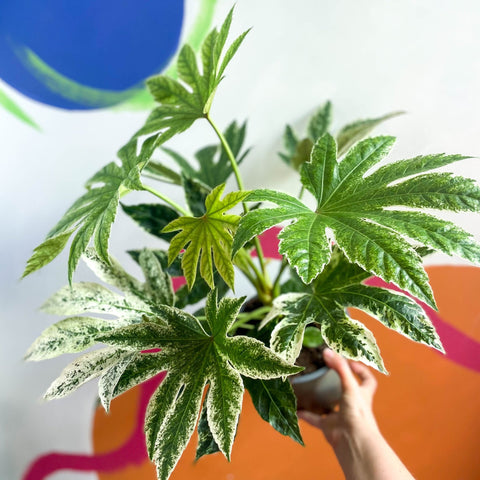
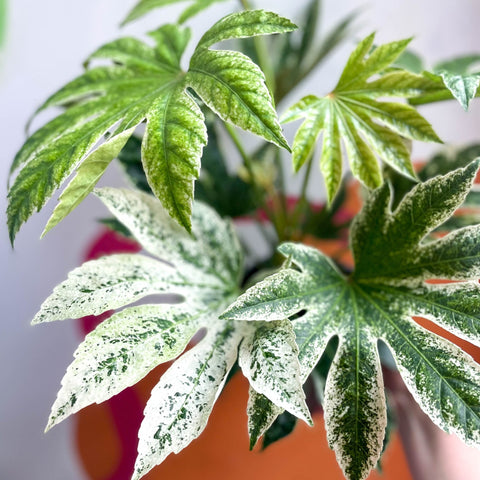
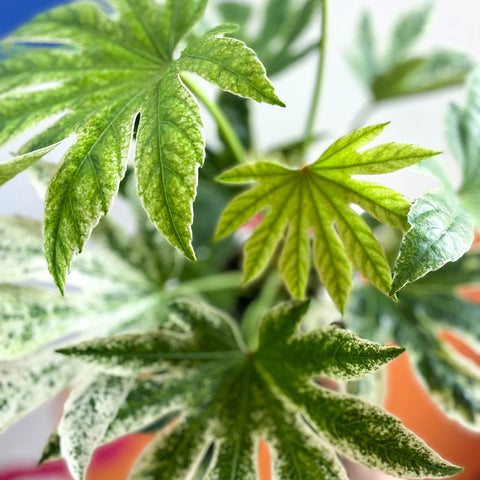
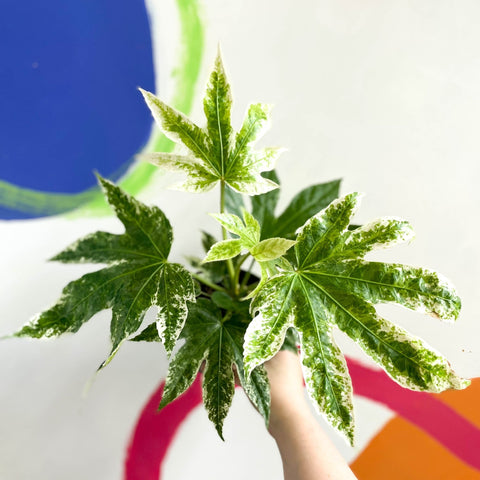
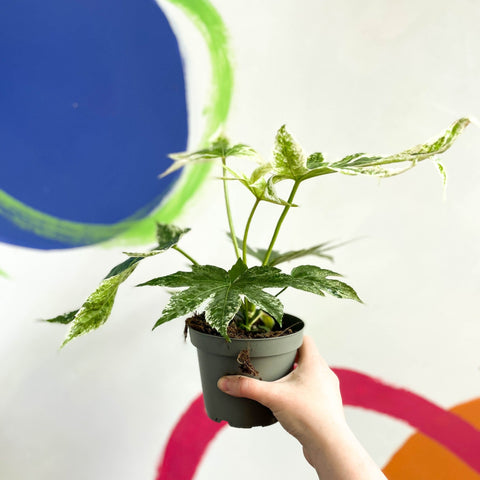
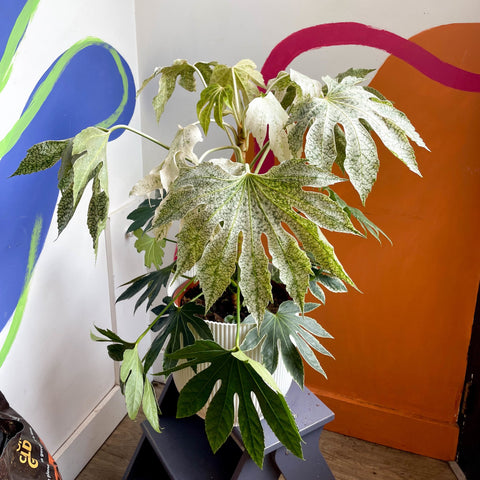
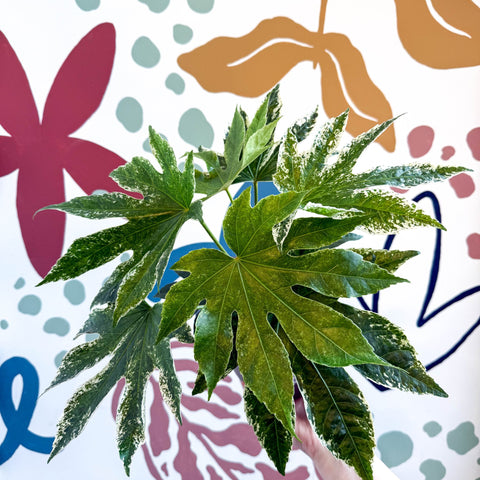
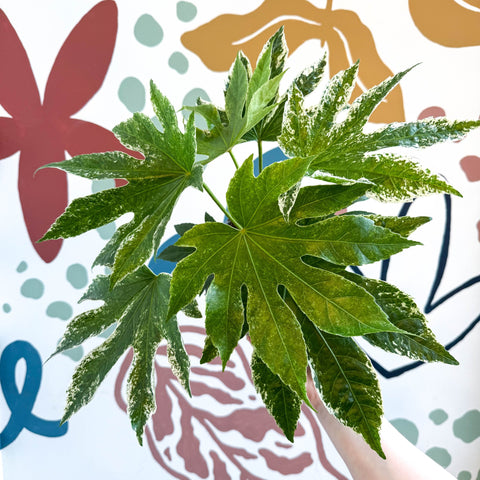
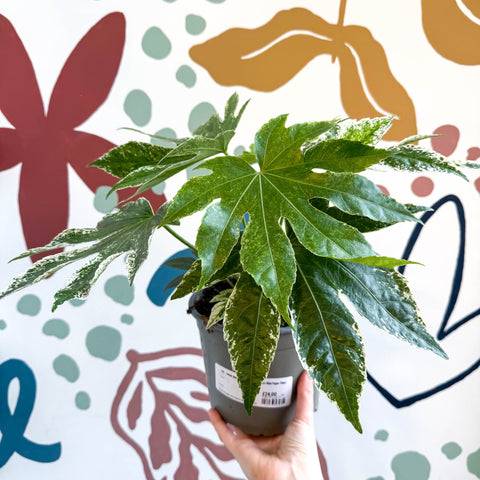
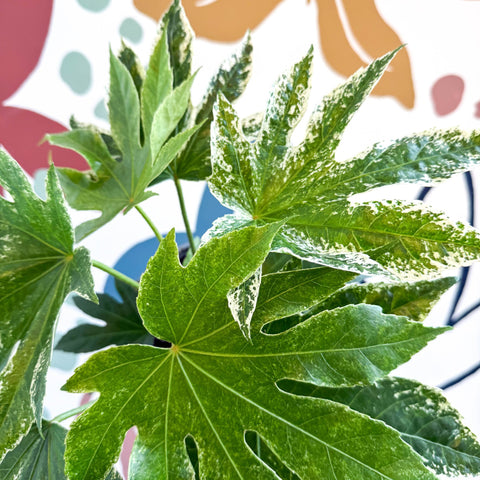
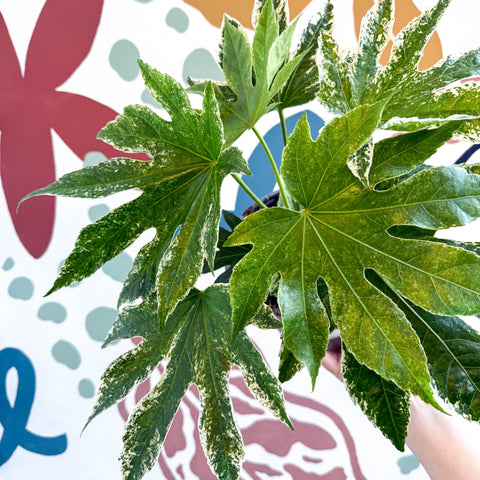
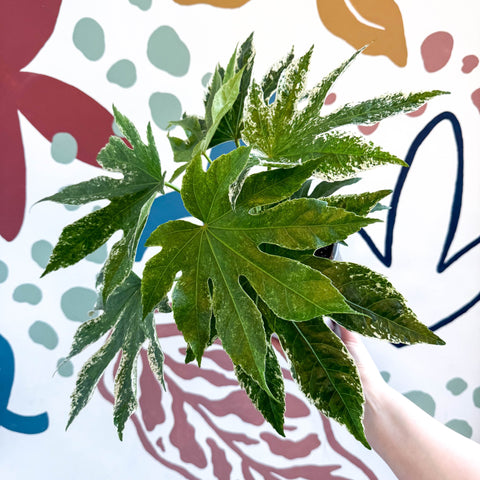
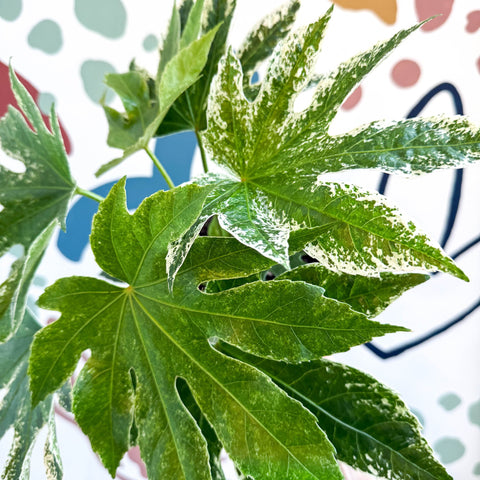
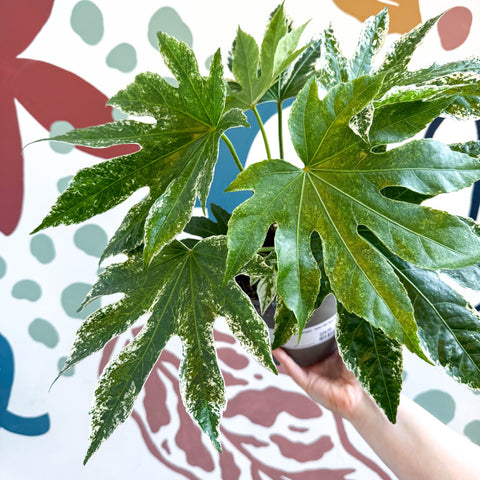
This Paper Plant's segmented leaves are stunning, standing out thanks to the criss-cross of white variegation which is most prominent at the leaf edges. Each mid-green leaf is split into segments like an outstretched palm, but with seven 'fingers', and this delicate-looking foliage is bordered in this cultivar by a pattern of white variegation which gives it the common name of Spider's Web Paper Plant. And while the leaves may look delicate, they are in fact half-hardy, meaning this plant can grow outside in sheltered, mid areas in the UK. We have seen them growing in outdoor containers in and around Bristol, for example! So whether you're bringing them into your home or placing them just outside it, give this plant a bit of shade and evenly moist soil and it will show its appreciation with more gorgeous foliage, and not too much fuss.
Scientific Name
Fatsia japonica ‘Variegata’ (Japanese plant with eight-fronded leaves, cultivar: variegated)
Synonyms:
Aralia japonica, Aralia sieboldii, Dimorphanthus japonicus, Echinopanax japonicus, Aralia brownii, Fatsia japonica var. lobulata, Fatsia japonica var. liukiuensis, Aralia sieboldii var. variegata
Originally identified as Aralia japonica in 1780, this plant was reexamined in the mid-nineteenth century and reclassified in 1854, into the new genus of Fatsia.
Common Name(s)
Spider’s Web Paper Plant, Variegated Japanese Aralia, False Castor Oil Plant, Fatsi, Variegated Paper Plant
Origin
The Paper Plant is native to subtropical East Asia, ranging from Korea through Japan to Nansei-shoto
Light
Paper Plants like bright but indirect light; outdoors they appreciate shade, and indoors they will prefer to be a bit away from a window if it gets direct sun. It is tolerant of some shade, but this can cause it to lose variegation; if you notice that new leaves are coming through with less variegation, move it to a brighter spot.
Water
Keep the soil evenly moist, allowing the top inch to dry out between waterings. Soggy soil can lead to root rot, so ensure the pot has good drainage. Water less frequently in winter when growth slows.
Humidity
Thrives in moderate to high humidity. Especially in dry indoor conditions, it can be useful to set up a pebble tray or place near a humidifier - look out for crispy brown leaf tips as a sign of too-low humidity. Avoid keeping it near radiators or other sources of dry heat which will fry your leaves.
Soil
Use a mix that retains moisture well; components like coir, perlite and bark will ensure this, and adding some sand and zeolite will help it to drain extra water away. A mix designed for Ficus plants will work well here. Repot every 2-3 years in spring.
Food
Feed every four waters in the growing season, reduce to every six in autumn and winter.
Temperature
This plant is half-hardy, so can stand winter temperatures down to -5°C, however it will grow best above 10°C, making it especially suited to growing indoors. Temperatures between 15-30°C should promote good growth.
Pet-safe
No; this plant is not toxic, but it can cause gastrointestinal upset in, and irritate the mouths of, pets who have had a nibble.
Sprouts Top Tips
Balance your light and water conditions, and keep your watering regular - regular to the rate the soil dries out, that is, rather than the exact number of days between waters. The amount of water your plant will get through depends on how much light it gets; the more light it gets, the sooner it will need more water.
Prune leggy stems in early spring to keep it compact and bushy.
Keep the leaves clean by regularly wiping them with a soft, damp cloth - this will maximise the amount of light that gets to the leaves.
Did You Know?
The variegation on each leaf of the Spider Web Fatsia is unique, and can change on each leaf as the plant grows.




![The 'Mulled Wine' Fresh Foliage Christmas Wreath [Made to Order]](https://cdn.shopify.com/s/files/1/0490/2774/3905/products/the-mulled-wine-fresh-foliage-christmas-wreath-188341_500x500.jpg?v=1637972611)