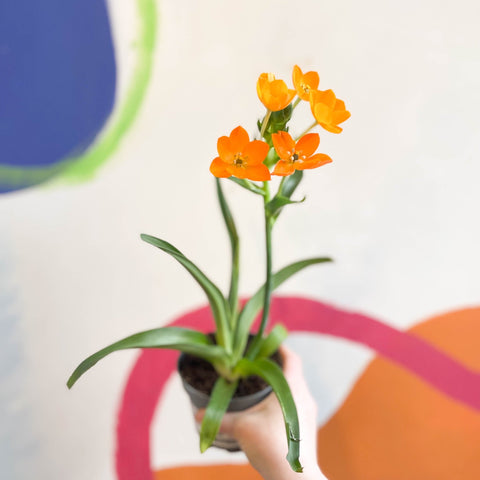
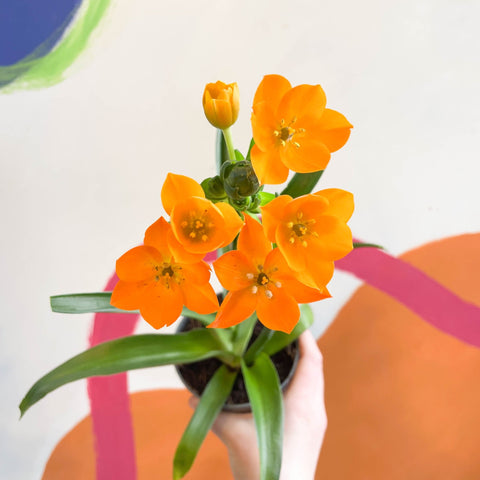
Ornithogalum dubium - Star of Bethlehem

Size
Regular price £8.00
This product is not available for pickup at any store

Scientific Name
Ornithogalum dubium (variable bird milk)

There have been some attempts to reclassify this plant, including in 2011 as Eliokarmos dubius, however, none of these have been approved so O. dubium remains correct.

Common Name
Sun Star, Star of Bethlehem, Yellow Chincherinchee

Origin
Native to South Africa

Description
These plants' bright orange flowers are really showstopping, adding a splash of vibrant colour which catches the eye in any room. The flower is seasonal, and will need a winter dormancy in a cool, dark cupboard to bloom again, but if you follow a few simple tips you can keep your plant producing bright blooms year on year. In between its dormancies it's quite easygoing, and will enjoy a bright spot to show off its golden flowers.

Light

This plant likes bright light and will do best in a spot which gets a couple of hours of sun and indirect light the rest of the day; a north-east or north-west facing window would be ideal.

Water

Allow the top third of the soil to dry out between waters; reduce in autumn and winter over its dormancy period.

Humidity
Average room humidity is fine; this plant will suffer if there's too much moisture/ too little circulation and can develop powdery mildew.

Soil
Use a well-draining, moisture retentive potting mix to ensure its roots are not sat in soggy soil. A mix with added sand or grit will help get air to the roots whilst allowing water to drain. Repot every two to three years at the end of its winter dormancy into a slightly larger pot.

Food
Feed every couple of weeks whilst it's blooming with a high-potassium feed.

Temperature

Likes temperatures of 15-24°C; don't let it drop below 12°C in winter.

Pet-safe
No, this plant is toxic to pets and small humans.

Sprouts Top Tips
To get this plant to flower each year, you'll need to give it a proper dormancy period (like a hibernation) over winter. Once it finishes flowering in late summer, its foliage will begin to yellow and die off. Once it's totally yellow, prune it back to about an inch above the soil using clean scissors or secateurs. Put it in a cool, dark location for a couple of months. A dry cupboard with temperatures around 10°C would be ideal. Water only just enough to keep the bulb ticking over. Once foliage starts to grow again in spring, feed it with a weak fertiliser and start watering more frequently, and gradually increase the light it gets. At this point, you're back to normal care and can keep an eye out for new flower buds!

The name 'Ornithogalum' comes from the Greek meaning 'bird-milk', because some species have white flowers which look a bit like bird poo...


Check out The Sprouts Blog

Sprouts insights to house plants, gardening, our favourite brands and plant hire case studies.
We’re Growing – Welcome to Sprouts HQ! - Sprouts of Bristol
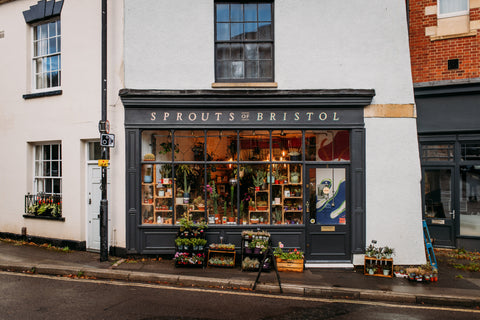
Sprouts of Bristol is expanding with the launch of Sprouts HQ – a new South Bristol premises that will house a dedicated packing space for online orders, an office, studio, and more room for rare and exciting plants. While the Kingsdown shop remains open as usual, the new HQ allows Sprouts to grow behind the scenes and offer even better service both in-store and online. This blog post shares the story behind the move, what customers can expect, and how to keep supporting this independent plant shop through the transition.
Jessy EdgarAugust 15, 2025
Terrarium & Wreath Workshops in Bristol – Autumn & Winter 2025 - Sprouts of Bristol
Join Sprouts of Bristol for terrarium, kokedama, and Christmas wreath workshops this autumn–winter. Creative, plant-filled fun in the heart of Bristol!
Jessy EdgarAugust 5, 2025
Build Your Own Terrarium: A Step-by-Step Guide from Sprouts - Sprouts of Bristol
Fancy creating your own tiny, self-contained world of green? Our DIY terrarium kits are the...
Jessy EdgarJuly 20, 2025