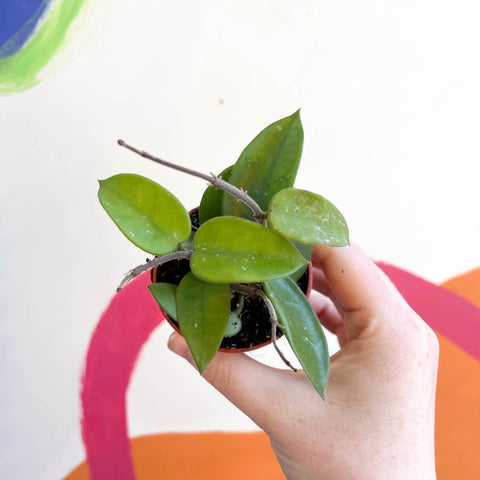
Hoya chouke

Size
Regular price £12.00
This product is not available for pickup at any store

Scientific Name
Hoya 'Chouke' (Hoya carnosa x Hoya serpens- Hoy's meaty plant crossed with Hoy's snakey plant)

This Hoya is a hybrid between the species H. carnosa and H. serpens. It is he sister plant to Hoya 'Mathilde'.


Common Name
Rope Plant, Hindu Rope Plant, Hoya Chouke, Wax Plant, Porcelain Flower

Origin
Native to Southeast Asia and Australia, although this hybrid first grew unexpectedly in 1995

Description
A cross between Hoya carnosa and Hoya serpens, this variety brings vibrancy to wherever you choose to keep it. Its splash of paler green variegation across bright green leaves makes it stand out and adds extra beauty; with some patience, this vining plant can be trained to grow up or left to dangle free to fit your interior aesthetic. If new leaves are losing the variegation, this is a sign it needs a brighter spot, so keep an eye out for that. In a bright spot, with care taken not to over-water, this Hoya will reward you with its beautiful, standout foliage and maybe even clusters of fragrant white or pink blooms if it's really happy!

Light
Thrives in bright, indirect light, and will benefit from a splash of morning or evening sun. Make sure it gets 1-2 hours of direct sunlight in autumn and winter, throughout its dormant period.

Water
Allow the top third of the soil to dry out between waters, and reduce watering in winter and in dimmer spots. Make sure you don't leave any water sitting in the foliage (or flowers) as this can cause damage.

Humidity
Used to a rainforest environment, this plant likes it humid; introduce a humidity tray if possible, and hose down the leaves regularly to keep them free of dust. If the leaves start to brown and curl, this is a sign that the air is too dry.

Soil
Use an anthurium mix and repot every three years in spring as the plant grows. If it's flowering, keep it pot-bound a little longer to prevent it getting shocked by the move and losing flowers.

Food
Feed every four waters throughout the year. To tailor your feeding even more, look for a Nitrogen-heavy fertiliser when the foliage needs to develop more, and to encourage flowers once it's mature look for one with higher Potassium (K) content, like tomato feed.

Temperature
Ideal temperature is between 15-25°C; make sure it does not get colder than 15°C in winter or for longer periods.

Pet-safe
Yes, but too much nibbling won't be good for pets, small humans or the plant!

Sprouts Top Tips
While this plant likes it humid, it does not like soggy soil- make sure not to over-water it. Keep an eye out for yellowing leaves, especially those closer to the soil, to spot this early and reduce the frequency of your waters before the roots are damaged.

Check out The Sprouts Blog

Sprouts insights to house plants, gardening, our favourite brands and plant hire case studies.
We’re Growing – Welcome to Sprouts HQ! - Sprouts of Bristol
Sprouts of Bristol is expanding with the launch of Sprouts HQ – a new South Bristol premises that will house a dedicated packing space for online orders, an office, studio, and more room for rare and exciting plants. While the Kingsdown shop remains open as usual, the new HQ allows Sprouts to grow behind the scenes and offer even better service both in-store and online. This blog post shares the story behind the move, what customers can expect, and how to keep supporting this independent plant shop through the transition.
Jessy EdgarAugust 15, 2025
Terrarium & Wreath Workshops in Bristol – Autumn & Winter 2025 - Sprouts of Bristol
Join Sprouts of Bristol for terrarium, kokedama, and Christmas wreath workshops this autumn–winter. Creative, plant-filled fun in the heart of Bristol!
Jessy EdgarAugust 5, 2025
Build Your Own Terrarium: A Step-by-Step Guide from Sprouts - Sprouts of Bristol
Fancy creating your own tiny, self-contained world of green? Our DIY terrarium kits are the...
Jessy EdgarJuly 20, 2025