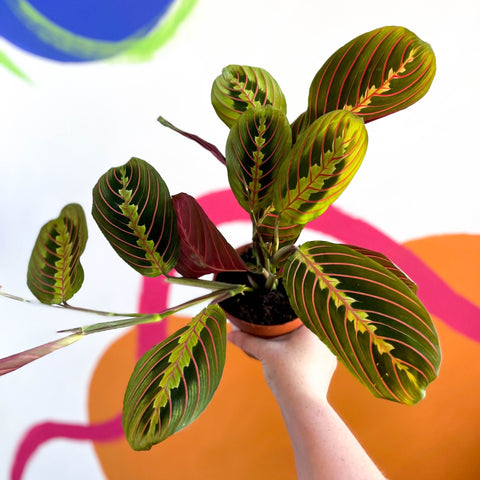
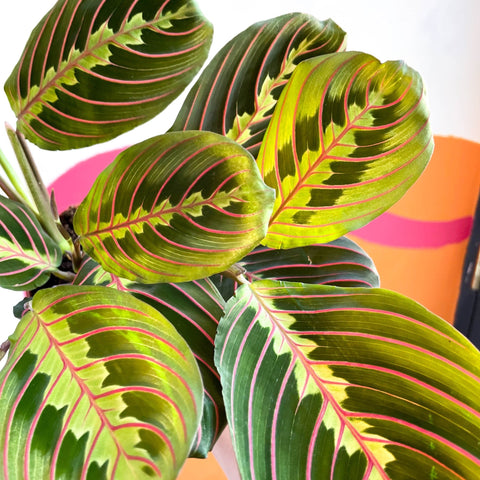
The Ficus elastica grows like a miniature tree, with its broad, many-shaded leaves branching off a central stem. This variety's variegated leaves are tinted pink, with shades of cream, olive and forest green in the mix too. This colouring marks it out as a standout shrub, an ideal centrepiece or statement plant which will add interest to any room. In the wild, these trees can grow up to 60m tall - in your home it will be more like 2m (6ft) which, indoors, is still quite the presence! Add a more than a little splash of colour to your home with this beautiful plant.
Scientific Name
Ficus elastica 'Shivereana' (springy fig, cultivar: Shivereana)
Common Name
Variegated Rubber Tree, Moonshine Rubber Plant
Origin
Native to Asia, from the Himalayas to Malaysia, Sumatra and Java
Light
Your Ficus will thrive best in bright, indirect light for most of the day, but a splash of morning or evening sun will go down well and help avoid both overwatering and loss of variegation.
Water
Allow the top half of the soil to dry out between watering; the pot will also be lighter at this point. Reduce even further in winter when the water will evaporate less.
Humidity
Likes high humidity; your plant will appreciate the addition of a humidity tray!
Soil
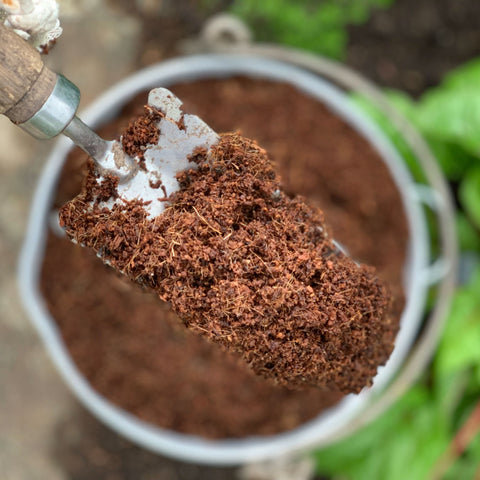
Use a well-draining soil mix. A mix with chunky elements like bark alongside moisture-retentive coir will work well; look out for mixes designed for Ficus plants. Repot every three years in the spring as the plant grows.
Food
Feed every four waters in the growing season, reduce to every six in autumn and winter.
Temperature
Ideal temperature is 18-26°C; make sure it does not get colder than 12°C in winter.
Pet-safe
No, this plant is toxic to pets and small humans.
Sprouts Top Tips
Keep an eye out for lower-leaf loss; this will tell you if your plant is in too dark a location and/or too full of water. This is how you get a rotten plant, so it's important to watch for early signs and avoid it at all costs. It's important due to the variegation on this plant that it gets enough light, so try and choose a location where it gets some morning or evening sun (like a west- or east-facing window) and this should help avoid overwatering too.