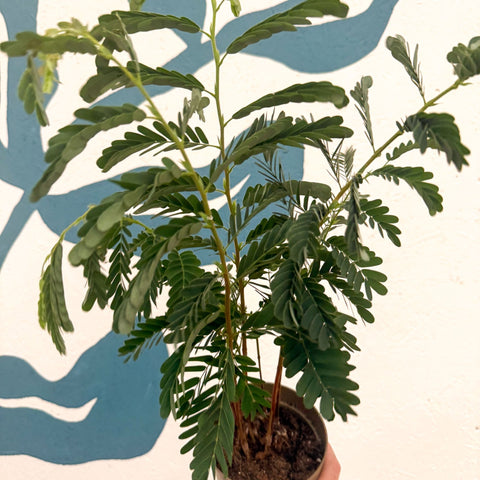
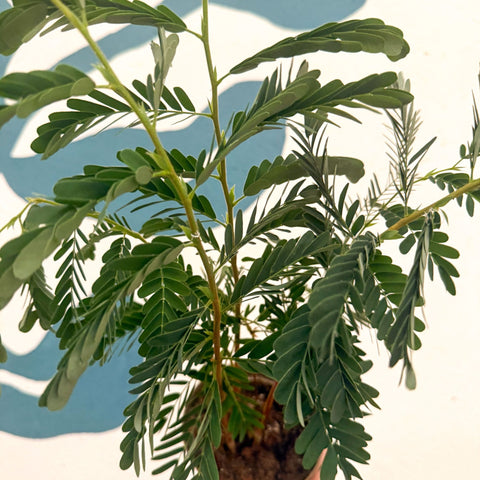
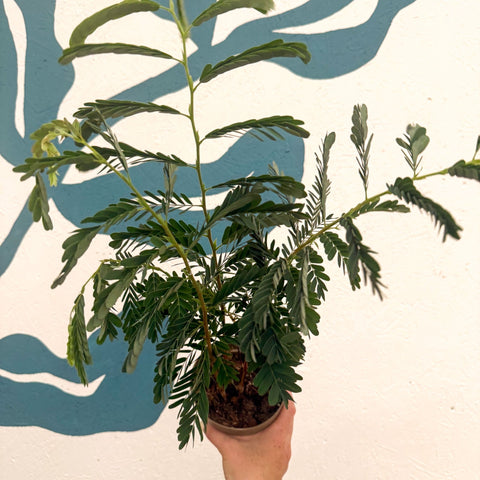
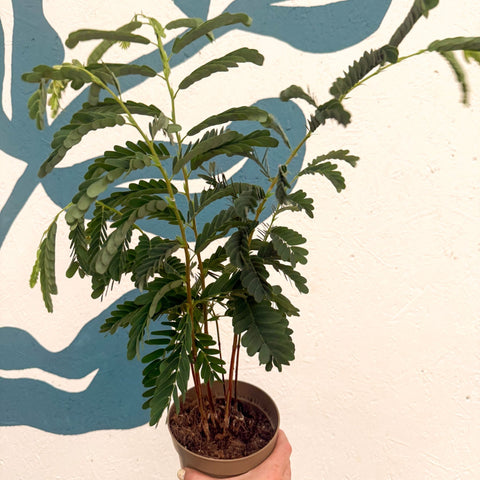
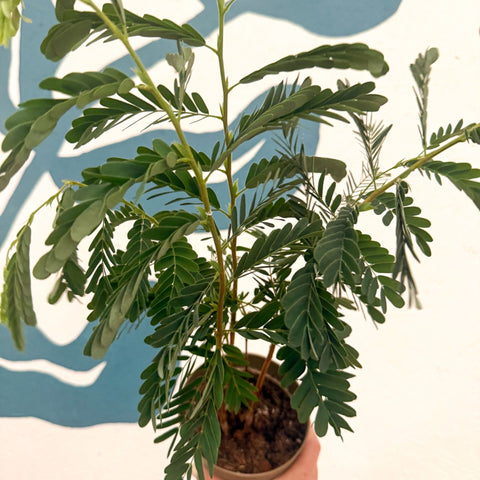
Best known for producing the sweet-sharp tamarind pods used in cuisines around the world, Tamarindus indica is a beautiful tropical tree with graceful, feathery foliage and an elegant, spreading habit. While it can grow into a magnificent specimen outdoors in tropical climates, it also makes an attractive and unusual houseplant or conservatory tree when grown in the UK.
Scientific Name
Tamarindus indica
Despite its species name indica, meaning “of India”, tamarind is believed to have originated in tropical Africa before becoming widely cultivated across India and much of Asia thousands of years ago.
Common Name(s)
Tamarind, Tamarind Tree
Origin
Native to tropical Africa and now widely cultivated throughout tropical and subtropical regions worldwide.
Light
Prefers bright light, including several hours of direct sun each day. A south- or west-facing window, conservatory or greenhouse is ideal. The more light it receives, the stronger and healthier its growth will be.
Water
Water when the top few centimetres of compost have dried out. Keep the compost lightly moist during the growing season but avoid leaving the roots sitting in water. Reduce watering during winter when growth slows.
Humidity
Enjoys average to moderately high humidity, although it adapts well to typical household conditions.
Temperature
Thrives between 18–30°C. Protect from temperatures below 10°C and avoid cold draughts.
Soil
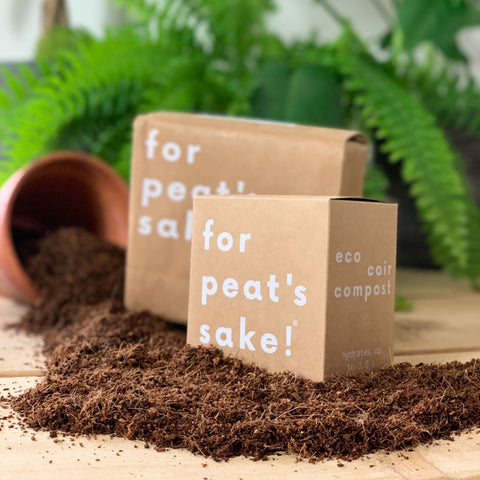
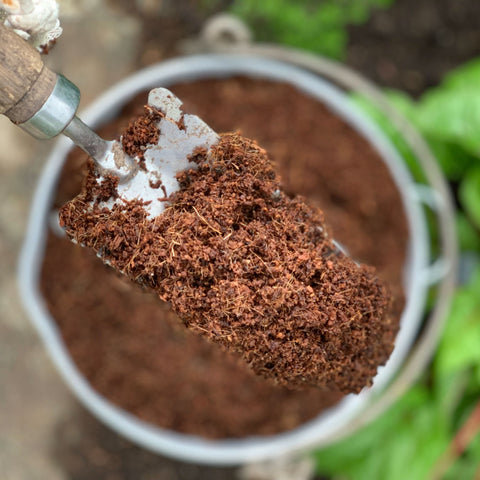
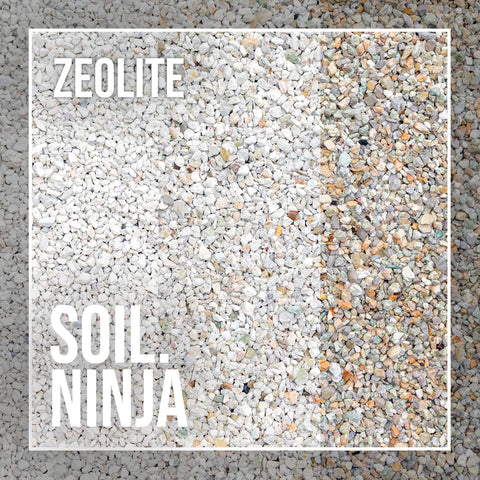
Use a free-draining, fertile compost. A mix of peat-free houseplant compost with added perlite or horticultural grit provides good drainage while retaining enough moisture.
Feeding
Feed every 2–4 weeks during spring and summer with a balanced liquid fertiliser. Stop feeding during winter.
Growth Habit
A slow to moderate-growing tree with delicate, fern-like foliage. As a houseplant it can be maintained at around 1–2 metres with regular pruning, while in its native habitat it can eventually exceed 20 metres in height.
Toxicity
Non-toxic to pets and humans. The ripe fruit is edible and widely used in cooking, although houseplants grown indoors are unlikely to produce fruit in the UK.